


California Child Care Compliance Infractions: Most Common Deficiencies and How to Avoid Them
8 min read
Aug 28, 2026
State Programs
8 min read
Last updated

Ellis Murphy
Ellis Murphy
8 min read
Last updated
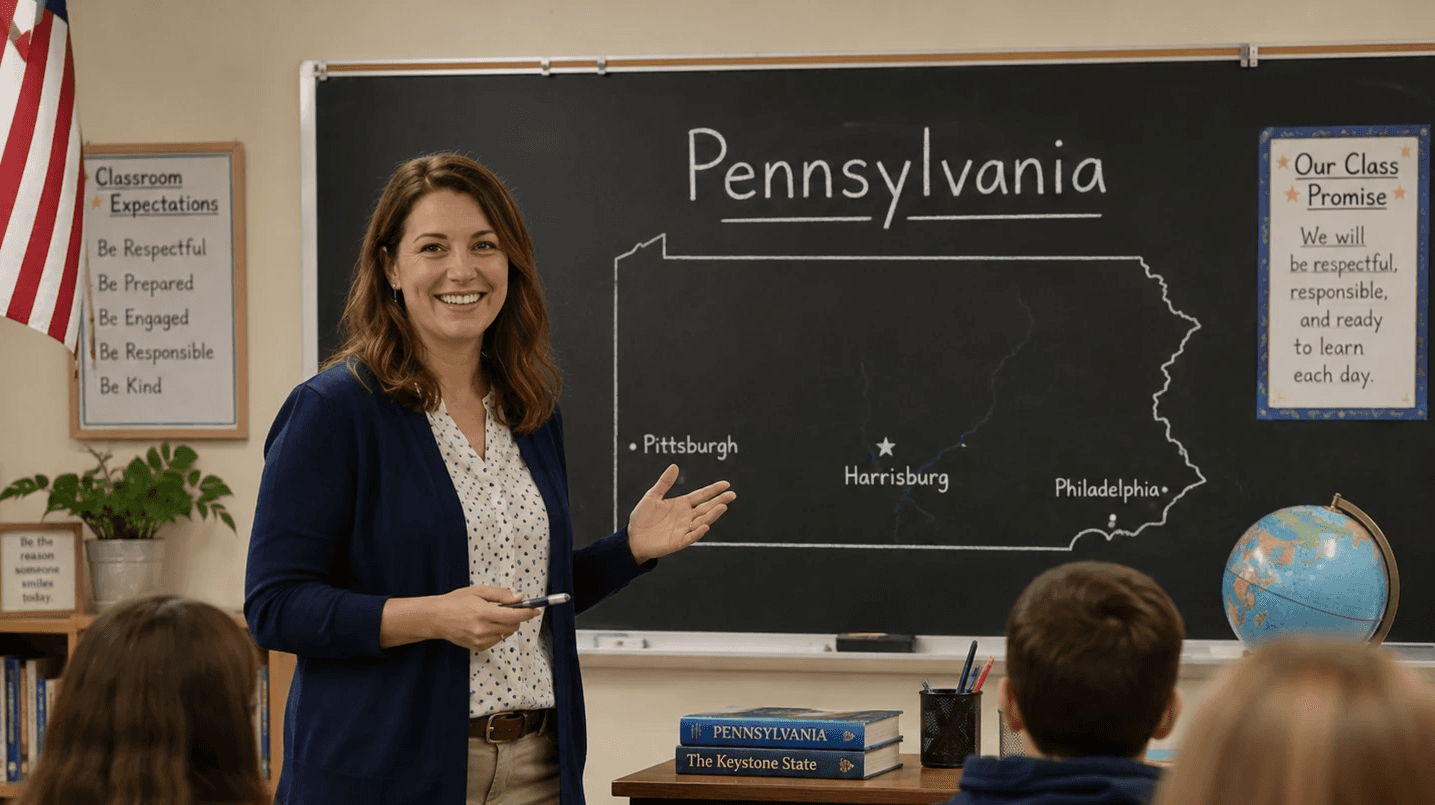
Picture this: it’s 2026, and there are two child care centers in downtown Pittsburgh operating just down the street from each other. Both centers host a similar number of children, employ a similar staff count, and are nearly indistinguishable from one another tech stack-wise; however, the reimbursement each center receives from the state varies dramatically. The difference between them? Keystone STARS.
Some context: there’s a real shortage of child care support in the state of Pennsylvania. The Center for American Progress's 2026 analysis found that nearly half of American children under 6 (roughly 46%) live in a "child care desert," which is an area with more than three young children for every licensed slot, disproportionately affecting rural and suburban locations. And despite Philadelphia being the 6th largest city in the country, this shortage isn't really a Philadelphia problem: CAP's data shows access across much of the city itself, while many surrounding suburbs and rural areas run short on providers.
Ensuring quality care for Pennsylvania's children is one of the state's most pressing challenges right now, which is the exact context Keystone STARS was made for.
Keystone STARS (Standards, Training & Professional Development, Assessment, Resources, and Support) is Pennsylvania's QRIS (Quality Rating and Improvement System), run by the Office of Child Development and Early Learning (OCDEL). Every licensed child care program in the state holds a STAR level, and that level reflects where your program stands across four areas: staff qualifications and professional development; the early learning program (including the learning environment, curriculum, and child assessment); family and community partnerships; and leadership and management.
The system is designed to do a few things at once: encourage programs toward better quality, give directors the support and resources to get there, and give families a clear way to compare options.
Many child care centers in the state of Pennsylvania might not even be aware of what STAR level they’re at, let alone how to move between these levels. Here, we break it down for you:
Star 1 - Licensed and Compliant. This is the starting point rather than an achievement. Every licensed center in Pennsylvania begins at Star 1, which means your program meets the state's basic licensing requirements.
Star 2 - Commitment to Quality. Star 2 is the first real step up. It signals that your program has made a noticeable commitment to improvement: staff begin pursuing professional development, the program works toward more defined curriculum and environment standards, and internal assessment becomes a requirement. Star 2 marks the point where reimbursement for Child Care Works (CCW) families starts, as well; moving up from this point can directly impact your center's revenue.
Star 3 - Meaningful Investment. At Star 3, the bar is higher and so is the documentation. Staff need to meet specific education credentials, and your program needs to use an OCDEL-approved curriculum and assessment tool. The formal Internal Assessment Process, which includes building an assessment team and conducting program observation alongside a quality coach, begins here, building on the assessment already required at Star 2. This is more work, but it's also where your program starts to stand out from lower STAR levels.
Star 4 - Highest Designation. Star 4 is the top of the system. Reaching it means earning the most points across all four quality standards areas, meeting continuous quality improvement goals, and reaching threshold scores through the Internal Assessment Process, with support from an OCDEL-approved qualifier. It's the highest standard in Pennsylvania child care, and it carries real weight with families, funders, and state partners. Relatively few centers reach this level, which is part of what gives it value.
The first step is to find your current Star designation (you can look it up here). Assuming your center is Star 1, and you meet qualifications for Star 2, you can then apply for a move-up case in the PD Registry System. The deadline to qualify for Continuous Quality Improvement (CQI) Award eligibility is August 1, under OCDEL's exception policy. Completion must be required by October 31.
To get your move-up case started, request an Early Learning Resource Center (ELRC) quality coach; there are 19 regions across Pennsylvania. Eligible Star 2, 3, and 4 programs hear from their ELRC starting each September; if you haven't received one, reach out directly.
This is the part that often doesn't get explained clearly, so it's worth walking through.
Programs at Star 2 and above receive an add-on reimbursement rate for every child enrolled in Child Care Works. That add-on increases at each STAR level and is applied automatically to the daily subsidized rate. In some cases, this pushes provider rates above the standard Maximum Child Care Allowance. If your center serves a large number of CCW families, the gap between Star 1 and Star 2 can be dramatic.
Additionally, Keystone STARS Continuous Quality Improvement (CQI) Awards are available to Star 2, 3, and 4 programs. Eligible centers receive an Eligibility and Acceptance Letter from their regional ELRC each September, and the letter explains the maximum amount you qualify for and how to accept it.
Award amounts are program-specific. If you haven't received a letter or aren't sure of your status, your first call should be to your regional ELRC.
Here's how the benefits stack up as you move from Star 1 to Star 2 and beyond:
Star 1 | Star 2 | Star 3 | Star 4 | |
CCW Tiered Reimbursement Add-On | None | Begins | Higher | Highest |
CQI Award Eligibility | Exception only* | Eligible | Eligible | Eligible |
Workforce Retention Bonus (CCW providers) | ✓ | ✓ | ✓ | ✓ |
Pre-K Counts Partnership Positioning | Limited | Stronger | Strong | Strongest |
*Star 1 programs can qualify under OCDEL's exception policy by opening a move-up designation case in the PD Registry System before August 1 and completing the move-up by October 31. Missing that window means missing CQI Award eligibility for the full cycle.
Governor Shapiro's 2025-26 budget added a $25 million Child Care Staff Recruitment and Retention Program, providing $450 bonuses to ~55,000 child care workers at licensed CCW providers statewide. His 2026-27 budget proposal goes further, with an additional $10 million to raise that figure to at least $630 and bring the total program investment to $35 million. More than 4,300 providers applied in the first round alone.
Moving up in STARS also means including more families on subsidy, more reporting requirements, and more for administrators to manage. That's where having the right systems in place makes a real difference: you can book a free demo to see how Playground handles CCW billing and the added documentation a higher STAR level brings.
Your STAR level is more than just a credential; it directly affects the income your center can bring in. With CQI Awards, tiered CCW reimbursement, and state workforce bonuses all available to STARS participants, there is a strong case to be made for moving up through the program.
The tricky part is that the path between levels requires more than just paperwork; it takes documented evidence of quality across every area OCDEL measures. For a director who is also teaching, managing staff, handling billing, and staying in contact with 50 families, building that documentation layer while running the center is truly difficult. Centers that are stuck between levels often aren't short on quality; they're short on the infrastructure to document and demonstrate it.
That lack of documentation is frequently the real barrier. With demand for high-quality care being larger than available supply across much of the state, the centers that move up are much more likely to grow enrollment, access new funding, and maintain reputations of the highest standard.
Pennsylvania's STARS system has been running since 2002 and is one of the more developed quality rating systems in the country. What makes it effective is that it ties financial incentives directly to quality levels. Star 2 begins changing your revenue right away (with an immediacy that isn't found in many government-driven programs), and it's why the system functions as a genuine improvement driver rather than just a compliance label.
Keystone STARS is designed to make improving center quality worth the effort. The program’s tiered reimbursement, CQI Awards, state workforce bonuses, and a growing pool of families with better access to child care funding highlight a common truth: the centers that invest in moving up are better positioned than the ones that don't.
For most directors, the question isn't whether moving up is worth it, but rather whether or not they have the bandwidth to pursue it without the operational side of the center falling behind in the meantime.
This is one of the problems that Playground was built to solve. CCW billing alongside private-paying families, enrollment records, family communication, and documentation all live in one place, so you can focus on driving change rather than just keeping up with what's already on your plate.
CQI Award amounts are program-specific and communicated via ELRC letters each September. The $630 workforce bonus figure reflects Governor Shapiro's 2026-27 budget proposal and is subject to legislative approval.
Picture this: it’s 2026, and there are two child care centers in downtown Pittsburgh operating just down the street from each other. Both centers host a similar number of children, employ a similar staff count, and are nearly indistinguishable from one another tech stack-wise; however, the reimbursement each center receives from the state varies dramatically. The difference between them? Keystone STARS.
Some context: there’s a real shortage of child care support in the state of Pennsylvania. The Center for American Progress's 2026 analysis found that nearly half of American children under 6 (roughly 46%) live in a "child care desert," which is an area with more than three young children for every licensed slot, disproportionately affecting rural and suburban locations. And despite Philadelphia being the 6th largest city in the country, this shortage isn't really a Philadelphia problem: CAP's data shows access across much of the city itself, while many surrounding suburbs and rural areas run short on providers.
Ensuring quality care for Pennsylvania's children is one of the state's most pressing challenges right now, which is the exact context Keystone STARS was made for.
Keystone STARS (Standards, Training & Professional Development, Assessment, Resources, and Support) is Pennsylvania's QRIS (Quality Rating and Improvement System), run by the Office of Child Development and Early Learning (OCDEL). Every licensed child care program in the state holds a STAR level, and that level reflects where your program stands across four areas: staff qualifications and professional development; the early learning program (including the learning environment, curriculum, and child assessment); family and community partnerships; and leadership and management.
The system is designed to do a few things at once: encourage programs toward better quality, give directors the support and resources to get there, and give families a clear way to compare options.
Many child care centers in the state of Pennsylvania might not even be aware of what STAR level they’re at, let alone how to move between these levels. Here, we break it down for you:
Star 1 - Licensed and Compliant. This is the starting point rather than an achievement. Every licensed center in Pennsylvania begins at Star 1, which means your program meets the state's basic licensing requirements.
Star 2 - Commitment to Quality. Star 2 is the first real step up. It signals that your program has made a noticeable commitment to improvement: staff begin pursuing professional development, the program works toward more defined curriculum and environment standards, and internal assessment becomes a requirement. Star 2 marks the point where reimbursement for Child Care Works (CCW) families starts, as well; moving up from this point can directly impact your center's revenue.
Star 3 - Meaningful Investment. At Star 3, the bar is higher and so is the documentation. Staff need to meet specific education credentials, and your program needs to use an OCDEL-approved curriculum and assessment tool. The formal Internal Assessment Process, which includes building an assessment team and conducting program observation alongside a quality coach, begins here, building on the assessment already required at Star 2. This is more work, but it's also where your program starts to stand out from lower STAR levels.
Star 4 - Highest Designation. Star 4 is the top of the system. Reaching it means earning the most points across all four quality standards areas, meeting continuous quality improvement goals, and reaching threshold scores through the Internal Assessment Process, with support from an OCDEL-approved qualifier. It's the highest standard in Pennsylvania child care, and it carries real weight with families, funders, and state partners. Relatively few centers reach this level, which is part of what gives it value.
The first step is to find your current Star designation (you can look it up here). Assuming your center is Star 1, and you meet qualifications for Star 2, you can then apply for a move-up case in the PD Registry System. The deadline to qualify for Continuous Quality Improvement (CQI) Award eligibility is August 1, under OCDEL's exception policy. Completion must be required by October 31.
To get your move-up case started, request an Early Learning Resource Center (ELRC) quality coach; there are 19 regions across Pennsylvania. Eligible Star 2, 3, and 4 programs hear from their ELRC starting each September; if you haven't received one, reach out directly.
This is the part that often doesn't get explained clearly, so it's worth walking through.
Programs at Star 2 and above receive an add-on reimbursement rate for every child enrolled in Child Care Works. That add-on increases at each STAR level and is applied automatically to the daily subsidized rate. In some cases, this pushes provider rates above the standard Maximum Child Care Allowance. If your center serves a large number of CCW families, the gap between Star 1 and Star 2 can be dramatic.
Additionally, Keystone STARS Continuous Quality Improvement (CQI) Awards are available to Star 2, 3, and 4 programs. Eligible centers receive an Eligibility and Acceptance Letter from their regional ELRC each September, and the letter explains the maximum amount you qualify for and how to accept it.
Award amounts are program-specific. If you haven't received a letter or aren't sure of your status, your first call should be to your regional ELRC.
Here's how the benefits stack up as you move from Star 1 to Star 2 and beyond:
Star 1 | Star 2 | Star 3 | Star 4 | |
CCW Tiered Reimbursement Add-On | None | Begins | Higher | Highest |
CQI Award Eligibility | Exception only* | Eligible | Eligible | Eligible |
Workforce Retention Bonus (CCW providers) | ✓ | ✓ | ✓ | ✓ |
Pre-K Counts Partnership Positioning | Limited | Stronger | Strong | Strongest |
*Star 1 programs can qualify under OCDEL's exception policy by opening a move-up designation case in the PD Registry System before August 1 and completing the move-up by October 31. Missing that window means missing CQI Award eligibility for the full cycle.
Governor Shapiro's 2025-26 budget added a $25 million Child Care Staff Recruitment and Retention Program, providing $450 bonuses to ~55,000 child care workers at licensed CCW providers statewide. His 2026-27 budget proposal goes further, with an additional $10 million to raise that figure to at least $630 and bring the total program investment to $35 million. More than 4,300 providers applied in the first round alone.
Moving up in STARS also means including more families on subsidy, more reporting requirements, and more for administrators to manage. That's where having the right systems in place makes a real difference: you can book a free demo to see how Playground handles CCW billing and the added documentation a higher STAR level brings.
Your STAR level is more than just a credential; it directly affects the income your center can bring in. With CQI Awards, tiered CCW reimbursement, and state workforce bonuses all available to STARS participants, there is a strong case to be made for moving up through the program.
The tricky part is that the path between levels requires more than just paperwork; it takes documented evidence of quality across every area OCDEL measures. For a director who is also teaching, managing staff, handling billing, and staying in contact with 50 families, building that documentation layer while running the center is truly difficult. Centers that are stuck between levels often aren't short on quality; they're short on the infrastructure to document and demonstrate it.
That lack of documentation is frequently the real barrier. With demand for high-quality care being larger than available supply across much of the state, the centers that move up are much more likely to grow enrollment, access new funding, and maintain reputations of the highest standard.
Pennsylvania's STARS system has been running since 2002 and is one of the more developed quality rating systems in the country. What makes it effective is that it ties financial incentives directly to quality levels. Star 2 begins changing your revenue right away (with an immediacy that isn't found in many government-driven programs), and it's why the system functions as a genuine improvement driver rather than just a compliance label.
Keystone STARS is designed to make improving center quality worth the effort. The program’s tiered reimbursement, CQI Awards, state workforce bonuses, and a growing pool of families with better access to child care funding highlight a common truth: the centers that invest in moving up are better positioned than the ones that don't.
For most directors, the question isn't whether moving up is worth it, but rather whether or not they have the bandwidth to pursue it without the operational side of the center falling behind in the meantime.
This is one of the problems that Playground was built to solve. CCW billing alongside private-paying families, enrollment records, family communication, and documentation all live in one place, so you can focus on driving change rather than just keeping up with what's already on your plate.
CQI Award amounts are program-specific and communicated via ELRC letters each September. The $630 workforce bonus figure reflects Governor Shapiro's 2026-27 budget proposal and is subject to legislative approval.
Ellis Murphy
Growth Marketing
Ellis Murphy is writer and growth marketer specializing in the intersection between data science and creative strategy. At Playground, he is involved in growth marketing initiatives spanning data reporting, audience engagement, and content development. He previously worked with UNDRCVR Entertainment, a NY music marketing agency, where he led SEO reporting and social media strategy. Ellis holds a Bachelor of Arts in Computer Science from the University of North Carolina at Chapel Hill, with a double minor in Data Science and Music. A classically trained musician and music historian, he served as a programming coordinator and on-air host at WXYC 89.3 FM, where he curated coverage of significant new releases across the music industry.
Date created

Nick Caughell
The Weston School
of directors say Playground saves them hours every week
Based on data from 5,000+ centers.



California Child Care Compliance Infractions: Most Common Deficiencies and How to Avoid Them
8 min read
Aug 28, 2026
State Programs
Texas Child Care Licensing Violations: Most Common Deficiencies and How to Avoid Them
6 min read
Aug 14, 2026
State Programs
Ohio Child Care Licensing Violations: Most Common Citations & How to Avoid Them
6 min read
Aug 13, 2026
State Programs
