9 Fun Thanksgiving Activities for Preschool
9 Fun Thanksgiving Activities for Preschool
9 Fun Thanksgiving Activities for Preschool

Thanksgiving week is a natural time to slow down, practice gratitude, and give children hands-on ways to notice the season. The right activities can also help directors and teachers fill the days around a center feast, a family event, or a quieter in-class celebration.
Below are 9 Thanksgiving activities for preschool and child care classrooms, including scavenger hunts, turkey crafts, science observations, and gratitude projects, with notes on ages, materials, skills, and safety.
Looking to build and record your lesson plans, share them with families, and send photo updates, all in the same app as your other operations? You can with Playground. Book a free demo to see how it can streamline your business.
9 Thanksgiving activities for preschool classrooms
Thanksgiving scavenger hunt
A classroom scavenger hunt gets children up and moving. Hide Thanksgiving-themed objects around the room and invite children to find them, checking each one off a picture list as they go. Ages 2 to 5. Materials: larger themed objects, a simple picture checklist, and clipboards or cards. Skills: observation, movement, and vocabulary. Safety tip: skip tiny pieces that could be choking hazards, keep walkways clear, and make sure every hiding spot is in a teacher’s line of sight.
Turkey handprint activity
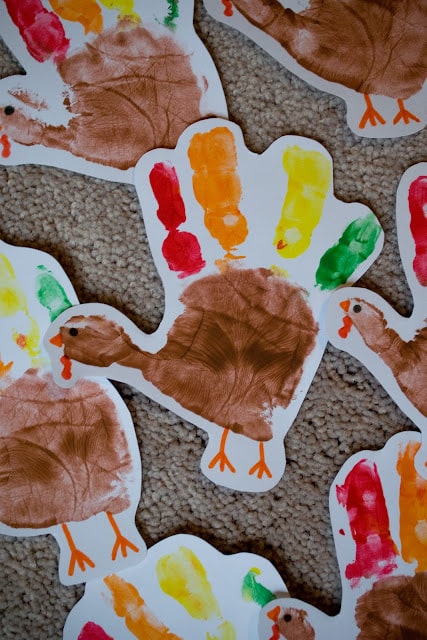
Handprint turkeys are a classic classroom craft. Trace or paint each child’s hand, let the paint dry, then add a beak, wattles, and legs so the prints become a flock you can display. Ages 2 to 5. Materials: washable non-toxic paint or crayons, paper, and smocks. Skills: fine motor control and body awareness. Safety tip: use washable paint, wash hands when you finish, and keep small googly eyes for ages 3 and up. For more visual ideas, see these turkey activities for preschool.
Turkey paper headbands
Paper turkey headbands are a simple craft children can wear for a short circle time or photo, then take home. Cut a paper band to fit, add a turkey face and paper feathers, and have an adult tape or staple the band closed with fasteners on the outside. Ages 3 to 5; adults can pre-cut pieces for toddlers. Materials: construction paper or cardstock, glue sticks, markers, and tape or a stapler for adults. Skills: assembling, measuring, and following steps. Treat this as a turkey craft, not a Native headdress or costume. Make bands comfortable, keep decorations from blocking vision, and take headbands off for meals, rest, and active play. Step-by-step instructions are here.

Rotting pumpkin watch
Not every Thanksgiving activity has to be a craft. A pumpkin already past its prime can become a month-long science observation. Place it in a sealed, clear container and invite children to watch how it changes. Ages 3 to 5 for close observation; younger children can look from a short distance. Materials: a pumpkin, a sealed clear bin, paper, and crayons.
Discuss changes in color, shape, and smell from a safe distance, and talk about why the pumpkin is decomposing. Skills: observation, comparison, and early science vocabulary. Safety tip: do not let children touch or smell mold, keep the container away from food prep and rest areas, and have adults wear gloves if they need to move it. Children with mold allergies or asthma can observe from farther away or from photographs.
Have children draw what they see each week and compare the first drawing with the last. Wash hands after any time spent near the container.
Leaf rubbings
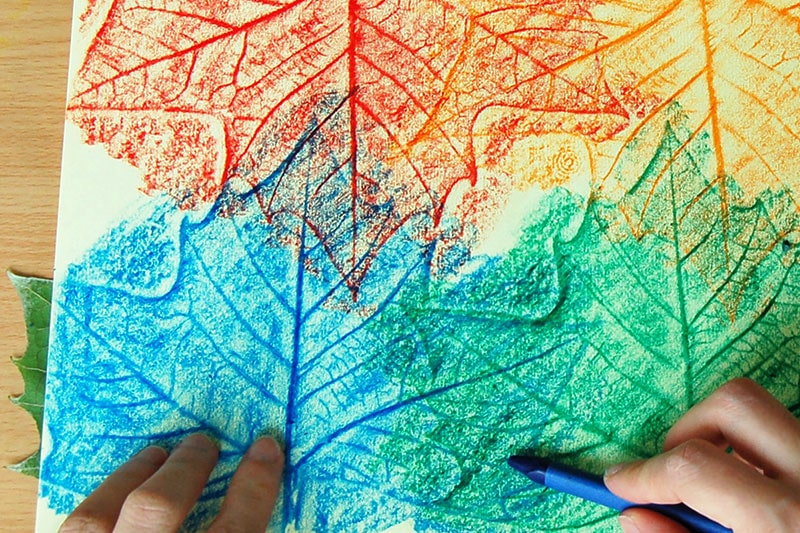
Leaf rubbings are a familiar fall activity that also fits a Thanksgiving week. Place a leaf under thin paper, vein side up, and rub with the side of a crayon to reveal the shape. Ages 3 to 5, or toddlers with help. Materials: fresh, flexible leaves, thin paper, and peeled crayons. Skills: fine motor strength and noticing leaf parts. Tape the leaf and paper so they do not slide, skip moldy or crumbly leaves, and supervise peeled crayon pieces with children under 3. A simple how-to is here.
Toilet paper roll turkey
Toilet paper roll turkeys make a sturdy three-dimensional craft for tables or cubbies. Wrap or paint a clean roll, then add paper feathers, a head, and feet. Ages 3 to 5. Materials: clean cardboard rolls, construction paper, glue sticks, and child-safe scissors. Skills: building a 3D form and cutting. Supervise scissors, and save small parts such as googly eyes for ages 3 and up. Instructions are here.
Thanksgiving can also be a time to talk about gathering, friendship, and kindness. A short read-aloud is a calm way to open the day before a craft. You can find a variety of recommendations in this roundup of Thanksgiving books for child care and turkey books for the preschool classroom.
Gratitude tree
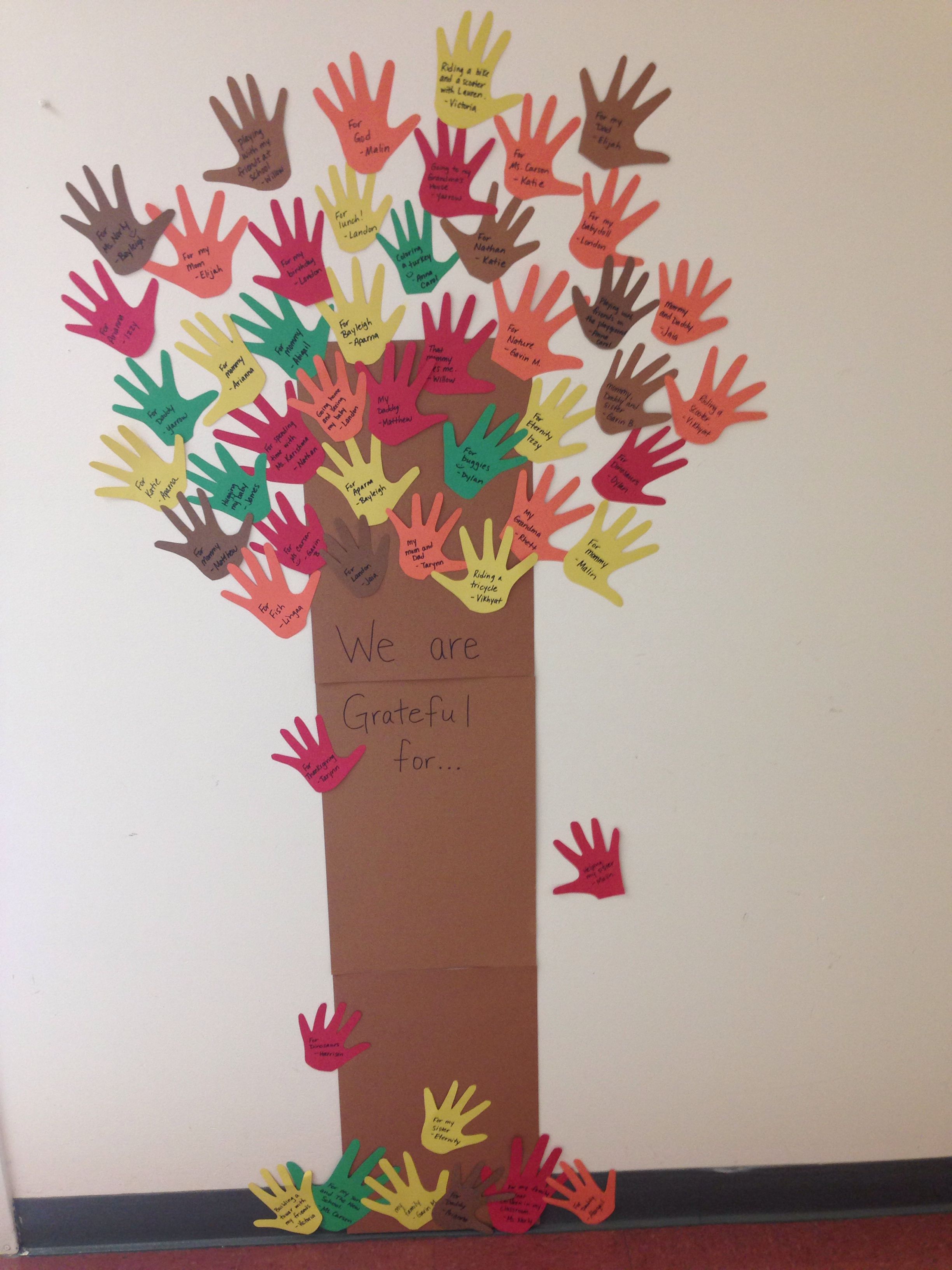
A gratitude tree gives children a place to share what they are thankful for. Start with a paper trunk on the wall and add a handprint or leaf as each child dictates or writes a note. Ages 2 to 5. Materials: butcher paper, handprint or leaf cutouts, crayons, and glue or tape. Skills: language, social-emotional development, and early writing. Hang the display securely and keep walkways clear. For display ideas, see our Thanksgiving decoration ideas and Thanksgiving bulletin board ideas, and pair the tree with Thanksgiving gratitude songs. More variations are here.
Homemade bird feeder
A simple bird feeder lets children care for wildlife and notice the birds that visit your yard or window. Ages 3 to 5, with close adult help. Materials: a clean milk carton or pinecone, string, and birdseed. If you use a spread to hold the seed, choose a nut-free option approved by your program and family allergy records; do not assume peanut butter is safe. Skills: nature observation and caring for living things. Safety tip: birdseed and small pieces are choking hazards, hang finished feeders out of children’s reach, and have everyone wash hands when the activity is done.
Leaf collecting
Take a nature walk and collect leaves, pinecones, and other large natural items. Sort them by color, size, or shape, then use a few to make Thanksgiving crafts or decorations for your classroom. Ages 2 to 5. Skills: gross motor movement, sorting, and comparing. Walk a route you have checked first, avoid poison ivy and mushrooms, skip small acorns and seed pods with children under 3, do a quick tick check after grassy areas, and wash hands when you return.
Adapting activities for toddlers and pre-K
Toddlers: Keep activities short and sensory. Offer large pre-cut shapes, glue sticks, and a few scavenger items they can find in plain sight. Skip small acorns, seed, and googly eyes, and do the cutting and stapler work for them.
Preschool and pre-K: Add challenge with cutting, writing or dictating grateful words, sorting collections, and comparing pumpkin drawings from week to week.
Planning the week
Spread the 9 activities across the week rather than trying to do them all in one day. A scavenger hunt or nature walk works well early in the week, crafts can fill quieter afternoons, and the gratitude tree can grow a little each day. Pair the plans with your November lesson plans and themes so decorations, songs, and stories stay consistent.
Involving families
Invite families to send a leaf or a short note about something they are thankful for to add to the class tree.
Share photos of finished crafts and the pumpkin watch so children can talk about the week at home. (You can do this through the Playground app).
Keep optional take-home ideas simple, such as a picture scavenger list for a weekend walk.
Key takeaways
These 9 activities mix movement, art, nature, and gratitude so you can match the energy of your group.
Check allergy records before bird-feeder spreads or other food, and keep small pieces away from children under 3.
Talk about Thanksgiving through gratitude, kindness, and respect for Native peoples, and avoid stereotyped costumes such as headdresses.
Let children’s words and artwork lead the displays, and invite families to add a simple note of thanks.
Make the most of Thanksgiving week
These 9 Thanksgiving activities give directors and teachers practical ways to fill the week with movement, art, science, and gratitude. Choose a few that fit your space and schedule, keep safety in mind, and let children’s ideas lead the rest.
For more seasonal planning, see our Thanksgiving books for child care and our November Themes and Lesson Plan Ideas.
Thanksgiving week is a natural time to slow down, practice gratitude, and give children hands-on ways to notice the season. The right activities can also help directors and teachers fill the days around a center feast, a family event, or a quieter in-class celebration.
Below are 9 Thanksgiving activities for preschool and child care classrooms, including scavenger hunts, turkey crafts, science observations, and gratitude projects, with notes on ages, materials, skills, and safety.
Looking to build and record your lesson plans, share them with families, and send photo updates, all in the same app as your other operations? You can with Playground. Book a free demo to see how it can streamline your business.
9 Thanksgiving activities for preschool classrooms
Thanksgiving scavenger hunt
A classroom scavenger hunt gets children up and moving. Hide Thanksgiving-themed objects around the room and invite children to find them, checking each one off a picture list as they go. Ages 2 to 5. Materials: larger themed objects, a simple picture checklist, and clipboards or cards. Skills: observation, movement, and vocabulary. Safety tip: skip tiny pieces that could be choking hazards, keep walkways clear, and make sure every hiding spot is in a teacher’s line of sight.
Turkey handprint activity
Handprint turkeys are a classic classroom craft. Trace or paint each child’s hand, let the paint dry, then add a beak, wattles, and legs so the prints become a flock you can display. Ages 2 to 5. Materials: washable non-toxic paint or crayons, paper, and smocks. Skills: fine motor control and body awareness. Safety tip: use washable paint, wash hands when you finish, and keep small googly eyes for ages 3 and up. For more visual ideas, see these turkey activities for preschool.
Turkey paper headbands
Paper turkey headbands are a simple craft children can wear for a short circle time or photo, then take home. Cut a paper band to fit, add a turkey face and paper feathers, and have an adult tape or staple the band closed with fasteners on the outside. Ages 3 to 5; adults can pre-cut pieces for toddlers. Materials: construction paper or cardstock, glue sticks, markers, and tape or a stapler for adults. Skills: assembling, measuring, and following steps. Treat this as a turkey craft, not a Native headdress or costume. Make bands comfortable, keep decorations from blocking vision, and take headbands off for meals, rest, and active play. Step-by-step instructions are here.
Rotting pumpkin watch
Not every Thanksgiving activity has to be a craft. A pumpkin already past its prime can become a month-long science observation. Place it in a sealed, clear container and invite children to watch how it changes. Ages 3 to 5 for close observation; younger children can look from a short distance. Materials: a pumpkin, a sealed clear bin, paper, and crayons.
Discuss changes in color, shape, and smell from a safe distance, and talk about why the pumpkin is decomposing. Skills: observation, comparison, and early science vocabulary. Safety tip: do not let children touch or smell mold, keep the container away from food prep and rest areas, and have adults wear gloves if they need to move it. Children with mold allergies or asthma can observe from farther away or from photographs.
Have children draw what they see each week and compare the first drawing with the last. Wash hands after any time spent near the container.
Leaf rubbings
Leaf rubbings are a familiar fall activity that also fits a Thanksgiving week. Place a leaf under thin paper, vein side up, and rub with the side of a crayon to reveal the shape. Ages 3 to 5, or toddlers with help. Materials: fresh, flexible leaves, thin paper, and peeled crayons. Skills: fine motor strength and noticing leaf parts. Tape the leaf and paper so they do not slide, skip moldy or crumbly leaves, and supervise peeled crayon pieces with children under 3. A simple how-to is here.
Toilet paper roll turkey
Toilet paper roll turkeys make a sturdy three-dimensional craft for tables or cubbies. Wrap or paint a clean roll, then add paper feathers, a head, and feet. Ages 3 to 5. Materials: clean cardboard rolls, construction paper, glue sticks, and child-safe scissors. Skills: building a 3D form and cutting. Supervise scissors, and save small parts such as googly eyes for ages 3 and up. Instructions are here.
Thanksgiving can also be a time to talk about gathering, friendship, and kindness. A short read-aloud is a calm way to open the day before a craft. You can find a variety of recommendations in this roundup of Thanksgiving books for child care and turkey books for the preschool classroom.
Gratitude tree
A gratitude tree gives children a place to share what they are thankful for. Start with a paper trunk on the wall and add a handprint or leaf as each child dictates or writes a note. Ages 2 to 5. Materials: butcher paper, handprint or leaf cutouts, crayons, and glue or tape. Skills: language, social-emotional development, and early writing. Hang the display securely and keep walkways clear. For display ideas, see our Thanksgiving decoration ideas and Thanksgiving bulletin board ideas, and pair the tree with Thanksgiving gratitude songs. More variations are here.
Homemade bird feeder
A simple bird feeder lets children care for wildlife and notice the birds that visit your yard or window. Ages 3 to 5, with close adult help. Materials: a clean milk carton or pinecone, string, and birdseed. If you use a spread to hold the seed, choose a nut-free option approved by your program and family allergy records; do not assume peanut butter is safe. Skills: nature observation and caring for living things. Safety tip: birdseed and small pieces are choking hazards, hang finished feeders out of children’s reach, and have everyone wash hands when the activity is done.
Leaf collecting
Take a nature walk and collect leaves, pinecones, and other large natural items. Sort them by color, size, or shape, then use a few to make Thanksgiving crafts or decorations for your classroom. Ages 2 to 5. Skills: gross motor movement, sorting, and comparing. Walk a route you have checked first, avoid poison ivy and mushrooms, skip small acorns and seed pods with children under 3, do a quick tick check after grassy areas, and wash hands when you return.
Adapting activities for toddlers and pre-K
Toddlers: Keep activities short and sensory. Offer large pre-cut shapes, glue sticks, and a few scavenger items they can find in plain sight. Skip small acorns, seed, and googly eyes, and do the cutting and stapler work for them.
Preschool and pre-K: Add challenge with cutting, writing or dictating grateful words, sorting collections, and comparing pumpkin drawings from week to week.
Planning the week
Spread the 9 activities across the week rather than trying to do them all in one day. A scavenger hunt or nature walk works well early in the week, crafts can fill quieter afternoons, and the gratitude tree can grow a little each day. Pair the plans with your November lesson plans and themes so decorations, songs, and stories stay consistent.
Involving families
Invite families to send a leaf or a short note about something they are thankful for to add to the class tree.
Share photos of finished crafts and the pumpkin watch so children can talk about the week at home. (You can do this through the Playground app).
Keep optional take-home ideas simple, such as a picture scavenger list for a weekend walk.
Key takeaways
These 9 activities mix movement, art, nature, and gratitude so you can match the energy of your group.
Check allergy records before bird-feeder spreads or other food, and keep small pieces away from children under 3.
Talk about Thanksgiving through gratitude, kindness, and respect for Native peoples, and avoid stereotyped costumes such as headdresses.
Let children’s words and artwork lead the displays, and invite families to add a simple note of thanks.
Make the most of Thanksgiving week
These 9 Thanksgiving activities give directors and teachers practical ways to fill the week with movement, art, science, and gratitude. Choose a few that fit your space and schedule, keep safety in mind, and let children’s ideas lead the rest.
For more seasonal planning, see our Thanksgiving books for child care and our November Themes and Lesson Plan Ideas.
Got any questions?
What ages are these Thanksgiving activities best for?
How can we talk about Thanksgiving respectfully with preschoolers?
Are food and bird-feeder activities safe when children have allergies?
How do we observe a rotting pumpkin safely in a classroom?
How can families take part without a lot of prep at home?
Beny Mizrachi leads marketing at Playground from New York, where he runs go-to-market across content, paid and organic social, email, referrals, and strategic partnerships. He authors content on the Playground blog — including the comprehensive guide to creating a preschool marketing plan — and is dedicated to making it easier for child care operators to attract families, improve enrollment, and stand out in competitive markets.
Share this article
The highest rated child care software
Ratings and review counts from public app store listings, May 2026.

Book a demo and simplify every corner of your business.




Book a demo and simplify every corner of your business.