

10 Phonics Activities for Preschoolers
10 Phonics Activities for Preschoolers
10 Phonics Activities for Preschoolers

Last updated:
Why Use Phonics Activities With Your Preschoolers?
Phonics is an important foundation for early reading and writing skills. By teaching phonics to preschoolers, we can help them develop the skills they need to become successful readers and writers.
There are many different phonics games and activities that can be used to teach phonics to preschoolers.
Here are ten phonics activities ideas to get you started:
“I Spy” Phonics Game
Play a game of “I Spy” using words that start with the same letter sound. For example, “I spy something that starts with the /s/ sound.” Use this phonics game for kids to develop not only reading and writing skills but also their literacy skills.
“Magnetic Letters” Phonics Activity
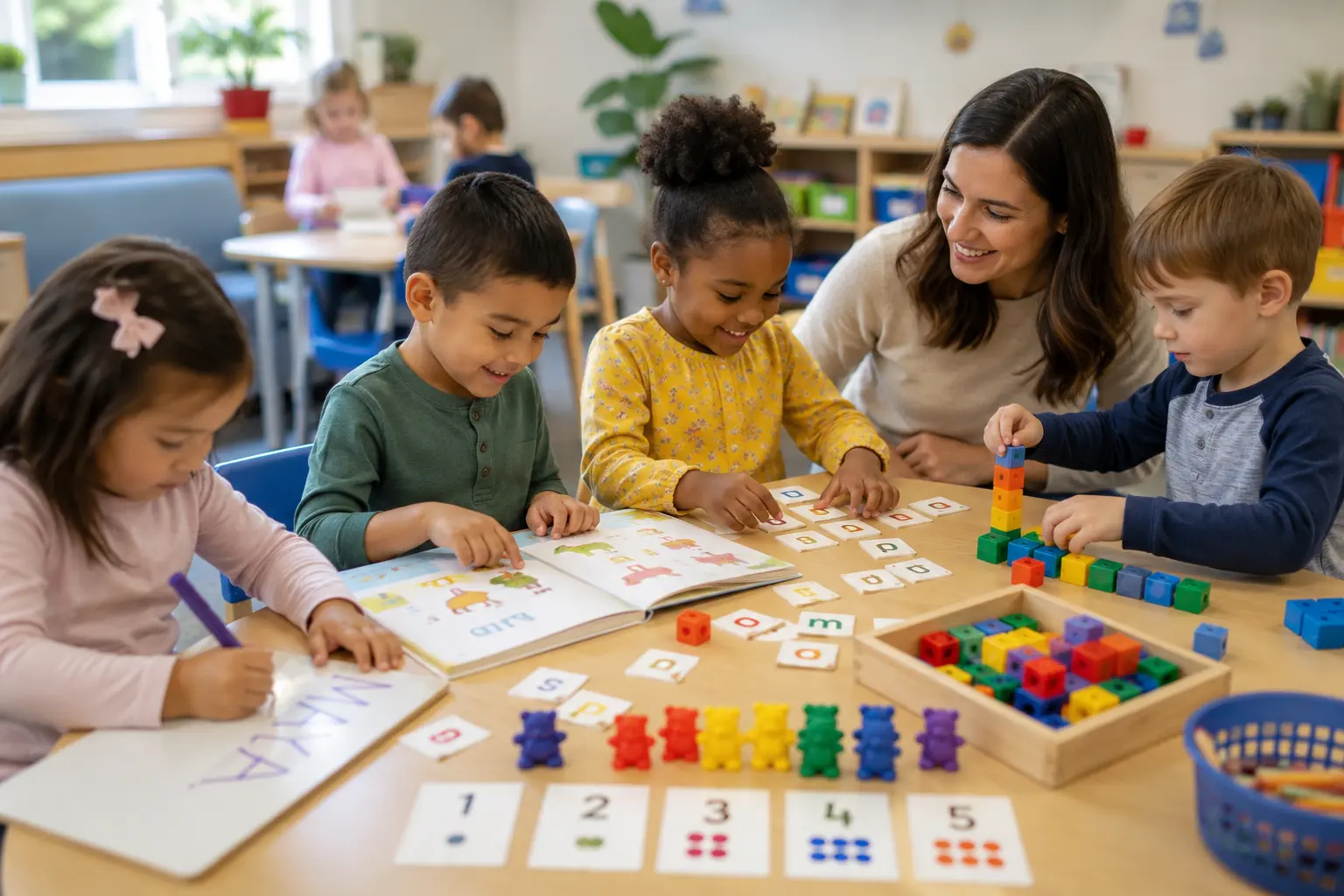
Use magnetic letters to spell out simple words and have the child say the word and identify the sounds of each letter. This phonics activity helps kids identify sounds at the same time it teaches them how to spell.

“Flashcards” Phonics Game
Use a set of flashcards with pictures of objects that start with different letter sounds. For this phonics activity, have the child say the name of the object and the corresponding letter sound.
“Memory” Phonics Game
Play a fun phonics game of “Memory” using a set of cards with pictures of objects that start with different letter sounds. Have the child match the picture to the corresponding letter sound.
“Go Fish” Phonics Game for Kids
Play a kindergarten phonics game of “Go Fish” using a deck of cards with pictures of objects that start with different letter sounds. Have the child ask for a card with a specific letter sound and try to make a match.

“Picture Cards With CVC Words” Phonics Activity
For this early phonics activity, use a set of picture cards with simple CVC words (words with consonant-vowel-consonant sounds) and have the child say the word and identify the sounds of each letter.
“Picture Cards With Simple Sight Words” Phonics Activity
This preschool phonics activity is similar to the one above but for this you will use a set of picture cards with simple CVC words and have the child build the words by manipulating letter tiles or magnetic letters.
“CVC Words” Early Phonics Activity
Use a set of picture cards with simple sight words and have the child say the word and identify the sounds of each letter.

“Simon Says” Kids Phonics Game
Play a game of “Simon Says” using letter sounds and simple CVC words. For example, “Simon says touch your nose if the word starts with the /m/ sound.”
“Sound sorting” Phonics Learning Game
Sound sorting phonics game — Children can sort objects or pictures by the initial sound, such as grouping items that start with the “b” sound.
Teaching Phonics to Preschoolers, a Summary
By using these fun and engaging activities, you can help your preschooler develop important phonics skills and lay the foundation for future success in reading and writing
Why Use Phonics Activities With Your Preschoolers?
Phonics is an important foundation for early reading and writing skills. By teaching phonics to preschoolers, we can help them develop the skills they need to become successful readers and writers.
There are many different phonics games and activities that can be used to teach phonics to preschoolers.
Here are ten phonics activities ideas to get you started:
“I Spy” Phonics Game
Play a game of “I Spy” using words that start with the same letter sound. For example, “I spy something that starts with the /s/ sound.” Use this phonics game for kids to develop not only reading and writing skills but also their literacy skills.
“Magnetic Letters” Phonics Activity
Use magnetic letters to spell out simple words and have the child say the word and identify the sounds of each letter. This phonics activity helps kids identify sounds at the same time it teaches them how to spell.
“Flashcards” Phonics Game
Use a set of flashcards with pictures of objects that start with different letter sounds. For this phonics activity, have the child say the name of the object and the corresponding letter sound.
“Memory” Phonics Game
Play a fun phonics game of “Memory” using a set of cards with pictures of objects that start with different letter sounds. Have the child match the picture to the corresponding letter sound.
“Go Fish” Phonics Game for Kids
Play a kindergarten phonics game of “Go Fish” using a deck of cards with pictures of objects that start with different letter sounds. Have the child ask for a card with a specific letter sound and try to make a match.
“Picture Cards With CVC Words” Phonics Activity
For this early phonics activity, use a set of picture cards with simple CVC words (words with consonant-vowel-consonant sounds) and have the child say the word and identify the sounds of each letter.
“Picture Cards With Simple Sight Words” Phonics Activity
This preschool phonics activity is similar to the one above but for this you will use a set of picture cards with simple CVC words and have the child build the words by manipulating letter tiles or magnetic letters.
“CVC Words” Early Phonics Activity
Use a set of picture cards with simple sight words and have the child say the word and identify the sounds of each letter.
“Simon Says” Kids Phonics Game
Play a game of “Simon Says” using letter sounds and simple CVC words. For example, “Simon says touch your nose if the word starts with the /m/ sound.”
“Sound sorting” Phonics Learning Game
Sound sorting phonics game — Children can sort objects or pictures by the initial sound, such as grouping items that start with the “b” sound.
Teaching Phonics to Preschoolers, a Summary
By using these fun and engaging activities, you can help your preschooler develop important phonics skills and lay the foundation for future success in reading and writing
Tamar Andrews, EdD, is an Associate Professor at UCLA's Graduate School of Education and Information Studies and Director of the Early Childhood Education Department at American Jewish University. With 30+ years in early childhood as a teacher and director, she led Temple Isaiah Preschool from 2003 to 2023, where she earned NAEYC accreditation and built an award-winning STEM program. Her work inspired her son Daniel to build Playground. She also teaches at UCLA Extension and Santa Monica College and speaks internationally on early childhood education.
Share this article
The highest rated child care software
Ratings and review counts from public app store listings, May 2026.


Book a demo and simplify every corner of your business.




Book a demo and simplify every corner of your business.


