

CACFP Meal Ideas by Age: Compliant Breakfasts, Lunches, Snacks, and Suppers for Infants Through Age 5
CACFP Meal Ideas by Age: Compliant Breakfasts, Lunches, Snacks, and Suppers for Infants Through Age 5
CACFP Meal Ideas by Age: Compliant Breakfasts, Lunches, Snacks, and Suppers for Infants Through Age 5

Last updated:
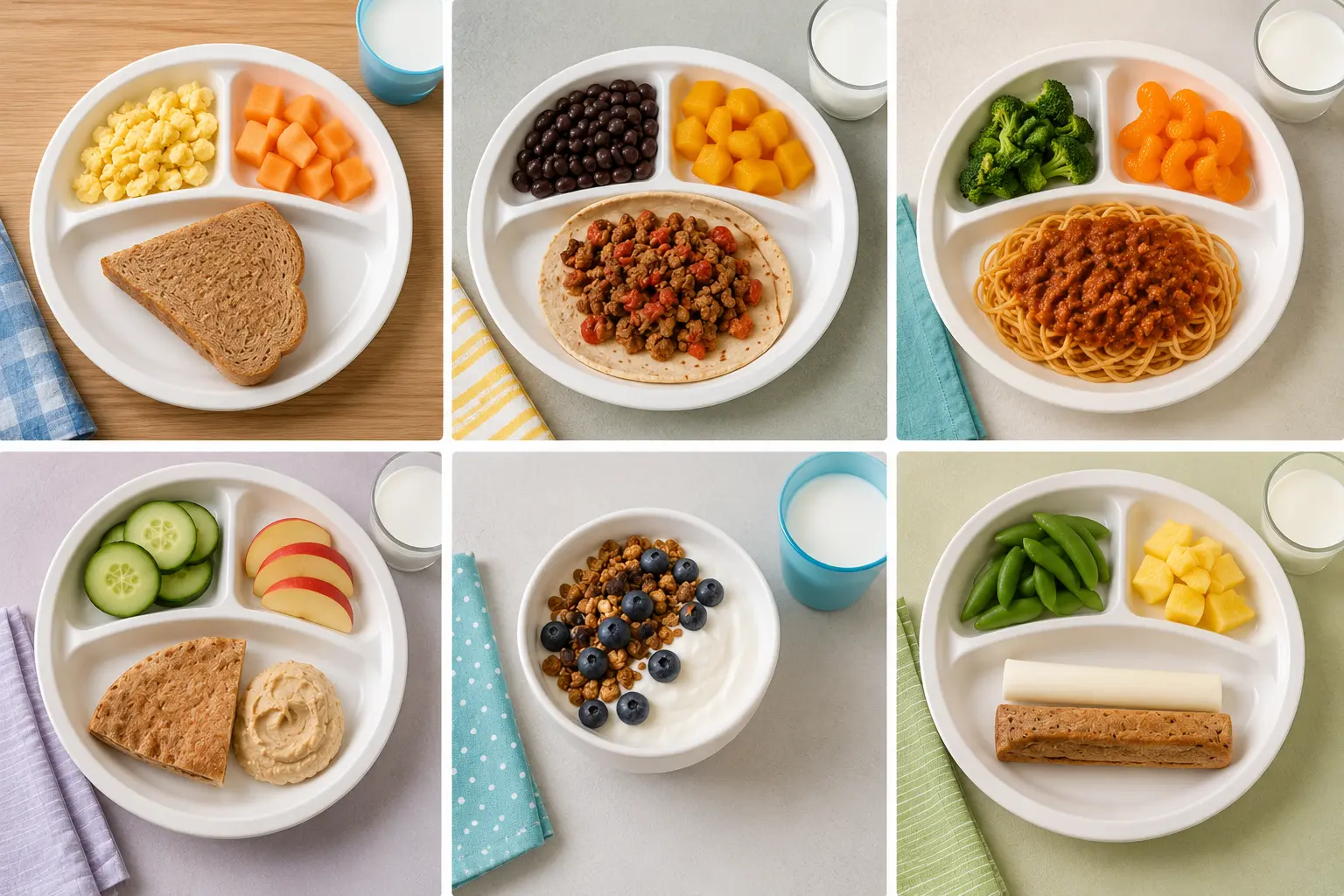
For child care providers participating in the Child and Adult Food Program (CACFP), planning compliant meals is essential to earning reimbursement money that can help fuel your business. Meals must meet strict compositional requirements to meet the program’s intention of serving healthy food to low-income children.
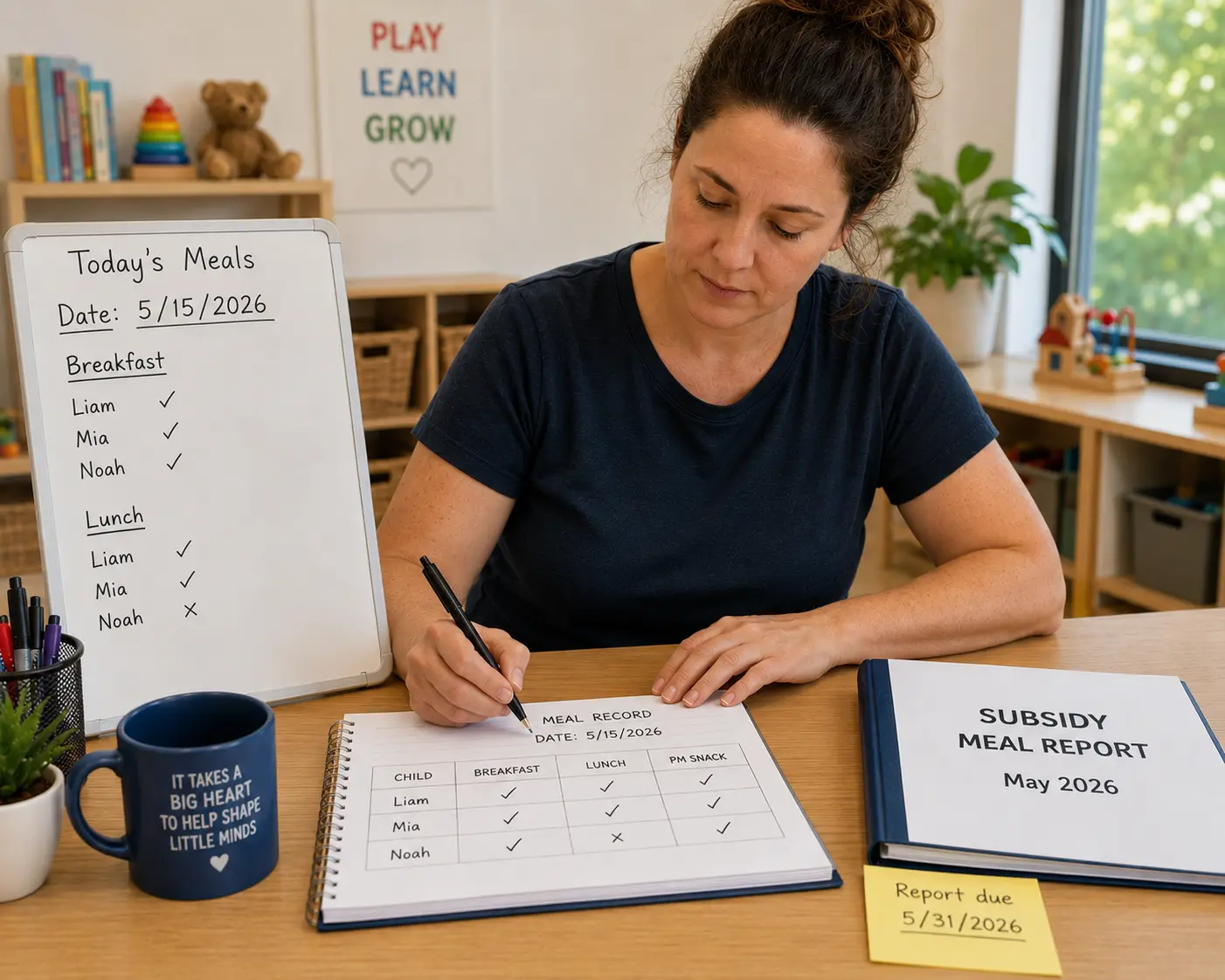
When CACFP meals are served and reported correctly, a child care provider can generally earn a reimbursement ranging from 40 cents to $4.60 per serving. However, many providers mistakenly misreport many CACFP eligible meals, leaving money on the table as the flurry of activity between meal planning, preparation, child supervision, classroom ratios, cleanup and other distractions often taking precedence over recording and reporting the specific details of each mealtime.
With this in mind, Playground laid out the dietary components of breakfast, lunch and dinner (supper) and snakcs for 1 to 2 year olds and 3 to 5 year olds – as well on some notes on requirements for infants – so that child care providers can think less about how to frankenstein what’s in the refrigerator and more about getting full reimbursements for the meals provided.
Want to spend less time on administrative tasks and capture more reimbursement dollars? Book a free demo with Playground to see the difference automating your subsidy reporting can make.
An overview of CACFP meal requirements
CACFP meal requirements vary by age and meal type, but generally span five major food groups: milk, grains, vegetables, fruits, and meats (or meat alternates).
Here’s a quick overview of what’s required for each age group:
Infants (0 to 5 months)
Only breastmilk or iron-fortified formula
No solid foods required
Infants (6 to 11 months)
Breastmilk or formula is the main part of every meal and snack
Small amounts of iron-fortified cereal, fruits, and vegetables may be added when the baby is ready
Ages 1 to 2
Meal | What’s Required | Key Amounts |
Breakfast | Milk + Fruit/Veg + Grain | 4 oz milk, ¼ cup fruit/veg, ½ oz grain |
Lunch/Supper | Milk + Protein + Veg + Fruit + Grain | 4 oz milk, 1 oz protein, ⅛ cup each veg & fruit, ½ oz grain |
Snack | Any 2 components | Varies by component |
Ages 3 to 5
Meal | What’s Required | Key Amounts |
Breakfast | Milk + Fruit/Veg + Grain | 6 oz milk, ½ cup fruit/veg, ½ oz grain |
Lunch/Supper | Milk + Protein + Veg + Fruit + Grain | 6 oz milk, 1½ oz protein, ¼ cup each veg & fruit, ½ oz grain |
Snack | Any 2 components | Varies by component |
If you are participating in CACFP, it’s a good idea to familiarize yourself with the fine print of eligible food types and other applicable guidelines. For instance: Milk type matters. Ages 1 through 5 must be served unflavored milk, with whole milk for 1-year-olds, and low-fat or fat-free for ages 2–5. Infants also have specific requirements.
CACFP meal ideas for 1 to 2 year olds
Breakfast ideas for 1 to 2 year olds
A qualifying breakfast includes:4 fl oz whole milk¼ cup vegetables/fruits (or both)½ oz eq grains
A meat/meat alternate is optional for this meal. You can replace the grain up to 3 times per week.
Banana oatmeal bowl
4 fl oz whole milk
¼ cup mashed banana (or very finely diced strawberries)
¼ cup cooked oatmeal
Whole grain toast & fruit
4 fl oz whole milk
¼ cup diced soft pear or peaches (or applesauce)
½ slice whole wheat toast torn into small strips or pieces
Cereal with fruit (with optional egg)
4 fl oz whole milk
¼ cup mashed or very small diced melon or berries
Small serving whole grain infant cereal or O-shaped cereal that equals ½ oz eq
Yogurt parfait style
4 fl oz whole milk
¼ cup mashed banana or peaches
¼ cup plain yogurt + a few pieces of soft whole grain cereal or toast on the side
Lunch / supper ideas for 1 to 2 year olds
These include all 5 required components using the exact minimum quantities for 1-2 year olds:
Fluid Milk: 4 fl oz (whole milk, unflavored) Meats/meat alternates: 1 oz eq Vegetables: ⅛ cup Fruits: ⅛ cup Grains: ½ oz eq
Chicken and rice bowl
4 fl oz whole milk
1 oz finely shredded or ground cooked chicken or turkey (1 oz eq meat)
⅛ cup very soft cooked carrots or peas (mashed or tiny pieces)
⅛ cup mashed or finely diced peaches or pears
¼ cup cooked brown rice or small pasta (½ oz eq grain)
Cheese and veggie quesadilla
4 fl oz whole milk
1 oz shredded cheese (1 oz eq meat alternate)
⅛ cup finely chopped soft cooked zucchini or mild bell pepper
⅛ cup mashed or diced banana or melon
½ small whole wheat tortilla torn into small pieces (½ oz eq grain)
Bean and cheese bowl
4 fl oz whole milk
¼ cup mashed black beans or pinto beans (1 oz eq meat alternate)
⅛ cup very soft cooked green beans or carrots (tiny pieces)
⅛ cup mashed or diced strawberries or applesauce
¼ cup cooked brown rice (½ oz eq grain)
Scrambled egg and veggies
4 fl oz whole milk
½ large egg, scrambled and finely chopped (1 oz eq meat alternate)
⅛ cup very soft cooked carrots or spinach (finely chopped)
⅛ cup mashed banana or diced soft pear
¼ cup cooked small pasta or rice (½ oz eq grain)
Turkey and sweet potato
4 fl oz whole milk
1 oz finely shredded cooked turkey (1 oz eq meat)
⅛ cup mashed or very soft cooked sweet potato or carrots
⅛ cup mashed or finely diced peaches
¼ cup cooked brown rice (½ oz eq grain)
Cheese and pasta
4 fl oz whole milk
1 oz small cheese cubes or shredded cheese (1 oz eq meat alternate)
⅛ cup very soft cooked peas or zucchini (tiny pieces)
⅛ cup mashed or diced banana
¼ cup cooked small whole wheat pasta (½ oz eq grain)
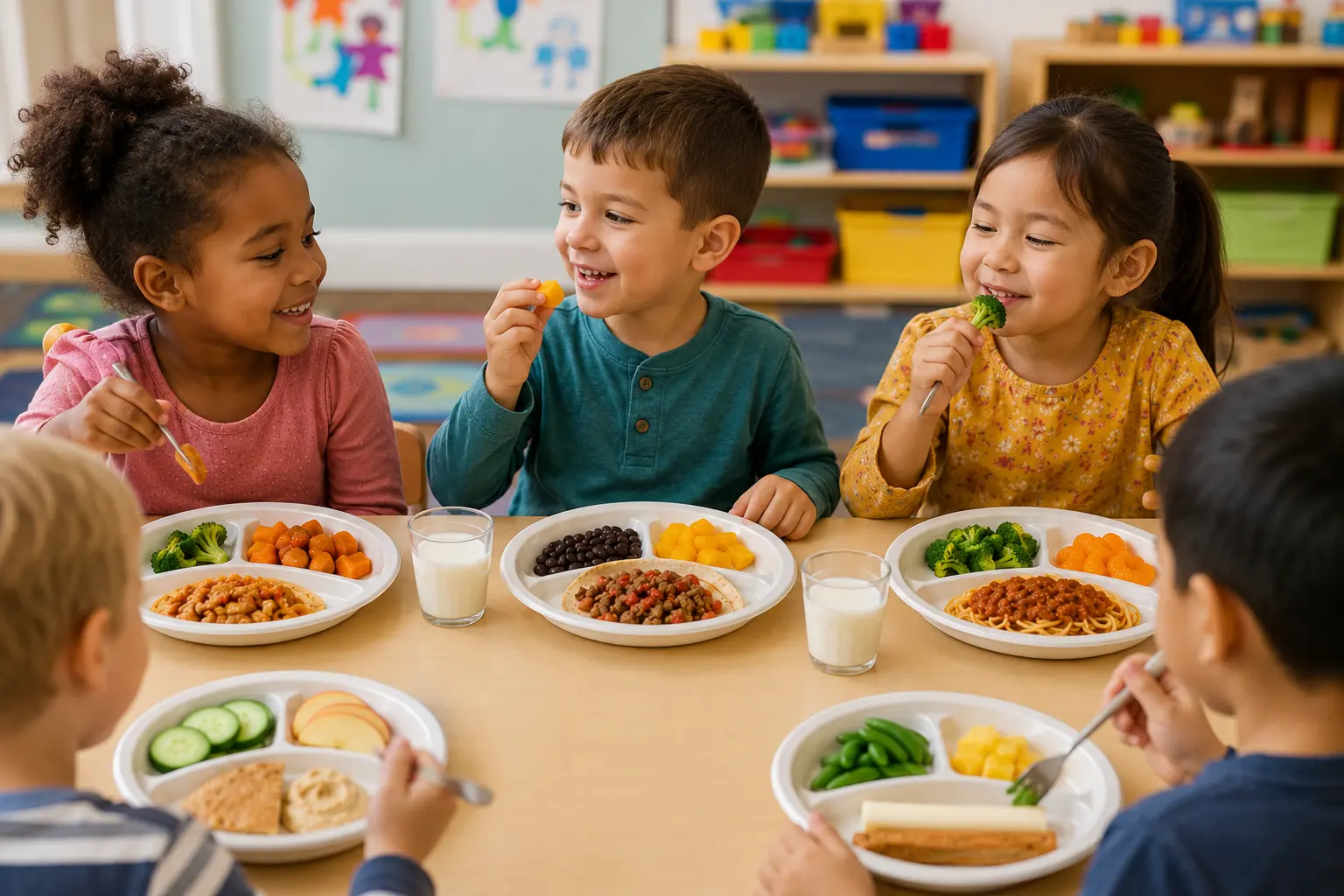
Snack ideas for 1 to 2 year olds
For 1-2 year olds, snacks can be any combination of two of the following:
Fluid Milk: 4 fl ozMeats / Meat Alternates: ½ oz eqVegetables: ½ cupFruits: ½ cupGrains: ½ oz eq
Milk must be unflavored whole milk. And all foods must be cut into very small, soft pieces (pea-sized or smaller) to prevent choking.
Milk and grain
4 fl oz whole milk
½ slice whole wheat toast torn into tiny pieces or a few small whole grain crackers (½ oz eq grain)
Cheese and fruit
½ oz cheese cut into tiny cubes (½ oz eq meat alternate)
½ cup mashed or very finely diced banana, peaches, or melon
Yogurt and fruit
¼ cup plain yogurt (½ oz eq meat alternate)
½ cup mashed banana or finely diced strawberries
Vegetable and grain
½ cup very soft cucumber slices or steamed carrot pieces (tiny)
A few small pieces of whole wheat toast or soft whole grain crackers (½ oz eq grain)
Milk and fruit
4 fl oz whole milk
½ cup mashed or finely diced pears, peaches, or applesauce
Hummus and vegetables
2 tbsp hummus (½ oz eq meat alternate)
½ cup very soft cucumber or steamed carrot sticks (cut tiny)
Cheese and grain
½ oz cheese cut into tiny pieces (½ oz eq meat alternate)
½ slice whole wheat toast torn small or a few soft whole grain crackers (½ oz eq grain)
Fruit and grain
½ cup mashed or finely diced fruit (banana, melon, or berries)
½ slice whole wheat toast torn into small pieces (½ oz eq grain)
Milk and vegetable
4 fl oz whole milk
½ cup very soft steamed carrot coins or cucumber slices (tiny pieces)
Egg and fruit
½ large hard-boiled egg, finely chopped (½ oz eq meat alternate)
½ cup mashed banana or finely diced peaches
CACFP meal ideas for 3-5 year olds
Breakfast
Requirements for breakfast for age 3 to 5 include:
Fluid Milk: 6 fl ozVegetables, fruits, or portions of both: ½ cupGrains: ½ oz eq
Meat/meat alternates are not required at breakfast and are not included in these ideas.
Berry oatmeal bowl
6 fl oz low-fat or fat-free milk
½ cup mixed berries or diced peaches
¼–⅓ cup cooked oatmeal (½ oz eq grain – whole grain-rich)
Whole grain toast and fruit
6 fl oz low-fat or fat-free milk
½ cup diced apple, pear, or melon
½ slice whole wheat toast or 1 small whole grain waffle (½ oz eq grain)
Yogurt fruit bowl
6 fl oz low-fat or fat-free milk
½ cup sliced strawberries, banana, or mixed fruit
¼ cup plain or low-sugar vanilla yogurt
¼ cup whole grain cereal
Whole grain cereal and fruit
6 fl oz low-fat or fat-free milk
½ cup diced banana or berries
⅓–½ cup whole grain cereal (such as Cheerios, Kix, or similar) that equals ½ oz eq
Toast with applesauce
6 fl oz low-fat or fat-free milk
½ cup applesauce or diced soft fruit
½ slice whole wheat toast
Oatmeal with peaches
6 fl oz low-fat or fat-free milk
½ cup diced peaches or pears
¼–⅓ cup cooked oatmeal
Lunch / supper for 3-5 year olds
These meal ideas include all 5 required components using the exact minimum quantities.
Fluid Milk: 6 fl oz Meats/meat alternates: 1½ oz eq Vegetables: ¼ cup Fruits: ¼ cup Grains: ½ oz eq
Chicken and rice bowl
6 fl oz low-fat or fat-free milk
1½ oz cooked diced chicken or turkey
¼ cup steamed broccoli or carrots
¼ cup diced peaches or pineapple
¼ cup cooked brown rice
Cheese quesadilla with veggies
6 fl oz low-fat or fat-free milk
1½ oz shredded cheese (1½ oz eq meat alternate)
¼ cup diced tomatoes or mild bell peppers
¼ cup diced apple or melon
½ small whole wheat tortilla
Turkey sandwich
6 fl oz low-fat or fat-free milk
1½ oz sliced turkey (1½ oz eq meat)
¼ cup cucumber slices or carrot sticks
¼ cup grapes (halved) or berries
½ slice whole wheat bread
Bean and cheese burrito bowl
6 fl oz low-fat or fat-free milk
¾ cup mashed or whole black beans / pinto beans (1½ oz eq meat alternate)
¼ cup cooked zucchini or green beans
¼ cup diced strawberries or banana
¼ cup cooked brown rice or quinoa
Meatballs with pasta
6 fl oz low-fat or fat-free milk
1½ oz cooked meatballs or ground turkey
¼ cup steamed peas or carrots
¼ cup diced pears or applesauce
¼ cup cooked whole wheat pasta
Egg and veggie scramble
6 fl oz low-fat or fat-free milk
1½ large eggs, scrambled (1½ oz eq meat alternate)
¼ cup diced tomatoes or spinach
¼ cup diced melon or oranges
½ slice whole wheat toast
Snack ideas for 3-5 year olds
For snacks, you only need to serve any 2 of the 5 components. Here are the quantities when that component is chosen:
Fluid Milk: 4 fl ozMeats/meat alternates: ½ oz eqVegetables: ½ cupFruits: ½ cupGrains: ½ oz eq
Milk and grain
4 fl oz low-fat or fat-free milk
½ slice whole wheat toast or a few whole grain crackers (½ oz eq grain)
Cheese and fruit
½ oz cheese cubes (½ oz eq meat alternate)
½ cup diced apple, berries, or melon
Yogurt and fruit
¼ cup plain or low-sugar yogurt (½ oz eq meat alternate)
½ cup sliced banana or strawberries
Vegetable and grain
½ cup cucumber slices, carrot sticks, or bell pepper strips
A few whole grain crackers or ½ slice whole wheat toast (½ oz eq grain)
Milk and fruit
4 fl oz low-fat or fat-free milk
½ cup diced peaches, pears, or mixed berries
Hummus and vegetables
2–3 tbsp hummus (½ oz eq meat alternate)
½ cup carrot sticks, cucumber slices, or bell pepper strips
Grain and meat alternate
½ slice whole wheat toast or a few whole grain crackers (½ oz eq grain)
½ oz cheese cubes or a small hard-boiled egg (½ oz eq meat alternate)
Fruit and grain
½ cup diced fruit (apple, melon, or berries)
½ slice whole wheat toast or a small whole grain muffin (½ oz eq grain)
Cheese and crackers
½ oz cheese (½ oz eq meat alternate)
A few whole grain crackers (½ oz eq grain)
CACFP meal ideas for infants
The Child and Adult Care Food Program (CACFP) has specific meal pattern requirements for infants that differ from those for older children. These requirements are divided into two age groups: birth through 5 months and 6 through 11 months. The goal is to support healthy development while ensuring meals and snacks are reimbursable.
Birth through 5 months
Infants in this age group should receive only breastmilk or iron-fortified infant formula. No solid foods are required or recommended at this stage. Feedings should be provided on demand, typically every 2 to 4 hours, with approximately 4 to 6 fluid ounces per feeding or as needed by the infant.
6 through 11 months
Beginning at 6 months, solid foods may be introduced when the infant shows signs of developmental readiness. The meal pattern allows flexibility, as not all infants are ready for solids at the same time. The quantities are presented as ranges, with “0” indicating that the component is optional if the infant is not yet eating solids.Breakfast, Lunch, or Supper
Infants should be offered:
6 to 8 fluid ounces of breastmilk or iron-fortified infant formula
0 to 4 tablespoons of iron-fortified infant cereal (optional)
0 to 2 tablespoons of vegetables, fruits, or a combination of both (optional)
Snacks for applicable infants
Snacks require only two components:
2 to 4 fluid ounces of breastmilk or iron-fortified infant formula
0 to ½ ounce equivalent of grains, such as iron-fortified infant cereal, bread, or crackers (optional)
0 to 2 tablespoons of vegetables or fruits (optional)
Important CACFP service notes for infants
Caring for and feeding infants can be more challenging and detail-oriented than with older children, so there are some important points you should always keep top of mind.
The “0” amounts mean a meal or snack remains reimbursable even if the infant is not yet consuming solid foods.
New foods should be introduced one at a time to monitor for allergies or reactions.
Start with smooth purees and gradually progress to mashed textures and soft finger foods as the infant becomes more developmentally ready.
Honey should never be given to infants under 12 months of age.
Cow’s milk should not be served as a beverage before 12 months of age.
Iron-fortified infant cereal is typically the first solid food introduced around 6 months.
These requirements help ensure infants receive appropriate nutrition while participating in the CACFP program.
For child care providers participating in the Child and Adult Food Program (CACFP), planning compliant meals is essential to earning reimbursement money that can help fuel your business. Meals must meet strict compositional requirements to meet the program’s intention of serving healthy food to low-income children.
When CACFP meals are served and reported correctly, a child care provider can generally earn a reimbursement ranging from 40 cents to $4.60 per serving. However, many providers mistakenly misreport many CACFP eligible meals, leaving money on the table as the flurry of activity between meal planning, preparation, child supervision, classroom ratios, cleanup and other distractions often taking precedence over recording and reporting the specific details of each mealtime.
With this in mind, Playground laid out the dietary components of breakfast, lunch and dinner (supper) and snakcs for 1 to 2 year olds and 3 to 5 year olds – as well on some notes on requirements for infants – so that child care providers can think less about how to frankenstein what’s in the refrigerator and more about getting full reimbursements for the meals provided.
Want to spend less time on administrative tasks and capture more reimbursement dollars? Book a free demo with Playground to see the difference automating your subsidy reporting can make.
An overview of CACFP meal requirements
CACFP meal requirements vary by age and meal type, but generally span five major food groups: milk, grains, vegetables, fruits, and meats (or meat alternates).
Here’s a quick overview of what’s required for each age group:
Infants (0 to 5 months)
Only breastmilk or iron-fortified formula
No solid foods required
Infants (6 to 11 months)
Breastmilk or formula is the main part of every meal and snack
Small amounts of iron-fortified cereal, fruits, and vegetables may be added when the baby is ready
Ages 1 to 2
Meal | What’s Required | Key Amounts |
Breakfast | Milk + Fruit/Veg + Grain | 4 oz milk, ¼ cup fruit/veg, ½ oz grain |
Lunch/Supper | Milk + Protein + Veg + Fruit + Grain | 4 oz milk, 1 oz protein, ⅛ cup each veg & fruit, ½ oz grain |
Snack | Any 2 components | Varies by component |
Ages 3 to 5
Meal | What’s Required | Key Amounts |
Breakfast | Milk + Fruit/Veg + Grain | 6 oz milk, ½ cup fruit/veg, ½ oz grain |
Lunch/Supper | Milk + Protein + Veg + Fruit + Grain | 6 oz milk, 1½ oz protein, ¼ cup each veg & fruit, ½ oz grain |
Snack | Any 2 components | Varies by component |
If you are participating in CACFP, it’s a good idea to familiarize yourself with the fine print of eligible food types and other applicable guidelines. For instance: Milk type matters. Ages 1 through 5 must be served unflavored milk, with whole milk for 1-year-olds, and low-fat or fat-free for ages 2–5. Infants also have specific requirements.
CACFP meal ideas for 1 to 2 year olds
Breakfast ideas for 1 to 2 year olds
A qualifying breakfast includes:4 fl oz whole milk¼ cup vegetables/fruits (or both)½ oz eq grains
A meat/meat alternate is optional for this meal. You can replace the grain up to 3 times per week.
Banana oatmeal bowl
4 fl oz whole milk
¼ cup mashed banana (or very finely diced strawberries)
¼ cup cooked oatmeal
Whole grain toast & fruit
4 fl oz whole milk
¼ cup diced soft pear or peaches (or applesauce)
½ slice whole wheat toast torn into small strips or pieces
Cereal with fruit (with optional egg)
4 fl oz whole milk
¼ cup mashed or very small diced melon or berries
Small serving whole grain infant cereal or O-shaped cereal that equals ½ oz eq
Yogurt parfait style
4 fl oz whole milk
¼ cup mashed banana or peaches
¼ cup plain yogurt + a few pieces of soft whole grain cereal or toast on the side
Lunch / supper ideas for 1 to 2 year olds
These include all 5 required components using the exact minimum quantities for 1-2 year olds:
Fluid Milk: 4 fl oz (whole milk, unflavored) Meats/meat alternates: 1 oz eq Vegetables: ⅛ cup Fruits: ⅛ cup Grains: ½ oz eq
Chicken and rice bowl
4 fl oz whole milk
1 oz finely shredded or ground cooked chicken or turkey (1 oz eq meat)
⅛ cup very soft cooked carrots or peas (mashed or tiny pieces)
⅛ cup mashed or finely diced peaches or pears
¼ cup cooked brown rice or small pasta (½ oz eq grain)
Cheese and veggie quesadilla
4 fl oz whole milk
1 oz shredded cheese (1 oz eq meat alternate)
⅛ cup finely chopped soft cooked zucchini or mild bell pepper
⅛ cup mashed or diced banana or melon
½ small whole wheat tortilla torn into small pieces (½ oz eq grain)
Bean and cheese bowl
4 fl oz whole milk
¼ cup mashed black beans or pinto beans (1 oz eq meat alternate)
⅛ cup very soft cooked green beans or carrots (tiny pieces)
⅛ cup mashed or diced strawberries or applesauce
¼ cup cooked brown rice (½ oz eq grain)
Scrambled egg and veggies
4 fl oz whole milk
½ large egg, scrambled and finely chopped (1 oz eq meat alternate)
⅛ cup very soft cooked carrots or spinach (finely chopped)
⅛ cup mashed banana or diced soft pear
¼ cup cooked small pasta or rice (½ oz eq grain)
Turkey and sweet potato
4 fl oz whole milk
1 oz finely shredded cooked turkey (1 oz eq meat)
⅛ cup mashed or very soft cooked sweet potato or carrots
⅛ cup mashed or finely diced peaches
¼ cup cooked brown rice (½ oz eq grain)
Cheese and pasta
4 fl oz whole milk
1 oz small cheese cubes or shredded cheese (1 oz eq meat alternate)
⅛ cup very soft cooked peas or zucchini (tiny pieces)
⅛ cup mashed or diced banana
¼ cup cooked small whole wheat pasta (½ oz eq grain)
Snack ideas for 1 to 2 year olds
For 1-2 year olds, snacks can be any combination of two of the following:
Fluid Milk: 4 fl ozMeats / Meat Alternates: ½ oz eqVegetables: ½ cupFruits: ½ cupGrains: ½ oz eq
Milk must be unflavored whole milk. And all foods must be cut into very small, soft pieces (pea-sized or smaller) to prevent choking.
Milk and grain
4 fl oz whole milk
½ slice whole wheat toast torn into tiny pieces or a few small whole grain crackers (½ oz eq grain)
Cheese and fruit
½ oz cheese cut into tiny cubes (½ oz eq meat alternate)
½ cup mashed or very finely diced banana, peaches, or melon
Yogurt and fruit
¼ cup plain yogurt (½ oz eq meat alternate)
½ cup mashed banana or finely diced strawberries
Vegetable and grain
½ cup very soft cucumber slices or steamed carrot pieces (tiny)
A few small pieces of whole wheat toast or soft whole grain crackers (½ oz eq grain)
Milk and fruit
4 fl oz whole milk
½ cup mashed or finely diced pears, peaches, or applesauce
Hummus and vegetables
2 tbsp hummus (½ oz eq meat alternate)
½ cup very soft cucumber or steamed carrot sticks (cut tiny)
Cheese and grain
½ oz cheese cut into tiny pieces (½ oz eq meat alternate)
½ slice whole wheat toast torn small or a few soft whole grain crackers (½ oz eq grain)
Fruit and grain
½ cup mashed or finely diced fruit (banana, melon, or berries)
½ slice whole wheat toast torn into small pieces (½ oz eq grain)
Milk and vegetable
4 fl oz whole milk
½ cup very soft steamed carrot coins or cucumber slices (tiny pieces)
Egg and fruit
½ large hard-boiled egg, finely chopped (½ oz eq meat alternate)
½ cup mashed banana or finely diced peaches
CACFP meal ideas for 3-5 year olds
Breakfast
Requirements for breakfast for age 3 to 5 include:
Fluid Milk: 6 fl ozVegetables, fruits, or portions of both: ½ cupGrains: ½ oz eq
Meat/meat alternates are not required at breakfast and are not included in these ideas.
Berry oatmeal bowl
6 fl oz low-fat or fat-free milk
½ cup mixed berries or diced peaches
¼–⅓ cup cooked oatmeal (½ oz eq grain – whole grain-rich)
Whole grain toast and fruit
6 fl oz low-fat or fat-free milk
½ cup diced apple, pear, or melon
½ slice whole wheat toast or 1 small whole grain waffle (½ oz eq grain)
Yogurt fruit bowl
6 fl oz low-fat or fat-free milk
½ cup sliced strawberries, banana, or mixed fruit
¼ cup plain or low-sugar vanilla yogurt
¼ cup whole grain cereal
Whole grain cereal and fruit
6 fl oz low-fat or fat-free milk
½ cup diced banana or berries
⅓–½ cup whole grain cereal (such as Cheerios, Kix, or similar) that equals ½ oz eq
Toast with applesauce
6 fl oz low-fat or fat-free milk
½ cup applesauce or diced soft fruit
½ slice whole wheat toast
Oatmeal with peaches
6 fl oz low-fat or fat-free milk
½ cup diced peaches or pears
¼–⅓ cup cooked oatmeal
Lunch / supper for 3-5 year olds
These meal ideas include all 5 required components using the exact minimum quantities.
Fluid Milk: 6 fl oz Meats/meat alternates: 1½ oz eq Vegetables: ¼ cup Fruits: ¼ cup Grains: ½ oz eq
Chicken and rice bowl
6 fl oz low-fat or fat-free milk
1½ oz cooked diced chicken or turkey
¼ cup steamed broccoli or carrots
¼ cup diced peaches or pineapple
¼ cup cooked brown rice
Cheese quesadilla with veggies
6 fl oz low-fat or fat-free milk
1½ oz shredded cheese (1½ oz eq meat alternate)
¼ cup diced tomatoes or mild bell peppers
¼ cup diced apple or melon
½ small whole wheat tortilla
Turkey sandwich
6 fl oz low-fat or fat-free milk
1½ oz sliced turkey (1½ oz eq meat)
¼ cup cucumber slices or carrot sticks
¼ cup grapes (halved) or berries
½ slice whole wheat bread
Bean and cheese burrito bowl
6 fl oz low-fat or fat-free milk
¾ cup mashed or whole black beans / pinto beans (1½ oz eq meat alternate)
¼ cup cooked zucchini or green beans
¼ cup diced strawberries or banana
¼ cup cooked brown rice or quinoa
Meatballs with pasta
6 fl oz low-fat or fat-free milk
1½ oz cooked meatballs or ground turkey
¼ cup steamed peas or carrots
¼ cup diced pears or applesauce
¼ cup cooked whole wheat pasta
Egg and veggie scramble
6 fl oz low-fat or fat-free milk
1½ large eggs, scrambled (1½ oz eq meat alternate)
¼ cup diced tomatoes or spinach
¼ cup diced melon or oranges
½ slice whole wheat toast
Snack ideas for 3-5 year olds
For snacks, you only need to serve any 2 of the 5 components. Here are the quantities when that component is chosen:
Fluid Milk: 4 fl ozMeats/meat alternates: ½ oz eqVegetables: ½ cupFruits: ½ cupGrains: ½ oz eq
Milk and grain
4 fl oz low-fat or fat-free milk
½ slice whole wheat toast or a few whole grain crackers (½ oz eq grain)
Cheese and fruit
½ oz cheese cubes (½ oz eq meat alternate)
½ cup diced apple, berries, or melon
Yogurt and fruit
¼ cup plain or low-sugar yogurt (½ oz eq meat alternate)
½ cup sliced banana or strawberries
Vegetable and grain
½ cup cucumber slices, carrot sticks, or bell pepper strips
A few whole grain crackers or ½ slice whole wheat toast (½ oz eq grain)
Milk and fruit
4 fl oz low-fat or fat-free milk
½ cup diced peaches, pears, or mixed berries
Hummus and vegetables
2–3 tbsp hummus (½ oz eq meat alternate)
½ cup carrot sticks, cucumber slices, or bell pepper strips
Grain and meat alternate
½ slice whole wheat toast or a few whole grain crackers (½ oz eq grain)
½ oz cheese cubes or a small hard-boiled egg (½ oz eq meat alternate)
Fruit and grain
½ cup diced fruit (apple, melon, or berries)
½ slice whole wheat toast or a small whole grain muffin (½ oz eq grain)
Cheese and crackers
½ oz cheese (½ oz eq meat alternate)
A few whole grain crackers (½ oz eq grain)
CACFP meal ideas for infants
The Child and Adult Care Food Program (CACFP) has specific meal pattern requirements for infants that differ from those for older children. These requirements are divided into two age groups: birth through 5 months and 6 through 11 months. The goal is to support healthy development while ensuring meals and snacks are reimbursable.
Birth through 5 months
Infants in this age group should receive only breastmilk or iron-fortified infant formula. No solid foods are required or recommended at this stage. Feedings should be provided on demand, typically every 2 to 4 hours, with approximately 4 to 6 fluid ounces per feeding or as needed by the infant.
6 through 11 months
Beginning at 6 months, solid foods may be introduced when the infant shows signs of developmental readiness. The meal pattern allows flexibility, as not all infants are ready for solids at the same time. The quantities are presented as ranges, with “0” indicating that the component is optional if the infant is not yet eating solids.Breakfast, Lunch, or Supper
Infants should be offered:
6 to 8 fluid ounces of breastmilk or iron-fortified infant formula
0 to 4 tablespoons of iron-fortified infant cereal (optional)
0 to 2 tablespoons of vegetables, fruits, or a combination of both (optional)
Snacks for applicable infants
Snacks require only two components:
2 to 4 fluid ounces of breastmilk or iron-fortified infant formula
0 to ½ ounce equivalent of grains, such as iron-fortified infant cereal, bread, or crackers (optional)
0 to 2 tablespoons of vegetables or fruits (optional)
Important CACFP service notes for infants
Caring for and feeding infants can be more challenging and detail-oriented than with older children, so there are some important points you should always keep top of mind.
The “0” amounts mean a meal or snack remains reimbursable even if the infant is not yet consuming solid foods.
New foods should be introduced one at a time to monitor for allergies or reactions.
Start with smooth purees and gradually progress to mashed textures and soft finger foods as the infant becomes more developmentally ready.
Honey should never be given to infants under 12 months of age.
Cow’s milk should not be served as a beverage before 12 months of age.
Iron-fortified infant cereal is typically the first solid food introduced around 6 months.
These requirements help ensure infants receive appropriate nutrition while participating in the CACFP program.
Jaclyn is a data journalist and CFP™ who evaluates trends in the childcare industry and wider economy. She has previously worked for publications including CNET, SmartAsset, Bizfluent, AZCentral and Chron, and as a research consultant for NAPCO Media. Her insights are often cited by publications including Bloomberg, CNBC, Business Insider, Fox News, USA Today, The Hill and more. She has a bachelor’s degree in economics and mathematics from The College of New Jersey.
Share this article

Book a demo and simplify every corner of your business.




Book a demo and simplify every corner of your business.
