

CACFP Reimbursement Rates Updated for July 1, 2026 – June 30, 2027
4 min read
Aug 11, 2026
Subsidy & Funding
6 min read
Last updated

Jaclyn DeJohn, CFP®
Jaclyn DeJohn, CFP®
6 min read
Last updated
The Child Care and Development Block Grant may help child care directors expand their business to serve more families, but you’ll want to carefully consider whether participation is the right choice for your business. If so, you’ll have to make sure your business meets the qualifications and then apply to participate.
The Child Care and Development Block Grant (CCDBG) is the legislative backing that provides the majority of capital resources for the Child Care and Development Fund (CCDF). This is the primary federal program supporting child care subsidies for low-income working families as well as child care quality improvements across the U.S. The program currently serves about 1.3 million children monthly, spread across approximately 797,000 families.
For child care center directors, understanding CCDBG is essential to evaluating the cost-benefit analysis for your circumstances. CCDBG participation means you will integrate your business with the program's standards for operational success, regulatory compliance, financial stability, and delivering high-quality care, in addition to your state’s requirements to these ends. For the right child care businesses, the CCDBG can open up a whole new market of potential clients and possibilities.
Looking for ways to quickly improve your business efficiency and improve your bottom line? Book a free demo today to see how the Playground app can help.
The Child Care and Development Block Grant (CCDBG) Act of 1990 authorizes discretionary funding to states, territories, and tribes. These funds combine with resources from the Child Care Entitlement to States (CCES) to form the Child Care and Development Fund (CCDF). Lead agencies – usually state departments of health, human services, or education – administer the program.
The core purposes of the CCDBG Act include:
Helping low-income families afford child care while parents work, attend school, or train for jobs
Improving the quality and supply of child care
Promoting parental choice and consumer education
Enhancing child development and school readiness
The Child Care and Development Block Grant (CCDBG) was last comprehensively reauthorized in 2014. Since then, the program has operated primarily through annual appropriations and extensions, with incremental policy updates through federal rules and state plans. As of mid-2026, full reauthorization remains pending. Currently in the Senate, the Child Care Modernization Act, S.2828, sponsored by Senator Deb Fischer (R-Neb), would reauthorize the CCDBG program for the fiscal years 2026–2030.
FY2026 CCDBG discretionary funding is approximately $8.83 billion, with total CCDF around $12.38 billion. The amount of funding changes each year, with both CCDBG and mandatory CCES money comprising the full CCDF fund. Additionally, average funding per child depends on what state you are in.
To qualify for subsidies through the CCDBG, children must generally be under 13, with family income at or below 85% of state median income (SMI), assets under $1 million, and parents working or training. In some cases, exceptions can be made to these rules. And states have flexibility in setting eligibility, copayments – generally capped around 7% of income under recent rules – and provider payments. Multiple children in the same family may qualify for funding. Payments may be made through vouchers, certificates, or direct grant contracts.
Home-based, center-based and multi-site child care businesses are all candidates for CCDBG participation. To accept CCDBG subsidies via CCDF funds, providers must meet state licensing and regulation, as well as federal health and safety standards. Non-compliance risks losing subsidy eligibility, funding, or licensing.
Lead agencies must enforce licensing (with possible exemptions for small providers) and specific health/safety standards in areas like:
Prevention/control of infectious diseases.
Safe sleep practices.
Medication administration.
Emergency preparedness.
Building/premises safety.
Handling hazardous materials.
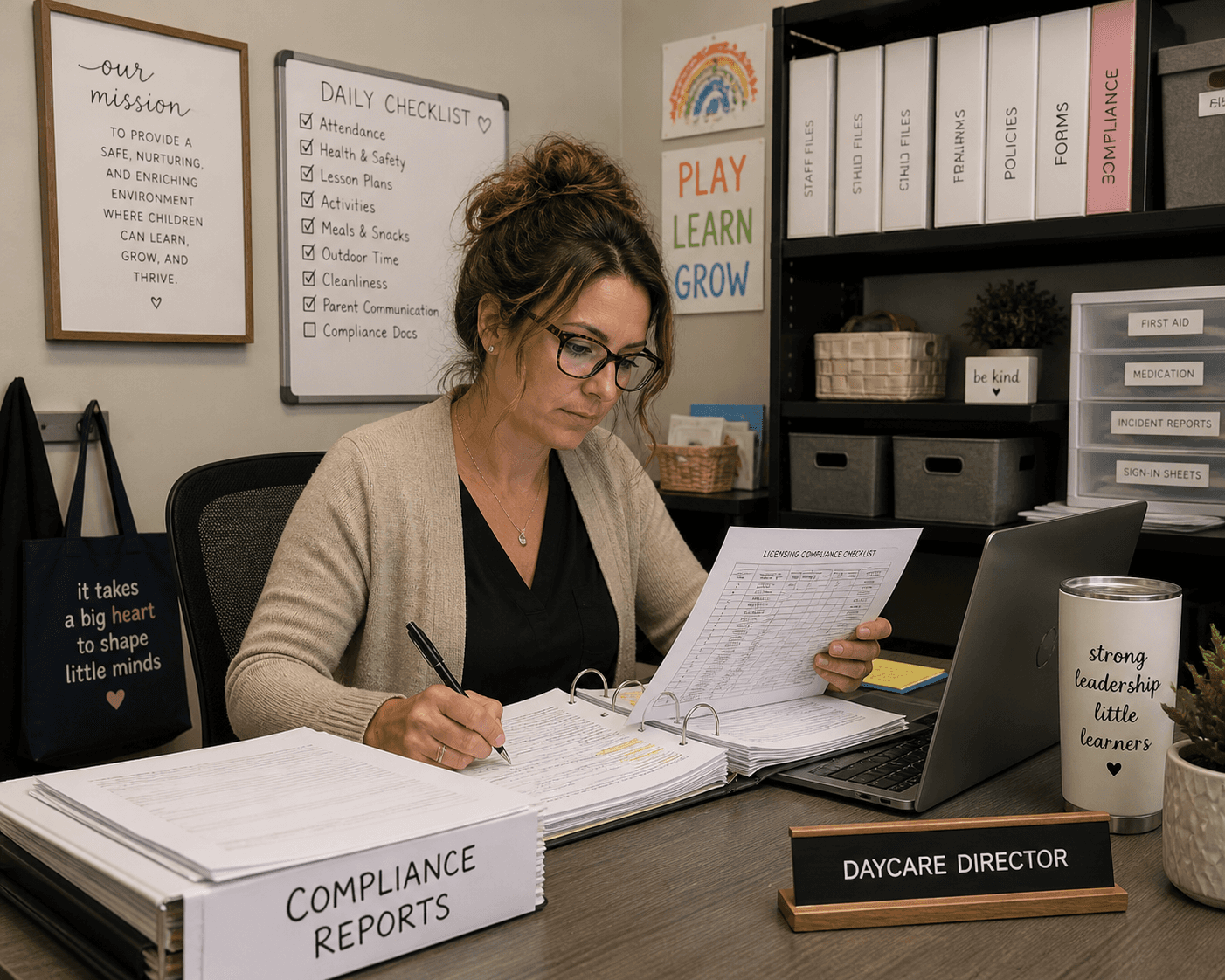
Conduct regular self-audits using your state’s CCDF plan and licensing checklist.
Maintain up-to-date policies and train all staff (including volunteers) on these topics.
Prepare for unannounced inspections and monitoring visits. Document everything—ratios, attendance, incidents.
Implement daily ratio logs and ensure adequate staffing during transitions, meals, or absences.
Comprehensive and compliant child care management software such as Playground can help you automate these efforts. Book a free demo today.
Comprehensive checks (state/federal criminal history, child abuse/neglect registry, sex offender registry) are required every 5 years for all staff, directors, volunteers, and certain household members in family/group care. This is likely already a part of your process for vetting and hiring qualified staff.
Directors and staff must meet state qualification requirements (which vary; some states specify director training/experience) and complete health and safety training. Ongoing professional development is emphasized, with quality funds supporting it.
Track and document pre-service and annual training hours (e.g., Pediatric CPR/First Aid, CCDBG-specific topics).
Leverage CCDF quality funds for staff credentials, Child Development Associate (CDA) programs, or director leadership training.
Develop a professional development plan tied to your Quality Rating and Improvement System (QRIS) if applicable – this can lead to higher reimbursement rates.
Directors manage subsidy enrollment, billing, and payments. States must set payment rates sufficient for equal access, often targeting the 50th to 75th percentile of market rates. These rates may only make sense for certain child care businesses under certain financial circumstances, depending on the demand for child care in the area, number of available enrollment slots, staffing ratios, and other factors. You’ll want to make sure you understand the nuances of all the payment policies that could impact your business, such as applicable absence and holiday pay, and time expectations on reimbursement.
If you have determined that CCDBG participation is the right move for your family- or center-based child care, you must have certain information ready to apply.
You can typically apply through your state licensing department’s online portal or designated office. Common requirements for submission include:
IRS Form W-9 and tax documentation
Proof of licensing
Program policies (ratios, attendance tracking, etc.)
Provider agreement or contract outlining payment rates, copay collection, attendance reporting, and compliance obligations
Rate information. Your private-pay rates may be requested for market comparison.
After you apply, you should expect an initial on-site review focused on the health and safety of your facility and operation, including record-keeping. You will receive a designated provider ID once you are approved for CCDBG subsidies and granted access to the state’s associated payment and attendance systems.
Actionable tip: Get ahead of process and document organization for CCDBG and other programs with the Playground app. Book a free demo to see how this software can help your business, from compliance reports to marketing to new families.
In addition to providing funding for low-income families to send their children to third-party child care programs, the CCDBG helps shape the regulatory environment and quality expectations for child care programs. For directors, proactive compliance, strategic use of quality resources, and strong business practices turn these requirements into opportunities for program excellence, staff retention, and better outcomes for children and families. However, it is important to evaluate whether CCDBG participation is right for your child care businesses’ goals and circumstances.
The Child Care and Development Block Grant may help child care directors expand their business to serve more families, but you’ll want to carefully consider whether participation is the right choice for your business. If so, you’ll have to make sure your business meets the qualifications and then apply to participate.
The Child Care and Development Block Grant (CCDBG) is the legislative backing that provides the majority of capital resources for the Child Care and Development Fund (CCDF). This is the primary federal program supporting child care subsidies for low-income working families as well as child care quality improvements across the U.S. The program currently serves about 1.3 million children monthly, spread across approximately 797,000 families.
For child care center directors, understanding CCDBG is essential to evaluating the cost-benefit analysis for your circumstances. CCDBG participation means you will integrate your business with the program's standards for operational success, regulatory compliance, financial stability, and delivering high-quality care, in addition to your state’s requirements to these ends. For the right child care businesses, the CCDBG can open up a whole new market of potential clients and possibilities.
Looking for ways to quickly improve your business efficiency and improve your bottom line? Book a free demo today to see how the Playground app can help.
The Child Care and Development Block Grant (CCDBG) Act of 1990 authorizes discretionary funding to states, territories, and tribes. These funds combine with resources from the Child Care Entitlement to States (CCES) to form the Child Care and Development Fund (CCDF). Lead agencies – usually state departments of health, human services, or education – administer the program.
The core purposes of the CCDBG Act include:
Helping low-income families afford child care while parents work, attend school, or train for jobs
Improving the quality and supply of child care
Promoting parental choice and consumer education
Enhancing child development and school readiness
The Child Care and Development Block Grant (CCDBG) was last comprehensively reauthorized in 2014. Since then, the program has operated primarily through annual appropriations and extensions, with incremental policy updates through federal rules and state plans. As of mid-2026, full reauthorization remains pending. Currently in the Senate, the Child Care Modernization Act, S.2828, sponsored by Senator Deb Fischer (R-Neb), would reauthorize the CCDBG program for the fiscal years 2026–2030.
FY2026 CCDBG discretionary funding is approximately $8.83 billion, with total CCDF around $12.38 billion. The amount of funding changes each year, with both CCDBG and mandatory CCES money comprising the full CCDF fund. Additionally, average funding per child depends on what state you are in.
To qualify for subsidies through the CCDBG, children must generally be under 13, with family income at or below 85% of state median income (SMI), assets under $1 million, and parents working or training. In some cases, exceptions can be made to these rules. And states have flexibility in setting eligibility, copayments – generally capped around 7% of income under recent rules – and provider payments. Multiple children in the same family may qualify for funding. Payments may be made through vouchers, certificates, or direct grant contracts.
Home-based, center-based and multi-site child care businesses are all candidates for CCDBG participation. To accept CCDBG subsidies via CCDF funds, providers must meet state licensing and regulation, as well as federal health and safety standards. Non-compliance risks losing subsidy eligibility, funding, or licensing.
Lead agencies must enforce licensing (with possible exemptions for small providers) and specific health/safety standards in areas like:
Prevention/control of infectious diseases.
Safe sleep practices.
Medication administration.
Emergency preparedness.
Building/premises safety.
Handling hazardous materials.
Conduct regular self-audits using your state’s CCDF plan and licensing checklist.
Maintain up-to-date policies and train all staff (including volunteers) on these topics.
Prepare for unannounced inspections and monitoring visits. Document everything—ratios, attendance, incidents.
Implement daily ratio logs and ensure adequate staffing during transitions, meals, or absences.
Comprehensive and compliant child care management software such as Playground can help you automate these efforts. Book a free demo today.
Comprehensive checks (state/federal criminal history, child abuse/neglect registry, sex offender registry) are required every 5 years for all staff, directors, volunteers, and certain household members in family/group care. This is likely already a part of your process for vetting and hiring qualified staff.
Directors and staff must meet state qualification requirements (which vary; some states specify director training/experience) and complete health and safety training. Ongoing professional development is emphasized, with quality funds supporting it.
Track and document pre-service and annual training hours (e.g., Pediatric CPR/First Aid, CCDBG-specific topics).
Leverage CCDF quality funds for staff credentials, Child Development Associate (CDA) programs, or director leadership training.
Develop a professional development plan tied to your Quality Rating and Improvement System (QRIS) if applicable – this can lead to higher reimbursement rates.
Directors manage subsidy enrollment, billing, and payments. States must set payment rates sufficient for equal access, often targeting the 50th to 75th percentile of market rates. These rates may only make sense for certain child care businesses under certain financial circumstances, depending on the demand for child care in the area, number of available enrollment slots, staffing ratios, and other factors. You’ll want to make sure you understand the nuances of all the payment policies that could impact your business, such as applicable absence and holiday pay, and time expectations on reimbursement.
If you have determined that CCDBG participation is the right move for your family- or center-based child care, you must have certain information ready to apply.
You can typically apply through your state licensing department’s online portal or designated office. Common requirements for submission include:
IRS Form W-9 and tax documentation
Proof of licensing
Program policies (ratios, attendance tracking, etc.)
Provider agreement or contract outlining payment rates, copay collection, attendance reporting, and compliance obligations
Rate information. Your private-pay rates may be requested for market comparison.
After you apply, you should expect an initial on-site review focused on the health and safety of your facility and operation, including record-keeping. You will receive a designated provider ID once you are approved for CCDBG subsidies and granted access to the state’s associated payment and attendance systems.
Actionable tip: Get ahead of process and document organization for CCDBG and other programs with the Playground app. Book a free demo to see how this software can help your business, from compliance reports to marketing to new families.
In addition to providing funding for low-income families to send their children to third-party child care programs, the CCDBG helps shape the regulatory environment and quality expectations for child care programs. For directors, proactive compliance, strategic use of quality resources, and strong business practices turn these requirements into opportunities for program excellence, staff retention, and better outcomes for children and families. However, it is important to evaluate whether CCDBG participation is right for your child care businesses’ goals and circumstances.
Jaclyn DeJohn, CFP®
Director of Content
Jaclyn is a data journalist and CFP™ who evaluates trends in the childcare industry and wider economy. She has previously worked for publications including CNET, SmartAsset, Bizfluent, AZCentral and Chron, and as a research consultant for NAPCO Media. Her insights are often cited by publications including Bloomberg, CNBC, Business Insider, Fox News, USA Today, The Hill and more. She has a bachelor’s degree in economics and mathematics from The College of New Jersey.
Date created

Nick Caughell
The Weston School
of directors say Playground saves them hours every week
Based on data from 5,000+ centers.




CACFP Reimbursement Rates Updated for July 1, 2026 – June 30, 2027
4 min read
Aug 11, 2026
Subsidy & Funding

QRIS Guide for Child Care Directors: State Contacts and Ratings Explained
8 min read
Jun 30, 2026
Subsidy & Funding

CACFP Meal Ideas by Age: Compliant Breakfasts, Lunches, Snacks, and Suppers for Infants Through Age 5
12 min read
Jun 23, 2026
Subsidy & Funding
