Last updated:
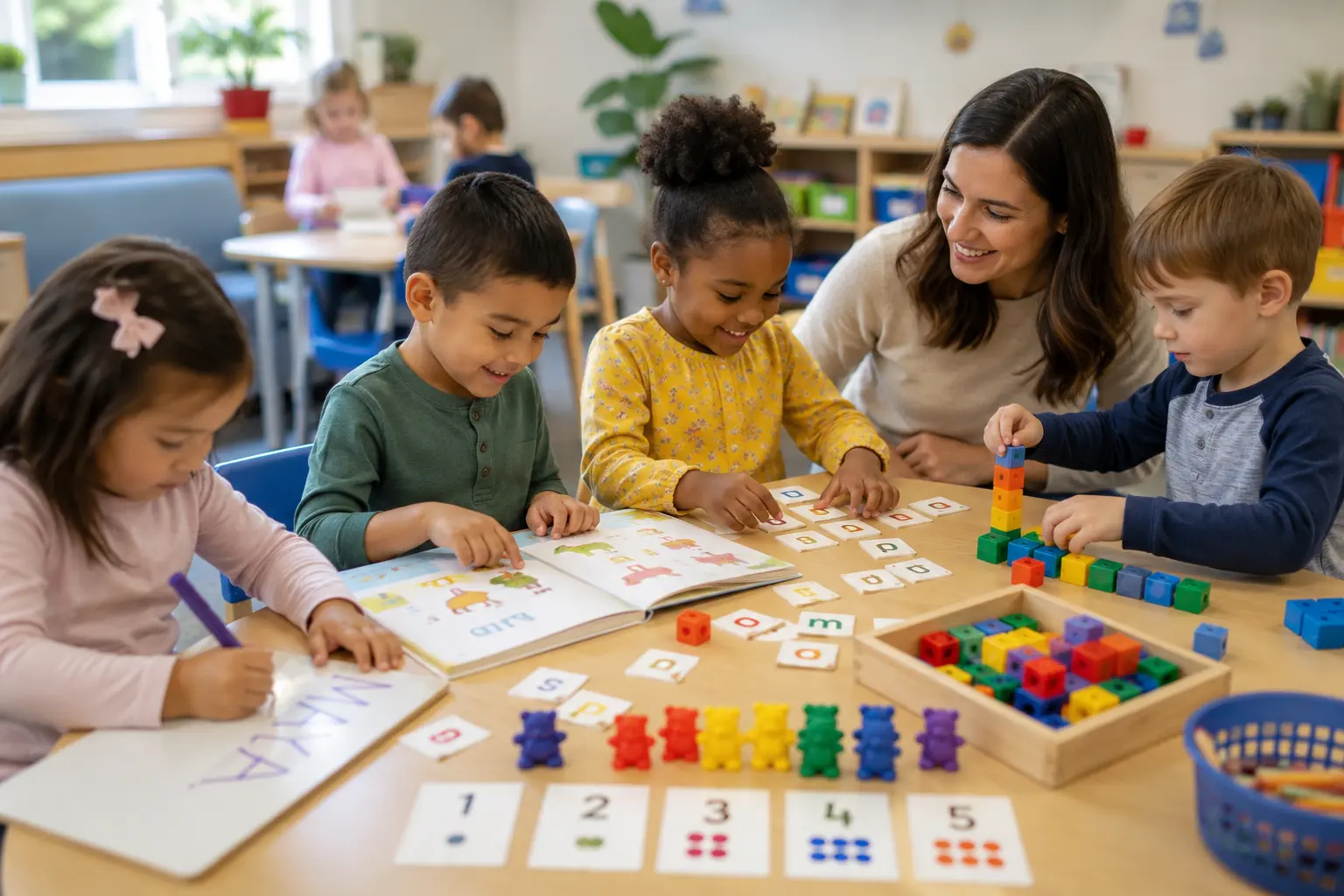
As the new school year approaches (or has already begun), many children are entering childcare and early learning centers for the first time. Many of them have never spent time with caretakers outside of their immediate family and because of the pandemic may not have socialized to the same degree as previous first-timers. These young children will be exposed to a lot of change at once - new adults, a new environment, new routines, and peers outside of their social group. Centers should consider all of these factors in working to make those transitions as positive as possible.
When creating an environment or routine for our youngest learners, staff should prioritize taking their life experiences into account. This may mean altering your physical environment or schedule to make new considerations for how best to care for the children who are entering your classroom this particular year. Being flexible and attuned to their individual needs and development, while also considering trends you see in the larger classroom will give the space to more easily make incremental changes along the way.
Here are a few ideas I’ve developed for creating a classroom attuned to children’s social-emotional needs this year and applicable to future classes:
1. Create a home-to-school connection
A child’s home is the most important place in the world for them — it is what they know best, and often where they feel safest physically and emotionally. Creating a physical connection to their home is important and can be done with a family picture velcroed on the wall, an all-about-me book that a child can look at with pictures of home, friends, and family, or even a special soft toy from home to hold on to for comfort.
What’s important about these ideas is that children connect to home through multiple senses In this case either through a combination of sight, touch, or even smell. Oftentimes sensory inputs help soothe children and help them internalize that their school is a safe place that cares about them, their home, and their family.
2. Engage in discussion about feelings
Young children have big feelings and oftentimes, changes in environment or structure activate related changes in their feelings. Young children channel their feelings and emotions into behavior as a form of communication about things that are worrisome or confusing to them. While they lack the language for it at first, engaging them to talk about feelings, both in the abstract as well as through sharing your own feelings as a teacher, children can learn words to help them express their feelings. Because it is normal to feel overwhelmed or confused by something new, talking about their experiences helps children normalize an experience and the feelings associated with it. Another tool for talking about feelings is through discussion of illustrations found in books. Using books about the beginning of school is a great way to jump-start a conversation about feelings by letting the students see themselves in characters and situations.
3. Create a realistic dramatic play area
The dramatic play area is the place in the classroom where children often work through real-life challenges, curiosities, and questions using their imagination and pretend play. Many schools have dramatic play areas set up like kitchens which are wonderful because of their familiarity. However, there are ways to expand upon this area to explore themes that are happening in children’s lives. The dramatic play area could be other familiar locations like school or a doctor’s office where children have some understanding of the roles and situations. It could be a house that has dolls or stuffed animals with miniature masks for them to put on and take off. It is important for these areas to be reflective of the sights and materials that have been exposed to so that exploration of these materials leads to reflections and deeper questions about the world around them.
4. Give them time
This year more than any in recent history, a meaningful percentage of children will not be used to new environments or even being around other similar-aged children. They need time to adapt to new spaces, new situations, and even time to explore new toys! When creating a classroom schedule it is helpful to create fewer rigid time blocks, and instead longer stretches of playtime both indoors and outdoors. This helps young children have smooth transitions and fully adapt to new environments and then still have time to explore and learn. In order to engage deeply in play, they first have to feel settled in their environment which includes the physical space, their teachers, and their peers. Because there is so much to get adjusted and readjusted to it is easier to get to a place of meaningful play the fewer transitions there are in a given day.You might reconsider scheduled science, music, and yoga all in the same day to reduce the stress of transitions. This year it is important to give young children a more fluid environment with more time to be with each other and learn the social and emotional skills that will help them thrive and adjust to life at school.
The new school year is going to be filled with lots of uncertainties, but teachers can use the classroom as a consistent place where students can feel safe and secure.
It is in their classroom where they can connect with students and students to one another, asking big questions, and exploring what it means to be part of a larger group. By centering social and emotional development, you can create a classroom that is responsive to children’s needs — individually and as a group. Every year there is a new group of children with their own unique set of experiences. This year we know children will enter our school differently from any other group prior, and we can use our knowledge of child development to create environments to support them having wonderful first-time school experiences.
Tamar Andrews, EdD, is an Associate Professor at UCLA's Graduate School of Education and Information Studies and Director of the Early Childhood Education Department at American Jewish University. With 30+ years in early childhood as a teacher and director, she led Temple Isaiah Preschool from 2003 to 2023, where she earned NAEYC accreditation and built an award-winning STEM program. Her work inspired her son Daniel to build Playground. She also teaches at UCLA Extension and Santa Monica College and speaks internationally on early childhood education.
Share this article