

How to Plan and Create a Preschool Curriculum That is Comprehensive and Engaging
How to Plan and Create a Preschool Curriculum That is Comprehensive and Engaging
How to Plan and Create a Preschool Curriculum That is Comprehensive and Engaging

Last updated:
Creating a successful early childhood education curriculum is a crucial task for any early preschool educator. A well-rounded and engaging curriculum can help preschoolers develop the skills and knowledge they need to succeed in school and beyond.
Here are some tips and ideas for planning and implementing a successful preschool curriculum:

Consider your goals and objectives while planning your preschool program
What do you hope to achieve with your curriculum? What skills and knowledge do you want to impart to your students?
Make a list of your goals and objectives and use them to guide you when planning your preschool curriculum.
Think about the age and developmental stage of the students you are planning the curriculum for
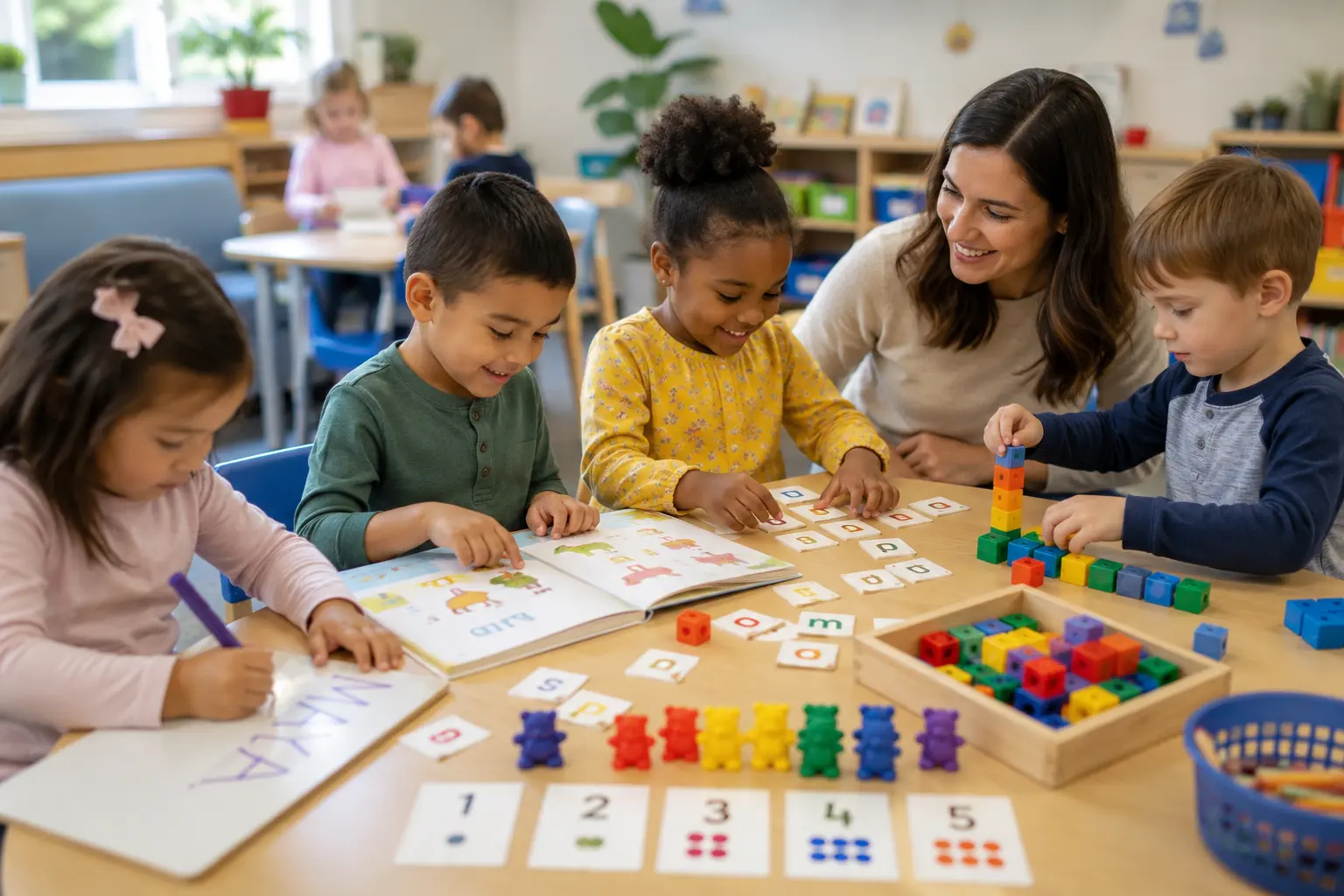
Preschool-age children are curious and energetic, and they learn best through hands-on, experiential activities.
Look for ways to incorporate sensory and kinesthetic experiences into your early childhood curriculum lessons.
Make sure your preschool curriculum includes a variety of teaching methods
This might include whole group instruction, small group work, one-on-one instruction, and independent exploration.
Incorporate play into your curriculum plans
Play is an essential part of a child’s development, and it can be a great way to teach new concepts and skills. Look for ways to integrate play-based activities into your curriculum plans.
Provide space for students to express themselves creatively
A good preschool teacher curriculum includes fun activities so kids get engaged while learning. This might include activities such as art, music, drama, or movement.
Make your early childhood curriculum lessons interactive and meaningful
Try to include activities in your early childhood development curriculum that not only engage your kids but are also meaningful to them. This might involve asking open-ended questions, incorporating real-life examples, and using props and manipulatives to help students understand new concepts.
Plan for assessment and evaluation
It’s important to regularly assess student progress to see what they have learned and identify areas that need further attention. Look for opportunities to gather data on student learning through observations, assessments, and other means.
Collaborate with parents and caregivers
Involving parents and caregivers when planning your curriculum can help ensure that your lessons align with the values and goals of the families in your program.
Incorporate social-emotional learning into your lessons
Social-emotional skills, such as self-regulation, empathy, and communication, are essential for success in school and in life. Look for ways to incorporate activities that help students develop these skills into your lesson plans.
Preschool Planning made simple
Don’t be afraid to adapt and change your curriculum as needed. No curriculum is perfect, and you may need to make changes as you go along.
Be open to feedback from students, parents, and colleagues, and be willing to make changes as needed to better meet the needs of your students.

By following these tips, you can create a successful preschool curriculum that helps your students learn and grow.
With careful planning and execution, you can create a fun and engaging learning environment that sets your students up for success!
Creating a successful early childhood education curriculum is a crucial task for any early preschool educator. A well-rounded and engaging curriculum can help preschoolers develop the skills and knowledge they need to succeed in school and beyond.
Here are some tips and ideas for planning and implementing a successful preschool curriculum:
Consider your goals and objectives while planning your preschool program
What do you hope to achieve with your curriculum? What skills and knowledge do you want to impart to your students?
Make a list of your goals and objectives and use them to guide you when planning your preschool curriculum.
Think about the age and developmental stage of the students you are planning the curriculum for
Preschool-age children are curious and energetic, and they learn best through hands-on, experiential activities.
Look for ways to incorporate sensory and kinesthetic experiences into your early childhood curriculum lessons.
Make sure your preschool curriculum includes a variety of teaching methods
This might include whole group instruction, small group work, one-on-one instruction, and independent exploration.
Incorporate play into your curriculum plans
Play is an essential part of a child’s development, and it can be a great way to teach new concepts and skills. Look for ways to integrate play-based activities into your curriculum plans.
Provide space for students to express themselves creatively
A good preschool teacher curriculum includes fun activities so kids get engaged while learning. This might include activities such as art, music, drama, or movement.
Make your early childhood curriculum lessons interactive and meaningful
Try to include activities in your early childhood development curriculum that not only engage your kids but are also meaningful to them. This might involve asking open-ended questions, incorporating real-life examples, and using props and manipulatives to help students understand new concepts.
Plan for assessment and evaluation
It’s important to regularly assess student progress to see what they have learned and identify areas that need further attention. Look for opportunities to gather data on student learning through observations, assessments, and other means.
Collaborate with parents and caregivers
Involving parents and caregivers when planning your curriculum can help ensure that your lessons align with the values and goals of the families in your program.
Incorporate social-emotional learning into your lessons
Social-emotional skills, such as self-regulation, empathy, and communication, are essential for success in school and in life. Look for ways to incorporate activities that help students develop these skills into your lesson plans.
Preschool Planning made simple
Don’t be afraid to adapt and change your curriculum as needed. No curriculum is perfect, and you may need to make changes as you go along.
Be open to feedback from students, parents, and colleagues, and be willing to make changes as needed to better meet the needs of your students.
By following these tips, you can create a successful preschool curriculum that helps your students learn and grow.
With careful planning and execution, you can create a fun and engaging learning environment that sets your students up for success!
Tamar Andrews, EdD, is an Associate Professor at UCLA's Graduate School of Education and Information Studies and Director of the Early Childhood Education Department at American Jewish University. With 30+ years in early childhood as a teacher and director, she led Temple Isaiah Preschool from 2003 to 2023, where she earned NAEYC accreditation and built an award-winning STEM program. Her work inspired her son Daniel to build Playground. She also teaches at UCLA Extension and Santa Monica College and speaks internationally on early childhood education.
Share this article
The highest rated child care software
Ratings and review counts from public app store listings, May 2026.

Book a demo and simplify every corner of your business.




Book a demo and simplify every corner of your business.
