11 Fun and Creative Fall Leaf Activities for Preschoolers, Toddlers, and Kindergarten Kids
11 Fun and Creative Fall Leaf Activities for Preschoolers, Toddlers, and Kindergarten Kids
11 Fun and Creative Fall Leaf Activities for Preschoolers, Toddlers, and Kindergarten Kids

As the leaves start to change color, fall is a natural time to bring nature into your classroom. Leaves are free, easy to find, and full of learning opportunities, from crafts and games to early science.
Below are 11 fall leaf activities for preschoolers and toddlers, each with notes on age fit, materials, learning goals, and safety, so directors and teachers can plan with confidence.
To integrate state-aligned curriculums into your program, book a demo with Playground to learn more about options available right in the app.
Before you start: safety and materials
Collect leaves from areas you know, and avoid poison ivy, poison oak, and treated lawns.
Skip wet or moldy leaves, and check enrollment records for allergies or asthma.
Do a quick tick check after time in grassy or wooded areas, and wash hands after outdoor play.
Keep small parts such as acorns, beads, and googly eyes away from children under 3.
Supervise scissors, string, and glue, and choose washable, non-toxic supplies.
Keep costs low with collected leaves, recycled paper, and supplies you already have.
11 preschool leaf activities to welcome fall
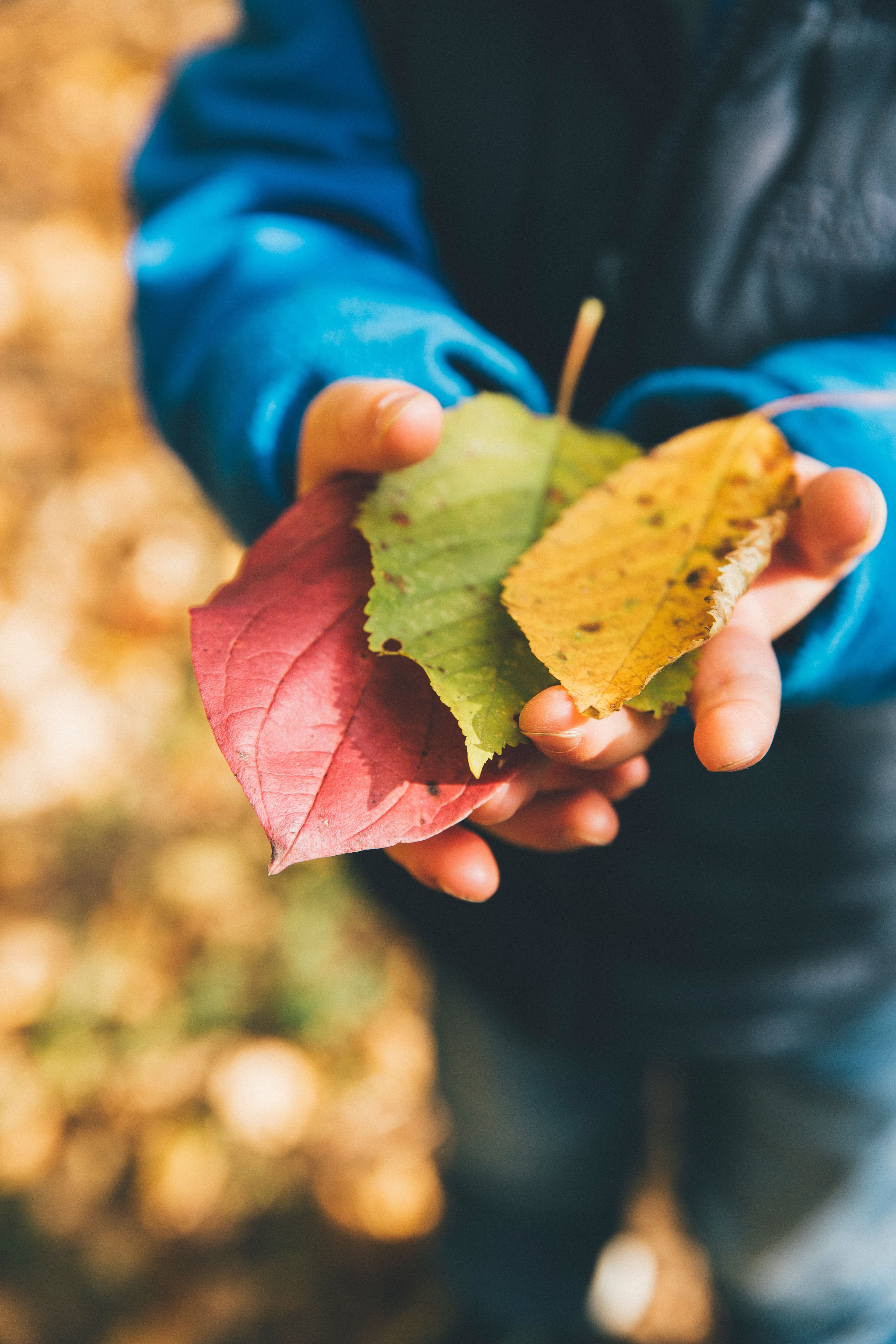
Leaf scavenger hunt
Give children clipboards and paper and invite them to hunt for leaves of different shapes, colors, and textures. Older preschoolers can tally what they find, while toddlers can match leaves to a simple picture card.
Ages and materials: Ages 2 to 5. Clipboards, paper, crayons, and a picture checklist of leaf shapes or colors.
Learning and safety: Builds observation skills and descriptive vocabulary. Walk the area first, steer clear of poison ivy and mushrooms, and do a quick tick check after grassy or wooded spots.
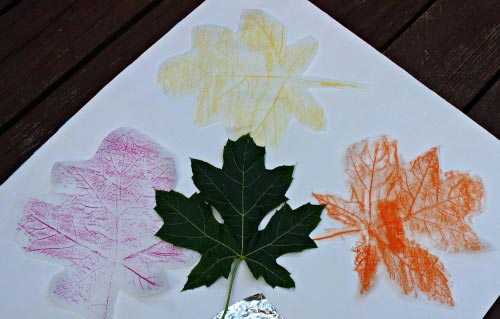
Leaf rubbings
Leaf rubbings are a classic fall lesson. Give children paper, crayons, and leaves of various sizes and textures. Have them place a leaf under the paper, vein side up, and rub with the side of a crayon to reveal the design. They can then color it and make it their own.
Ages and materials: Ages 3 to 5, or toddlers with help. Thin paper, peeled crayons, and fresh, flexible leaves. Taping the leaf and paper down keeps them from sliding.
Learning and safety: Strengthens hand muscles and shows leaf parts such as the veins and stem. Supervise peeled crayon pieces with children under 3.
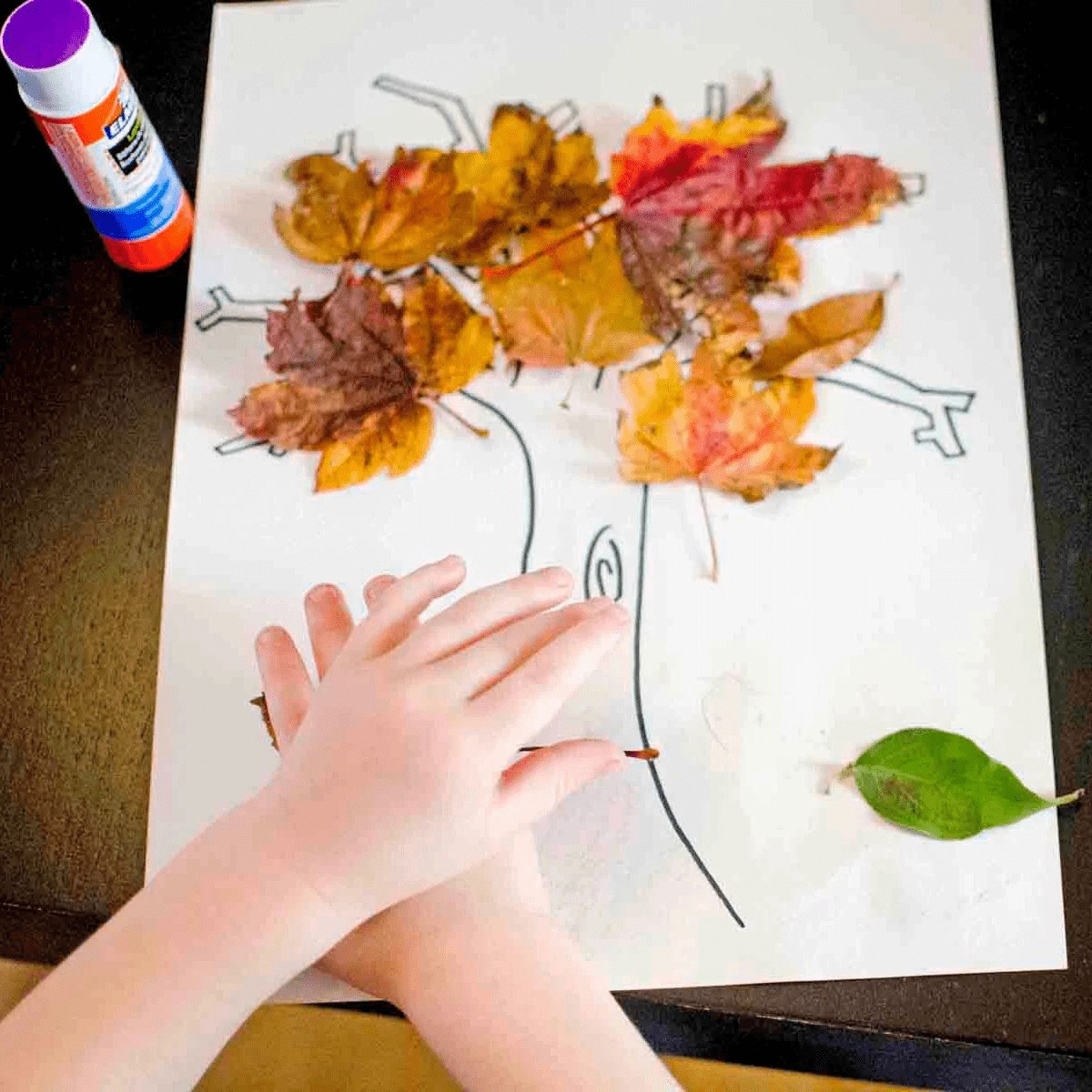
Leaf art
Fall leaves make beautiful art materials. Provide paper, glue, and leaves of all shapes, colors, and sizes. Children can cut out leaf shapes, create designs, make collages, or arrange leaves into shapes such as a tree.
Ages and materials: Ages 2 to 5. Glue sticks work best for toddlers, and preschoolers can use child-safe scissors with supervision. Collected leaves keep this activity nearly free.
Learning and safety: Encourages creativity and fine motor control. Pressed, dry leaves hold up better than crumbly ones, and small broken pieces should be cleared from toddler tables.
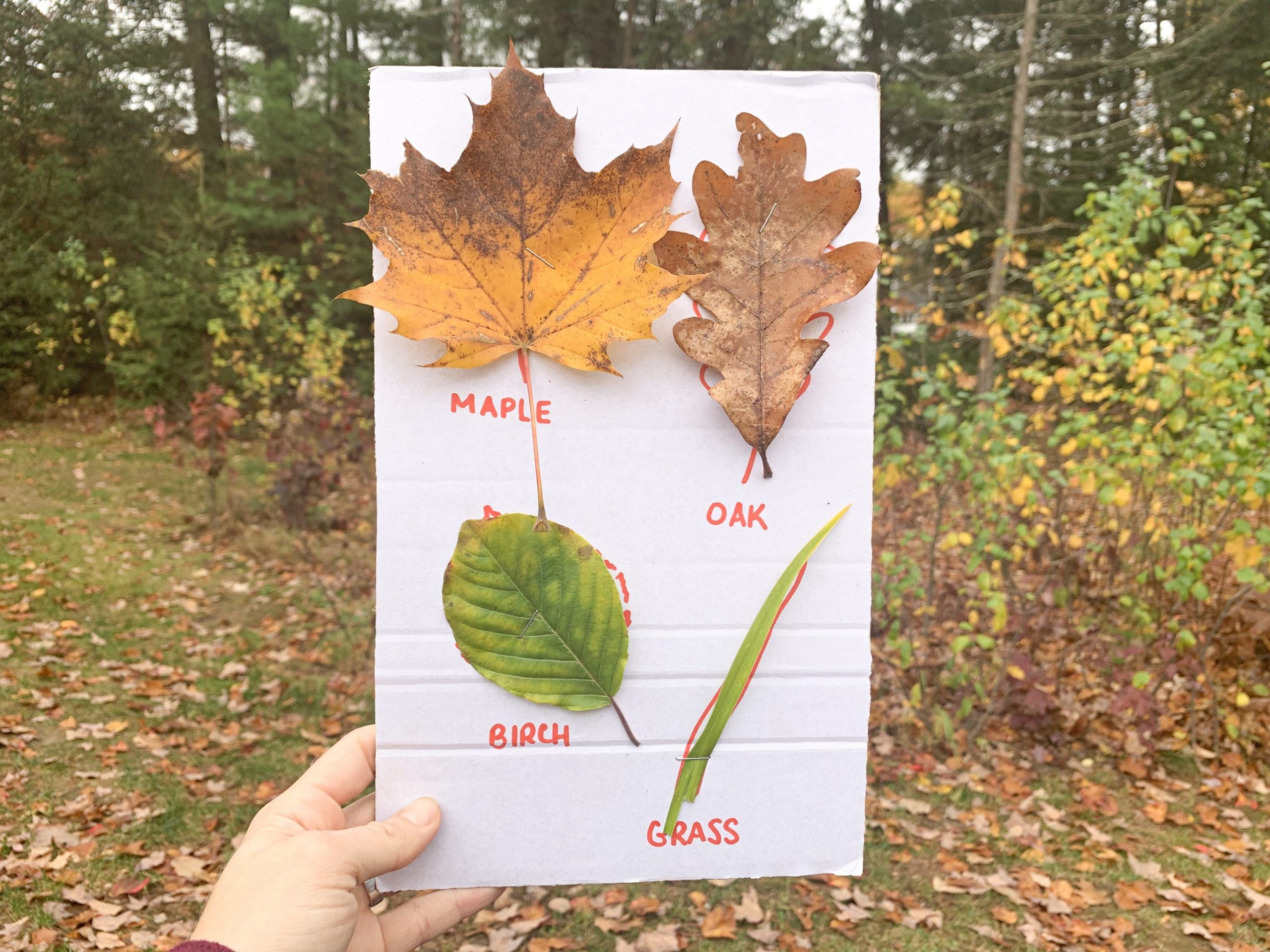
Leaf hide-and-seek and matching cards
Hide leaves around the classroom or play yard and have children find them. For a quieter table game, make leaf cards with different shapes, sizes, and colors for a matching game, or set out real leaves for a memory game where children find pairs of similar-looking leaves.
Ages and materials: Ages 2 to 5. Start toddlers with three or four pairs and build to eight or ten for pre-K. Laminated cards last all season.
Learning and safety: Builds memory, visual discrimination, and sorting skills. Keep hiding spots low and in sight of teachers.
Parts of a leaf handprint
Use a handprint as a template to learn the parts of a leaf. Trace each child’s hand onto heavy paper and cut it out. Then label each finger with a part of the leaf, such as the blade, veins, and stem, and compare it with a real leaf as you explain how leaves look and grow.
Ages and materials: Ages 4 to 5. Teachers can write labels for younger children. You need heavy paper, markers, child-safe scissors, and a few real leaves.
Learning and safety: Introduces early science vocabulary. Supervise scissor use closely.
Leaf garlands
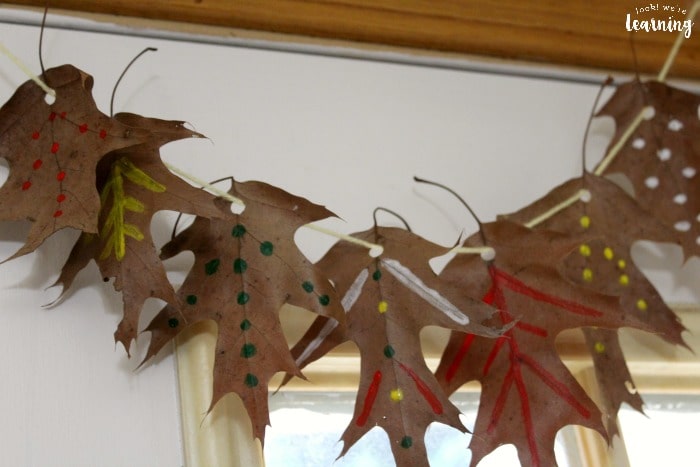
A classic leaf craft is to glue leaves onto string or construction paper to make a garland. Children can decorate the leaves with markers or paint before stringing them together. For more display ideas, see our fall classroom door ideas.
Ages and materials: Ages 3 to 5. Yarn with a taped end works like a needle, and an adult can punch the holes ahead of time.
Learning and safety: Practices threading, patterning, and color recognition. Hang finished garlands out of reach of young children, and supervise string use.
Leaf catch and tag
For a more physical activity, head outside on a breezy day and have children try to catch leaves as they fall from the trees. For a tag variation, the child who is “it” carries a leaf and passes it on when they tag a friend.
Ages and materials: Ages 2 to 5. No materials are needed beyond an open outdoor space.
Learning and safety: Builds gross motor skills, coordination, and turn-taking. Choose a clear area away from tree trunks, low branches, and uneven ground.
Leaf compost
Talk with children about what happens when leaves fall and go into the soil. Explain how leaves break down over time and add nutrients for new plants. You can start a small leaf compost bin outdoors, or a clear jar by the window, so children can watch the process. Our guide to STEM in early childhood education has more ideas for science play.
Ages and materials: Ages 3 to 5. A bin or clear jar, leaves, soil, and a small amount of water.
Learning and safety: Introduces life cycles and cause and effect. Provide gloves, and have children wash their hands after handling soil or compost.
Leaf scrapbook
Take a nature walk and collect fallen leaves. Have children draw the parts of a leaf, focusing on the shapes, sizes, and colors they find, then create a leaf scrapbook or collage to document their discoveries. Reading books and watching short videos about leaves and their life cycle extends the learning.
Ages and materials: Ages 3 to 5. Toddlers can press leaves onto sticky contact paper instead. Press leaves between paper in heavy books for a few days before gluing.
Learning and safety: Supports early literacy, drawing, and observation. Check the walking route ahead of time.
Leaf sensory bin
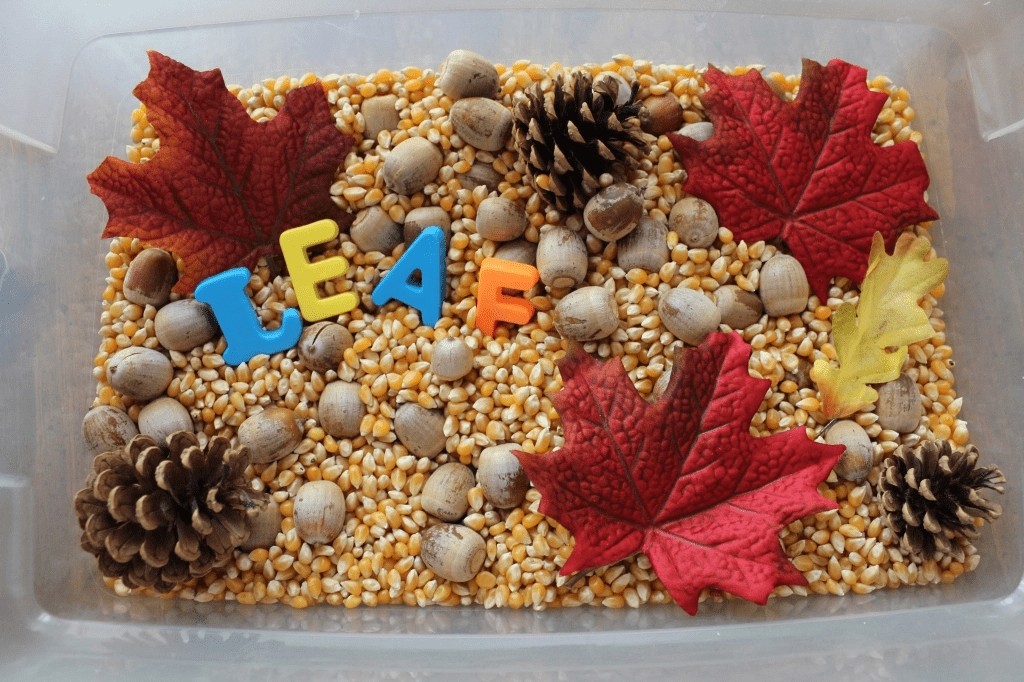
Gather leaves in different sizes, shapes, and textures and add them to a bin with other natural objects for children to explore. It is a good way to talk about colors, textures, and the different parts of leaves.
Ages and materials: Ages 2 to 5. Large leaves, fabric or artificial leaves, pinecones, and scoops work well.
Learning and safety: Builds sensory vocabulary. For children under 3, skip small fillers such as dried corn and acorns, which can be choking hazards, supervise closely, and check allergy records before adding natural materials.
Leaf people and animals
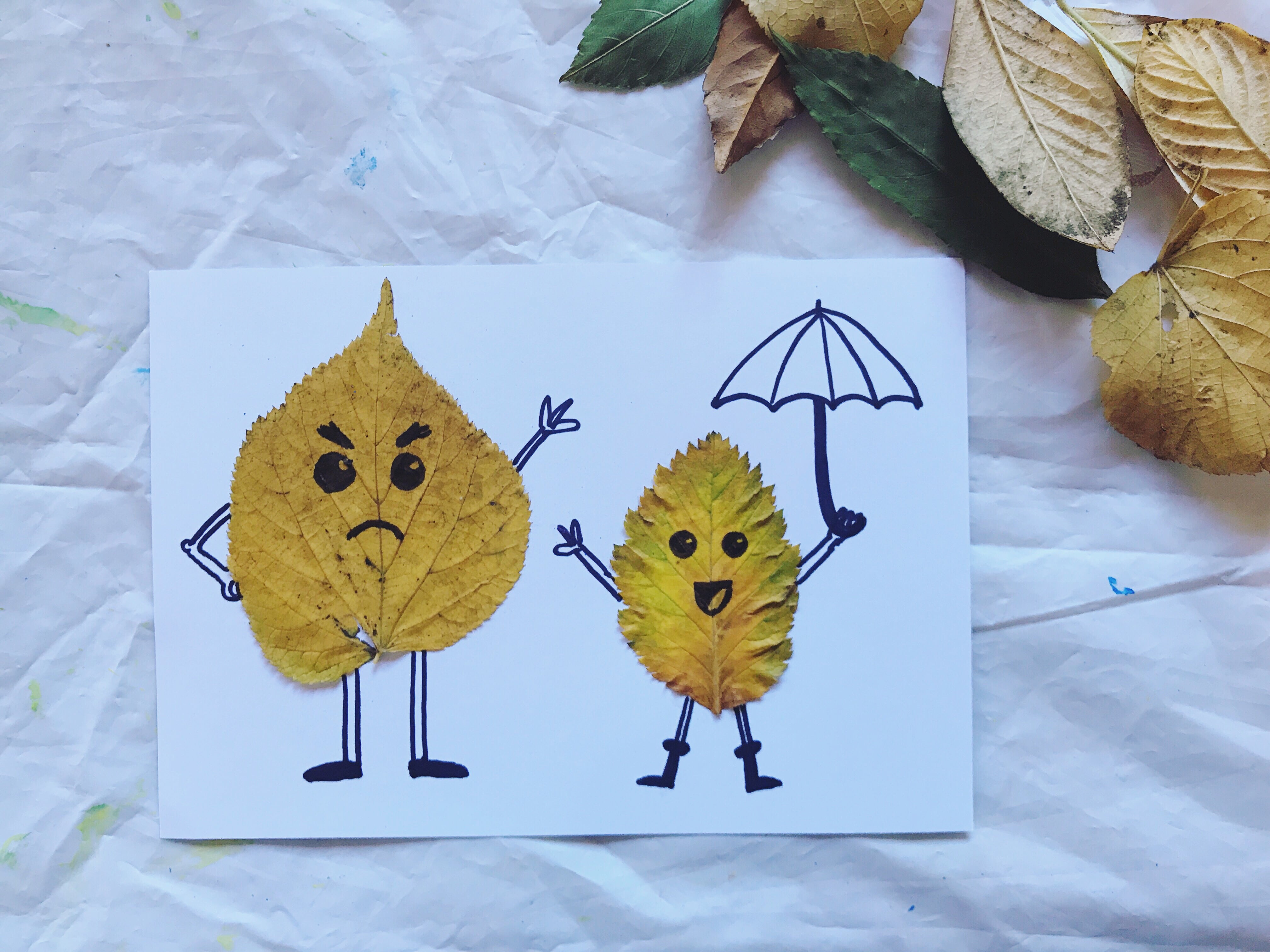
Making leaf people is a fun way to celebrate the season. Have children gather leaves and use them to make leaf people cutouts, decorations, or puppets. They can also turn leaves into leaf animals.
Ages and materials: Ages 2 to 5. Leaves, paper, glue, and markers. Googly eyes and other small parts are best for children over 3.
Learning and safety: Encourages storytelling and imaginative play. Children can name their characters and act out a short story.
Adapting leaf activities for toddlers and pre-K
Toddlers: Keep activities short and sensory. Offer large leaves, glue sticks, and chunky crayons, do the cutting for them, and keep small parts out of reach.
Preschool and pre-K: Add challenge with cutting, labeling leaf parts, counting and sorting collections, and simple graphs of leaf colors or shapes.
Fitting leaf activities into your fall plans
Leaf activities fit naturally into early fall, when leaves are changing and easy to collect. Pair them with October themes for preschool, carry nature walks and collages into your November lesson plans, and revisit them in your seasons lesson plans to compare how trees change throughout the year.
Involving families
Invite families to collect a few leaves on a walk at home and bring them in for sorting or art.
Share photos of finished crafts and outdoor play so families can talk about the activities at home.
Send home a simple leaf scavenger hunt list for weekend outings.
Key takeaways
Fall leaves are a free, flexible material for art, movement, science, and sensory play.
Match each activity to your age group, and keep small parts away from children under 3.
Check outdoor areas first, and build in tick checks and handwashing.
Involve families to extend the learning beyond the classroom.
Bring the season into your classroom
These fall leaf activities give children a hands-on way to explore the season, build vocabulary, and practice fine and gross motor skills. Pick a few that suit your group, repeat favorites, and let children’s curiosity guide the rest.
Learn more about on-demand, state-aligned curriculum options (including supplies) by booking a demo with Playground.
As the leaves start to change color, fall is a natural time to bring nature into your classroom. Leaves are free, easy to find, and full of learning opportunities, from crafts and games to early science.
Below are 11 fall leaf activities for preschoolers and toddlers, each with notes on age fit, materials, learning goals, and safety, so directors and teachers can plan with confidence.
To integrate state-aligned curriculums into your program, book a demo with Playground to learn more about options available right in the app.
Before you start: safety and materials
Collect leaves from areas you know, and avoid poison ivy, poison oak, and treated lawns.
Skip wet or moldy leaves, and check enrollment records for allergies or asthma.
Do a quick tick check after time in grassy or wooded areas, and wash hands after outdoor play.
Keep small parts such as acorns, beads, and googly eyes away from children under 3.
Supervise scissors, string, and glue, and choose washable, non-toxic supplies.
Keep costs low with collected leaves, recycled paper, and supplies you already have.
11 preschool leaf activities to welcome fall
Leaf scavenger hunt
Give children clipboards and paper and invite them to hunt for leaves of different shapes, colors, and textures. Older preschoolers can tally what they find, while toddlers can match leaves to a simple picture card.
Ages and materials: Ages 2 to 5. Clipboards, paper, crayons, and a picture checklist of leaf shapes or colors.
Learning and safety: Builds observation skills and descriptive vocabulary. Walk the area first, steer clear of poison ivy and mushrooms, and do a quick tick check after grassy or wooded spots.
Leaf rubbings
Leaf rubbings are a classic fall lesson. Give children paper, crayons, and leaves of various sizes and textures. Have them place a leaf under the paper, vein side up, and rub with the side of a crayon to reveal the design. They can then color it and make it their own.
Ages and materials: Ages 3 to 5, or toddlers with help. Thin paper, peeled crayons, and fresh, flexible leaves. Taping the leaf and paper down keeps them from sliding.
Learning and safety: Strengthens hand muscles and shows leaf parts such as the veins and stem. Supervise peeled crayon pieces with children under 3.
Leaf art
Fall leaves make beautiful art materials. Provide paper, glue, and leaves of all shapes, colors, and sizes. Children can cut out leaf shapes, create designs, make collages, or arrange leaves into shapes such as a tree.
Ages and materials: Ages 2 to 5. Glue sticks work best for toddlers, and preschoolers can use child-safe scissors with supervision. Collected leaves keep this activity nearly free.
Learning and safety: Encourages creativity and fine motor control. Pressed, dry leaves hold up better than crumbly ones, and small broken pieces should be cleared from toddler tables.
Leaf hide-and-seek and matching cards
Hide leaves around the classroom or play yard and have children find them. For a quieter table game, make leaf cards with different shapes, sizes, and colors for a matching game, or set out real leaves for a memory game where children find pairs of similar-looking leaves.
Ages and materials: Ages 2 to 5. Start toddlers with three or four pairs and build to eight or ten for pre-K. Laminated cards last all season.
Learning and safety: Builds memory, visual discrimination, and sorting skills. Keep hiding spots low and in sight of teachers.
Parts of a leaf handprint
Use a handprint as a template to learn the parts of a leaf. Trace each child’s hand onto heavy paper and cut it out. Then label each finger with a part of the leaf, such as the blade, veins, and stem, and compare it with a real leaf as you explain how leaves look and grow.
Ages and materials: Ages 4 to 5. Teachers can write labels for younger children. You need heavy paper, markers, child-safe scissors, and a few real leaves.
Learning and safety: Introduces early science vocabulary. Supervise scissor use closely.
Leaf garlands
A classic leaf craft is to glue leaves onto string or construction paper to make a garland. Children can decorate the leaves with markers or paint before stringing them together. For more display ideas, see our fall classroom door ideas.
Ages and materials: Ages 3 to 5. Yarn with a taped end works like a needle, and an adult can punch the holes ahead of time.
Learning and safety: Practices threading, patterning, and color recognition. Hang finished garlands out of reach of young children, and supervise string use.
Leaf catch and tag
For a more physical activity, head outside on a breezy day and have children try to catch leaves as they fall from the trees. For a tag variation, the child who is “it” carries a leaf and passes it on when they tag a friend.
Ages and materials: Ages 2 to 5. No materials are needed beyond an open outdoor space.
Learning and safety: Builds gross motor skills, coordination, and turn-taking. Choose a clear area away from tree trunks, low branches, and uneven ground.
Leaf compost
Talk with children about what happens when leaves fall and go into the soil. Explain how leaves break down over time and add nutrients for new plants. You can start a small leaf compost bin outdoors, or a clear jar by the window, so children can watch the process. Our guide to STEM in early childhood education has more ideas for science play.
Ages and materials: Ages 3 to 5. A bin or clear jar, leaves, soil, and a small amount of water.
Learning and safety: Introduces life cycles and cause and effect. Provide gloves, and have children wash their hands after handling soil or compost.
Leaf scrapbook
Take a nature walk and collect fallen leaves. Have children draw the parts of a leaf, focusing on the shapes, sizes, and colors they find, then create a leaf scrapbook or collage to document their discoveries. Reading books and watching short videos about leaves and their life cycle extends the learning.
Ages and materials: Ages 3 to 5. Toddlers can press leaves onto sticky contact paper instead. Press leaves between paper in heavy books for a few days before gluing.
Learning and safety: Supports early literacy, drawing, and observation. Check the walking route ahead of time.
Leaf sensory bin
Gather leaves in different sizes, shapes, and textures and add them to a bin with other natural objects for children to explore. It is a good way to talk about colors, textures, and the different parts of leaves.
Ages and materials: Ages 2 to 5. Large leaves, fabric or artificial leaves, pinecones, and scoops work well.
Learning and safety: Builds sensory vocabulary. For children under 3, skip small fillers such as dried corn and acorns, which can be choking hazards, supervise closely, and check allergy records before adding natural materials.
Leaf people and animals
Making leaf people is a fun way to celebrate the season. Have children gather leaves and use them to make leaf people cutouts, decorations, or puppets. They can also turn leaves into leaf animals.
Ages and materials: Ages 2 to 5. Leaves, paper, glue, and markers. Googly eyes and other small parts are best for children over 3.
Learning and safety: Encourages storytelling and imaginative play. Children can name their characters and act out a short story.
Adapting leaf activities for toddlers and pre-K
Toddlers: Keep activities short and sensory. Offer large leaves, glue sticks, and chunky crayons, do the cutting for them, and keep small parts out of reach.
Preschool and pre-K: Add challenge with cutting, labeling leaf parts, counting and sorting collections, and simple graphs of leaf colors or shapes.
Fitting leaf activities into your fall plans
Leaf activities fit naturally into early fall, when leaves are changing and easy to collect. Pair them with October themes for preschool, carry nature walks and collages into your November lesson plans, and revisit them in your seasons lesson plans to compare how trees change throughout the year.
Involving families
Invite families to collect a few leaves on a walk at home and bring them in for sorting or art.
Share photos of finished crafts and outdoor play so families can talk about the activities at home.
Send home a simple leaf scavenger hunt list for weekend outings.
Key takeaways
Fall leaves are a free, flexible material for art, movement, science, and sensory play.
Match each activity to your age group, and keep small parts away from children under 3.
Check outdoor areas first, and build in tick checks and handwashing.
Involve families to extend the learning beyond the classroom.
Bring the season into your classroom
These fall leaf activities give children a hands-on way to explore the season, build vocabulary, and practice fine and gross motor skills. Pick a few that suit your group, repeat favorites, and let children’s curiosity guide the rest.
Learn more about on-demand, state-aligned curriculum options (including supplies) by booking a demo with Playground.
Beny Mizrachi leads marketing at Playground from New York, where he runs go-to-market across content, paid and organic social, email, referrals, and strategic partnerships. He authors content on the Playground blog — including the comprehensive guide to creating a preschool marketing plan — and is dedicated to making it easier for child care operators to attract families, improve enrollment, and stand out in competitive markets.
Share this article
The highest rated child care software
Ratings and review counts from public app store listings, May 2026.

Book a demo and simplify every corner of your business.




Book a demo and simplify every corner of your business.