

Military Child Care Expansion Proposals in the 2027 NDAA: What Directors Need to Know
Military Child Care Expansion Proposals in the 2027 NDAA: What Directors Need to Know
Military Child Care Expansion Proposals in the 2027 NDAA: What Directors Need to Know

Last updated:
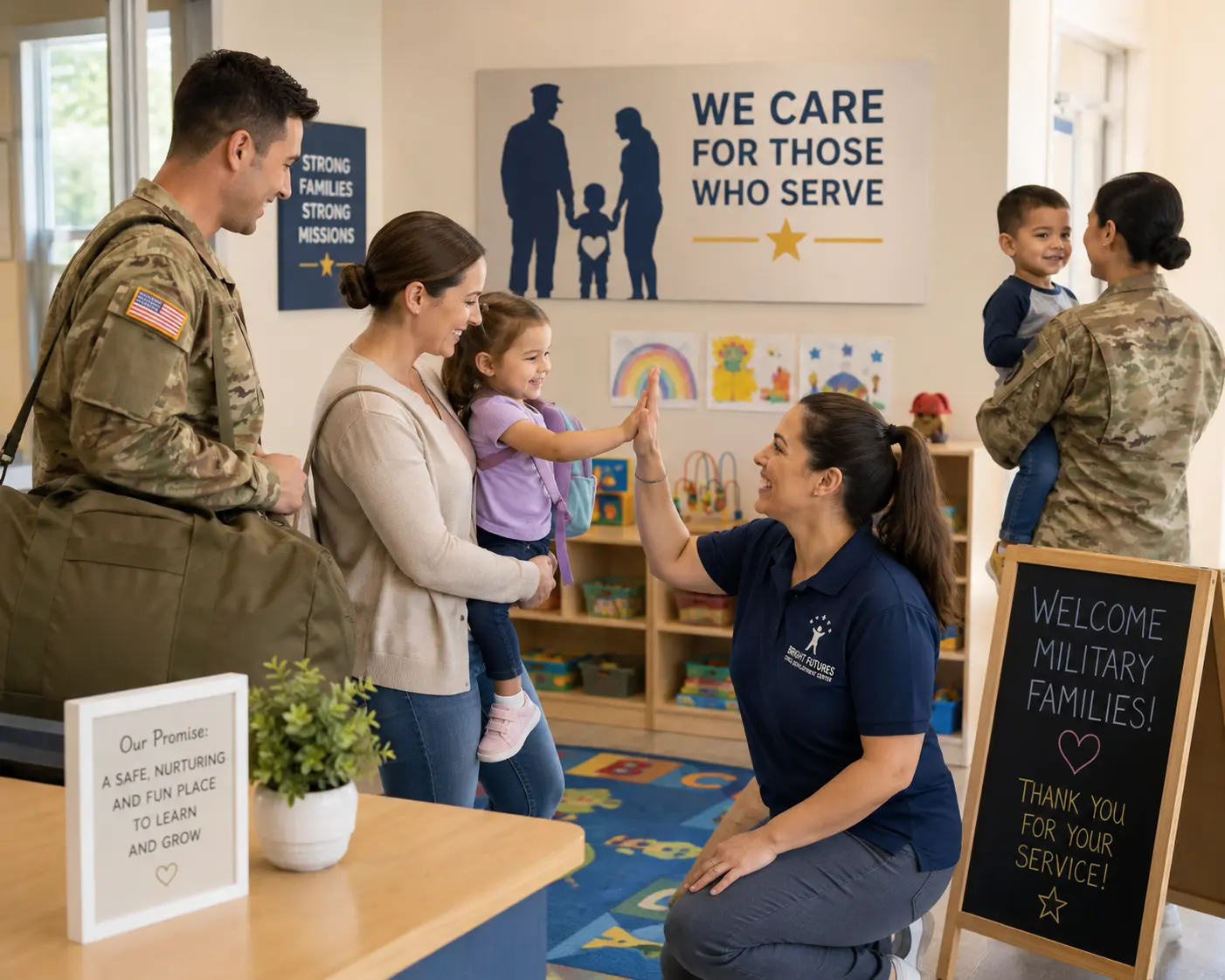
A recent development in federal defense policy is creating tangible expansion and revenue-growth opportunities for existing child care providers across the country. On July 6, 2026, a report detailed new proposals in the House and Senate drafts of the fiscal year 2027 National Defense Authorization Act (NDAA) aimed at addressing military families’ child care shortages.
While targeted at military readiness, these measures – particularly the House’s grant pilot – may potentially offer pathways for civilian providers to scale capacity with public funding support. By lowering the capital barriers to expansion, enabling new partnerships, and improving demand visibility, the proposals could help some providers add high-value infant and toddler spots, stabilize staffing, and tap into a reliable military family market. Here’s what child care directors need to know.
Looking for simple ways to streamline and grow your child care business? Book a free demo with Playground.
Why Military Child Care Matters to Everyone
Military families face unique challenges with child care, including frequent moves, deployments, and on-base versus off-base options. Long waitlists and high tuition costs are persistent issues that senior defense leaders have linked directly to recruitment and retention problems. While these proposals target military-specific programs – primarily Department of Defense (DoD) Child Development Centers – they address universal pain points in the child care industry: infant and toddler capacity shortages, staffing difficulties, and the need for better data-driven decision-making.
Successful models could influence future civilian funding streams, partnerships, or best practices, in addition to potentially adding enrollment and staffing opportunities for existing child care businesses.
3 key proposals in the 2027 NDAA drafts
1. Grants to expand infant and toddler care capacity
The House proposal includes a five-year pilot program where the Department of Defense could offer grants covering up to 75% of expansion costs for child care providers. Some applicable parameters would include:
At least half of any new spots created must serve infants and toddlers.
Priority goes to providers in areas with high child care costs or limited availability.
The Secretary of Defense could extend grants more broadly if needed.
Eligibility details (e.g., in-home providers vs. centers, on-base vs. off-base) are still being clarified. But this may be highly beneficial for child care providers as infant and toddler care is one of the most expensive and hardest-to-staff segments of the industry. A successful pilot could demonstrate a scalable model for public funding of expansions, potentially inspiring similar state or federal initiatives for civilian providers.
2. Innovative partnerships to boost staffing and capacity
Both chambers are exploring creative ways to increase spots without solely relying on traditional hiring. Cross-sector partnerships (e.g., with universities, local governments, or other agencies) can be powerful tools for solving staffing shortages and scaling capacity.
Senate proposal: Allow the DoD to staff military child development centers with teachers and personnel from other federal agencies. This could help reduce waitlists while providing more individualized attention for children.
House proposal: Support Intergovernmental Support Agreements (IGSAs) with public institutions, such as state universities or other government entities.
At least one real-world example is already being explored at Joint Base Langley-Eustis in Virginia, where they are looking at partnering with a state university to supplement on-base child care. Expected benefits include stabilized staffing, expanded operational capacity, and reduced waitlists.
Lawmakers are also requesting a report by March 2027 on how these agreements can help address shortages. Child care directors may want to consider exploring the viability of similar collaborations in their own communities, such as with colleges for student teachers, workforce development programs, or public facilities.
3. Greater data transparency and standardization
The Senate is pushing the DoD to standardize data collection and reporting across all military child care centers, workforce metrics, and waitlists, as they are currently fragmented by service branch. This would provide clearer insights into:
Staffing needs and financial aid utilization
Unmet demand for spots
Trends over time
Periodic reports on these trends and recommended solutions would also be required.
Better data leads to better decisions. Many civilian providers struggle with inconsistent tracking of waitlists, enrollment trends, and staffing. Book a free demo with Playground to see how you can solve these problems independent of government intervention.
The bottom line
The proposed military child care improvements in the 2027 NDAA represent a proactive approach to one of the most stubborn challenges in early care and education. While these are still proposals in draft legislation (i.e., not yet final law), they signal continued congressional attention to child care as a workforce and readiness issue. If enacted, successful pilots could lead to permanent programs or inspire broader federal or state funding. Emphasis on infant/toddler expansion could help alleviate a critical gap that affects families nationwide. And partnerships and data-focused approaches can offer practical, lower-cost strategies and insights that could help further improve child care services and their availability.
Whether your program serves military families directly or not, staying informed about these developments helps you anticipate trends, advocate effectively, and find innovative ways to grow.
A recent development in federal defense policy is creating tangible expansion and revenue-growth opportunities for existing child care providers across the country. On July 6, 2026, a report detailed new proposals in the House and Senate drafts of the fiscal year 2027 National Defense Authorization Act (NDAA) aimed at addressing military families’ child care shortages.
While targeted at military readiness, these measures – particularly the House’s grant pilot – may potentially offer pathways for civilian providers to scale capacity with public funding support. By lowering the capital barriers to expansion, enabling new partnerships, and improving demand visibility, the proposals could help some providers add high-value infant and toddler spots, stabilize staffing, and tap into a reliable military family market. Here’s what child care directors need to know.
Looking for simple ways to streamline and grow your child care business? Book a free demo with Playground.
Why Military Child Care Matters to Everyone
Military families face unique challenges with child care, including frequent moves, deployments, and on-base versus off-base options. Long waitlists and high tuition costs are persistent issues that senior defense leaders have linked directly to recruitment and retention problems. While these proposals target military-specific programs – primarily Department of Defense (DoD) Child Development Centers – they address universal pain points in the child care industry: infant and toddler capacity shortages, staffing difficulties, and the need for better data-driven decision-making.
Successful models could influence future civilian funding streams, partnerships, or best practices, in addition to potentially adding enrollment and staffing opportunities for existing child care businesses.
3 key proposals in the 2027 NDAA drafts
1. Grants to expand infant and toddler care capacity
The House proposal includes a five-year pilot program where the Department of Defense could offer grants covering up to 75% of expansion costs for child care providers. Some applicable parameters would include:
At least half of any new spots created must serve infants and toddlers.
Priority goes to providers in areas with high child care costs or limited availability.
The Secretary of Defense could extend grants more broadly if needed.
Eligibility details (e.g., in-home providers vs. centers, on-base vs. off-base) are still being clarified. But this may be highly beneficial for child care providers as infant and toddler care is one of the most expensive and hardest-to-staff segments of the industry. A successful pilot could demonstrate a scalable model for public funding of expansions, potentially inspiring similar state or federal initiatives for civilian providers.
2. Innovative partnerships to boost staffing and capacity
Both chambers are exploring creative ways to increase spots without solely relying on traditional hiring. Cross-sector partnerships (e.g., with universities, local governments, or other agencies) can be powerful tools for solving staffing shortages and scaling capacity.
Senate proposal: Allow the DoD to staff military child development centers with teachers and personnel from other federal agencies. This could help reduce waitlists while providing more individualized attention for children.
House proposal: Support Intergovernmental Support Agreements (IGSAs) with public institutions, such as state universities or other government entities.
At least one real-world example is already being explored at Joint Base Langley-Eustis in Virginia, where they are looking at partnering with a state university to supplement on-base child care. Expected benefits include stabilized staffing, expanded operational capacity, and reduced waitlists.
Lawmakers are also requesting a report by March 2027 on how these agreements can help address shortages. Child care directors may want to consider exploring the viability of similar collaborations in their own communities, such as with colleges for student teachers, workforce development programs, or public facilities.
3. Greater data transparency and standardization
The Senate is pushing the DoD to standardize data collection and reporting across all military child care centers, workforce metrics, and waitlists, as they are currently fragmented by service branch. This would provide clearer insights into:
Staffing needs and financial aid utilization
Unmet demand for spots
Trends over time
Periodic reports on these trends and recommended solutions would also be required.
Better data leads to better decisions. Many civilian providers struggle with inconsistent tracking of waitlists, enrollment trends, and staffing. Book a free demo with Playground to see how you can solve these problems independent of government intervention.
The bottom line
The proposed military child care improvements in the 2027 NDAA represent a proactive approach to one of the most stubborn challenges in early care and education. While these are still proposals in draft legislation (i.e., not yet final law), they signal continued congressional attention to child care as a workforce and readiness issue. If enacted, successful pilots could lead to permanent programs or inspire broader federal or state funding. Emphasis on infant/toddler expansion could help alleviate a critical gap that affects families nationwide. And partnerships and data-focused approaches can offer practical, lower-cost strategies and insights that could help further improve child care services and their availability.
Whether your program serves military families directly or not, staying informed about these developments helps you anticipate trends, advocate effectively, and find innovative ways to grow.
Jaclyn is a data journalist and CFP™ who evaluates trends in the childcare industry and wider economy. She has previously worked for publications including CNET, SmartAsset, Bizfluent, AZCentral and Chron, and as a research consultant for NAPCO Media. Her insights are often cited by publications including Bloomberg, CNBC, Business Insider, Fox News, USA Today, The Hill and more. She has a bachelor’s degree in economics and mathematics from The College of New Jersey.
Share this article
The highest rated child care software
Ratings and review counts from public app store listings, May 2026.



Book a demo and simplify every corner of your business.




Book a demo and simplify every corner of your business.
