

Child Care Record Retention Guide: What to Store, How Long, and Why Paper Costs More
7 min read
Aug 11, 2026
Operations

Daniel McDonnell
Daniel McDonnell
5 min read
Last updated
There’s nothing more important than keeping the children in your care safe. You’ve probably thought a lot about how to protect them from everyday accidents, but what about bigger security concerns? These days, safeguarding a daycare means thinking about everything from managing access to the facility to ensuring your team is ready for anything.
The idea of an intruder, a security breach, or even a weather emergency is unsettling, to say the least. What’s even more concerning though, is not having an action plan in place for those worst-case scenarios. In fact, that’s where peace of mind begins when learning how to run a daycare. Here, we’ll explore simple, actionable steps for you to strengthen security at your daycare center, so you can rest assured that your staff is prepared to handle any “what if” scenario.
In a daycare setting, security risks can feel like they’re lurking around every corner, and it’s enough to make any provider think, “Is my center truly secure?” Understanding the primary threats is the first step in assessing and bolstering your daycare’s security. Here are the top security risks to be aware of:
A top concern is the possibility of an unauthorized person entering the facility. This could be an unfamiliar visitor or even someone with harmful intent. We’ve all heard unsettling stories, and while they’re rare, the peace of mind that comes from knowing your center has restricted access is priceless.
Daycare centers need secure, surveilled entry points. Are you confident in your visitor verification process? A simple sign-in sheet isn’t enough anymore. This is your daycare’s “front line” against external threats. While this may sound a bit overboard, a lack of robust checks can leave your facility vulnerable to uninvited guests.

Playground’s check in feature means every visitor to your center—parent or not—records their visit via QR code.
Fires, severe weather, and emergency situations—these require quick action. Do you have clear protocols and does your staff feel prepared to act on them? Knowing you’re prepared for emergencies can make the difference between a minor incident and a tragedy.
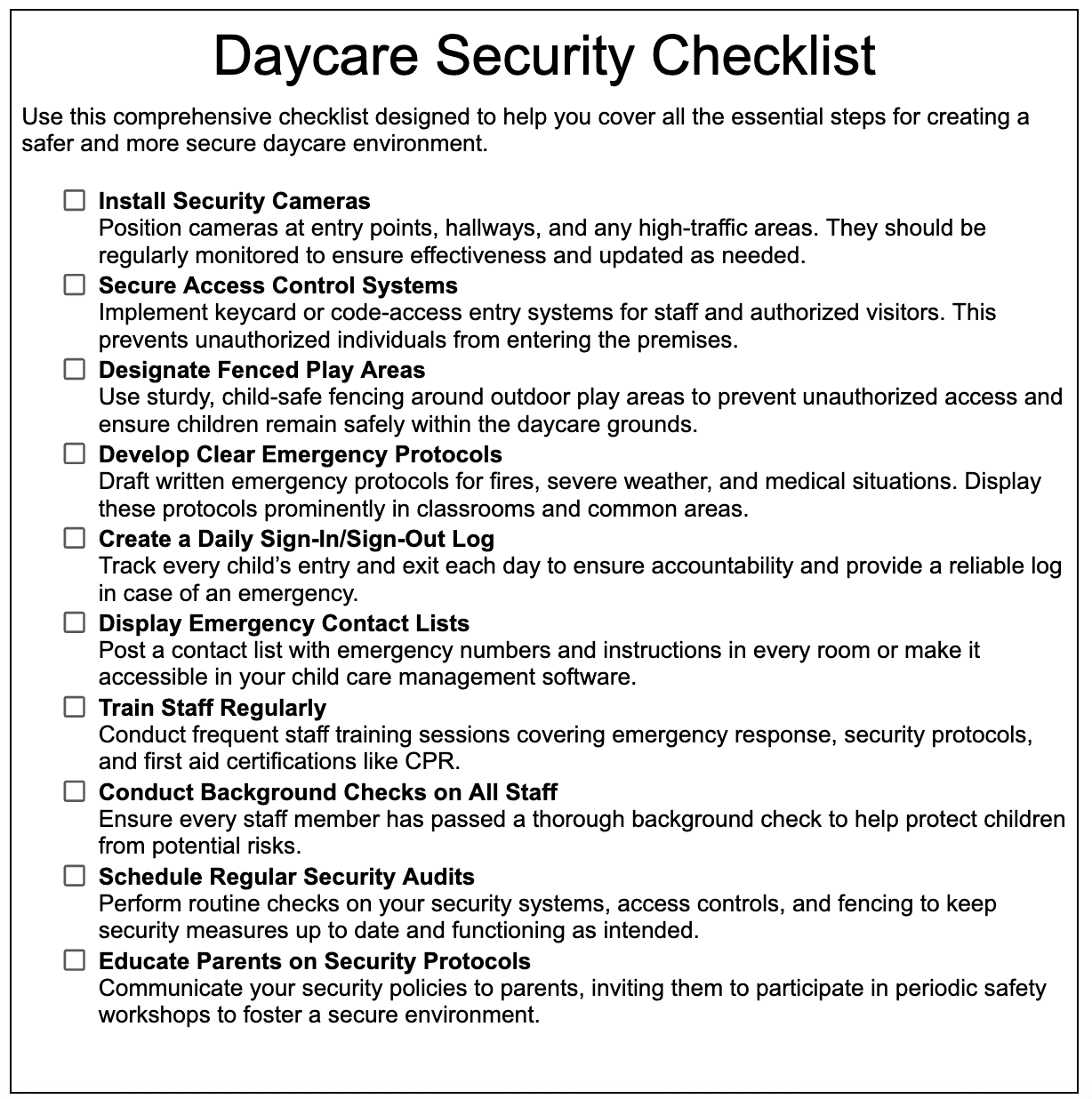
Your daycare center should be a secure environment where children can grow and parents can know for sure that they’re safe. That’s why we’ve developed a comprehensive security checklist to help you understand, implement, and maintain best practices for protecting your daycare.
Teamwork is your biggest asset in creating a safe daycare. Staff training and active parent involvement are your most powerful tools to create a secure environment where children can learn. Here’s a breakdown of what you can do to prepare your staff and get parents on board.
Effective training is an ongoing commitment. Regular security drills keep safety top of mind, ensuring that staff knows exactly what to do in any situation. First aid certifications, like CPR, are essential. Also, workshops on updated safety practices and security protocols allow your team to stay current on the best ways to keep children safe.
The goal is to have every procedure so well-rehearsed, everyone moves with calm and purpose! A clear set of emergency response guidelines, covering everything from natural disasters to minor incidents, helps avoid confusion. Staff should know where to go, who to call, and how to account for every child in an emergency. Consider creating a “go-to” guide for staff so everyone is equipped to handle emergencies.
Parents are your partners in safety. Clearly communicating your center’s safety protocols gives them confidence, and creates a chance to engage and involve them. Send out monthly newsletters or hold workshops where parents can learn about your emergency procedures. You could even invite them to suggest ideas for improving security to make them feel like valued contributors to the community.
Creating a safe and secure daycare is more than just checking off boxes—it requires building a foundation of trust with families. One way to do this is through thorough, deliberate compliance with your local regulations. Here are the key regulatory areas that you should know as a daycare provider:
No matter where you’re located, you’re legally bound to a complex web of local, state, and federal regulations, which are unique to your area. By reviewing these rules, you can get a precise look at facility access requirements, emergency protocols, child-to-staff ratios, and more. Failing to comply can lead to penalties, and worse, may jeopardize the safety of the children in your care. Many states provide resources and guidelines for childcare facilities, so check your local licensing office for the latest requirements.
Hiring trustworthy, qualified staff members is of the utmost importance. This process starts with comprehensive background checks that screen for any history of criminal activity, particularly offenses related to children. Many states require these checks by law, but if not, you should go above and beyond with thorough screenings to reinforce your center’s commitment to security.
To make compliance easier, we’ve gathered some helpful resources for you to reference:
National Database: Visit Child Care Aware for a database of state-by-state licensing information.
Federal Guidelines: The U.S. Department of Health & Human Services offers guidelines and resources on child welfare, including background check requirements.
Local Contacts: Check with your state’s department of health or children and family services for additional resources specific to your location.
Keeping children safe in daycare is an ongoing commitment to staying proactive and prepared. Each step you take, from installing security systems to training staff and involving parents, builds a stronger, safer environment. Through preventive measures and openness to adapt, you’ll create a space where kids can explore and parents can feel at ease.
There’s nothing more important than keeping the children in your care safe. You’ve probably thought a lot about how to protect them from everyday accidents, but what about bigger security concerns? These days, safeguarding a daycare means thinking about everything from managing access to the facility to ensuring your team is ready for anything.
The idea of an intruder, a security breach, or even a weather emergency is unsettling, to say the least. What’s even more concerning though, is not having an action plan in place for those worst-case scenarios. In fact, that’s where peace of mind begins when learning how to run a daycare. Here, we’ll explore simple, actionable steps for you to strengthen security at your daycare center, so you can rest assured that your staff is prepared to handle any “what if” scenario.
In a daycare setting, security risks can feel like they’re lurking around every corner, and it’s enough to make any provider think, “Is my center truly secure?” Understanding the primary threats is the first step in assessing and bolstering your daycare’s security. Here are the top security risks to be aware of:
A top concern is the possibility of an unauthorized person entering the facility. This could be an unfamiliar visitor or even someone with harmful intent. We’ve all heard unsettling stories, and while they’re rare, the peace of mind that comes from knowing your center has restricted access is priceless.
Daycare centers need secure, surveilled entry points. Are you confident in your visitor verification process? A simple sign-in sheet isn’t enough anymore. This is your daycare’s “front line” against external threats. While this may sound a bit overboard, a lack of robust checks can leave your facility vulnerable to uninvited guests.
Playground’s check in feature means every visitor to your center—parent or not—records their visit via QR code.
Fires, severe weather, and emergency situations—these require quick action. Do you have clear protocols and does your staff feel prepared to act on them? Knowing you’re prepared for emergencies can make the difference between a minor incident and a tragedy.
Your daycare center should be a secure environment where children can grow and parents can know for sure that they’re safe. That’s why we’ve developed a comprehensive security checklist to help you understand, implement, and maintain best practices for protecting your daycare.
Teamwork is your biggest asset in creating a safe daycare. Staff training and active parent involvement are your most powerful tools to create a secure environment where children can learn. Here’s a breakdown of what you can do to prepare your staff and get parents on board.
Effective training is an ongoing commitment. Regular security drills keep safety top of mind, ensuring that staff knows exactly what to do in any situation. First aid certifications, like CPR, are essential. Also, workshops on updated safety practices and security protocols allow your team to stay current on the best ways to keep children safe.
The goal is to have every procedure so well-rehearsed, everyone moves with calm and purpose! A clear set of emergency response guidelines, covering everything from natural disasters to minor incidents, helps avoid confusion. Staff should know where to go, who to call, and how to account for every child in an emergency. Consider creating a “go-to” guide for staff so everyone is equipped to handle emergencies.
Parents are your partners in safety. Clearly communicating your center’s safety protocols gives them confidence, and creates a chance to engage and involve them. Send out monthly newsletters or hold workshops where parents can learn about your emergency procedures. You could even invite them to suggest ideas for improving security to make them feel like valued contributors to the community.
Creating a safe and secure daycare is more than just checking off boxes—it requires building a foundation of trust with families. One way to do this is through thorough, deliberate compliance with your local regulations. Here are the key regulatory areas that you should know as a daycare provider:
No matter where you’re located, you’re legally bound to a complex web of local, state, and federal regulations, which are unique to your area. By reviewing these rules, you can get a precise look at facility access requirements, emergency protocols, child-to-staff ratios, and more. Failing to comply can lead to penalties, and worse, may jeopardize the safety of the children in your care. Many states provide resources and guidelines for childcare facilities, so check your local licensing office for the latest requirements.
Hiring trustworthy, qualified staff members is of the utmost importance. This process starts with comprehensive background checks that screen for any history of criminal activity, particularly offenses related to children. Many states require these checks by law, but if not, you should go above and beyond with thorough screenings to reinforce your center’s commitment to security.
To make compliance easier, we’ve gathered some helpful resources for you to reference:
National Database: Visit Child Care Aware for a database of state-by-state licensing information.
Federal Guidelines: The U.S. Department of Health & Human Services offers guidelines and resources on child welfare, including background check requirements.
Local Contacts: Check with your state’s department of health or children and family services for additional resources specific to your location.
Keeping children safe in daycare is an ongoing commitment to staying proactive and prepared. Each step you take, from installing security systems to training staff and involving parents, builds a stronger, safer environment. Through preventive measures and openness to adapt, you’ll create a space where kids can explore and parents can feel at ease.
Daniel McDonnell
Marketing Manager
Daniel is passionate about helping child care providers grow through clear, practical education. He is dedicated to creating helpful resources that make complex topics like enrollment, billing, operations, and child care management software easier to understand—so center leaders can make smarter decisions and build stronger businesses.
Date created

Nick Caughell
The Weston School
of directors say Playground saves them hours every week
Based on data from 5,000+ centers.




Child Care Record Retention Guide: What to Store, How Long, and Why Paper Costs More
7 min read
Aug 11, 2026
Operations
What Is the Right NAICS Code for a Child Care or Daycare Business?
4 min read
May 28, 2026
Operations
How Much Does It Cost to Open a Child Care Business?
15 min read
Apr 27, 2026
Operations
