Marketing & CRM
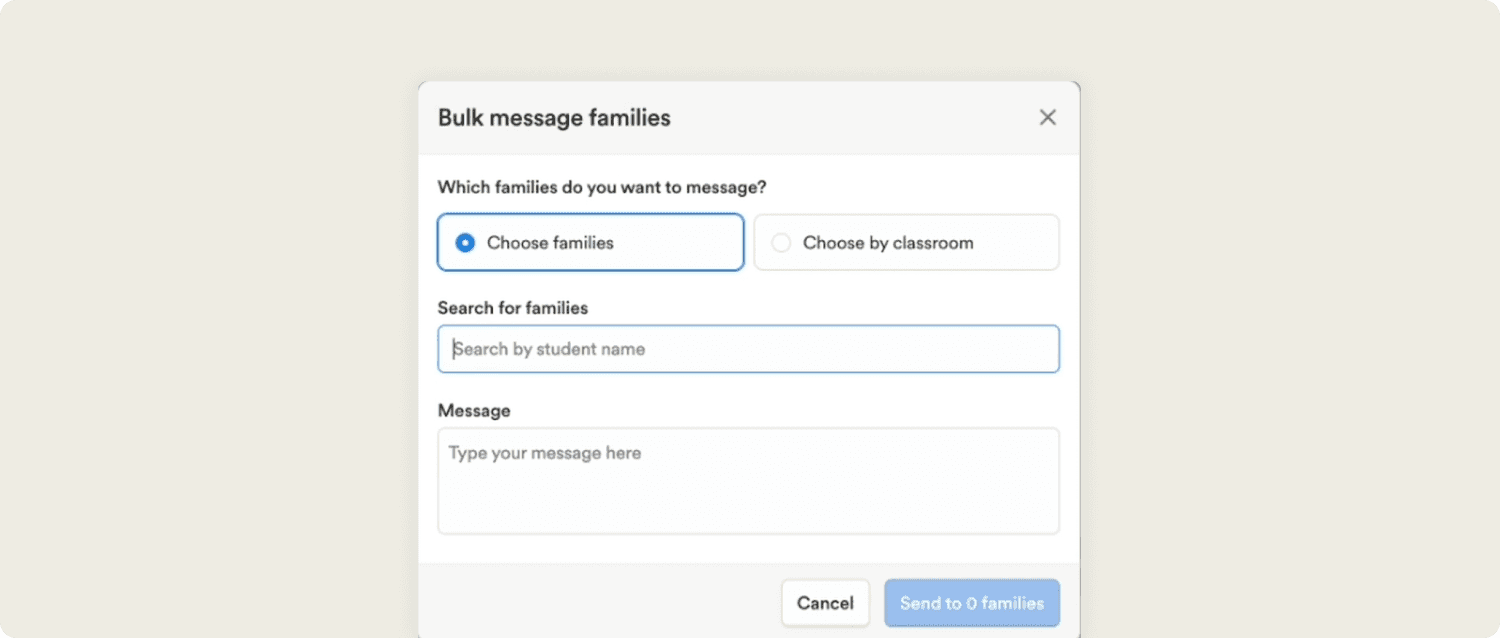
Staff can now send chat messages in bulk to selected families or classrooms, making program-wide and classroom communication much faster.
CRM booking pages and lead forms now support custom and white-label logos for a more branded family experience.
CRM onboarding has been redesigned with a clearer setup flow that returns users to the checklist after phone setup, reducing first-time configuration confusion.
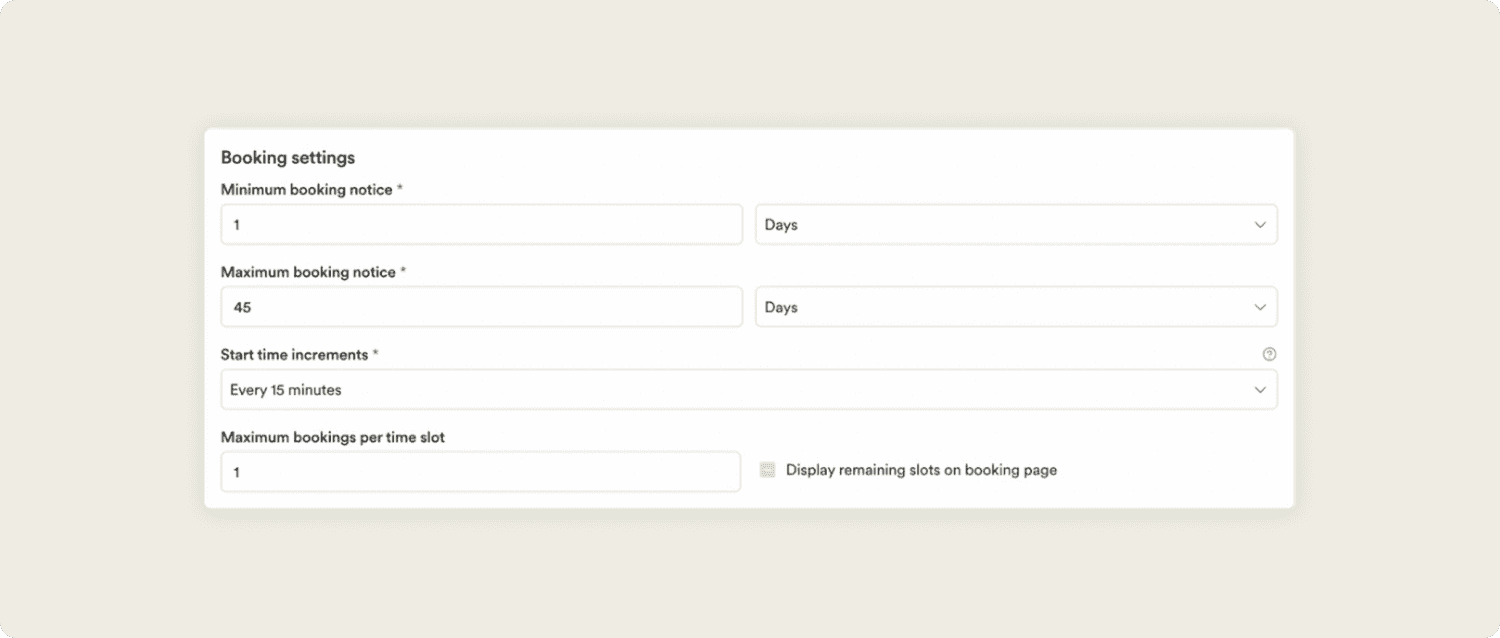
CRM tour booking now supports configurable start-time increments, allowing programs to offer options like 15 or 30-minute start times.
CRM meeting outcomes can now record which team member hosted the meeting, and booking history can display that information for easier follow-up.
Long emails, SMS messages, and notes in CRM activity timelines now collapse by default, making conversations easier to scan.
CRM agents now display which phone number they’re connected to, including the associated program for multi-program organizations.
CRM email preferences now default guardians to receiving email unless they opt out, while continuing to respect unsubscribe preferences for bulk and automated emails.
Fixed CRM automations using student-based conditions so multi-child leads now trigger correctly when any matching student qualifies.
Fixed CRM forms so stage fields no longer appear as empty dropdowns.
Billing & Finances
Billing cycle settings now have a dedicated management experience with presets, custom schedules, and calendar previews for weekly, monthly, and bimonthly billing.
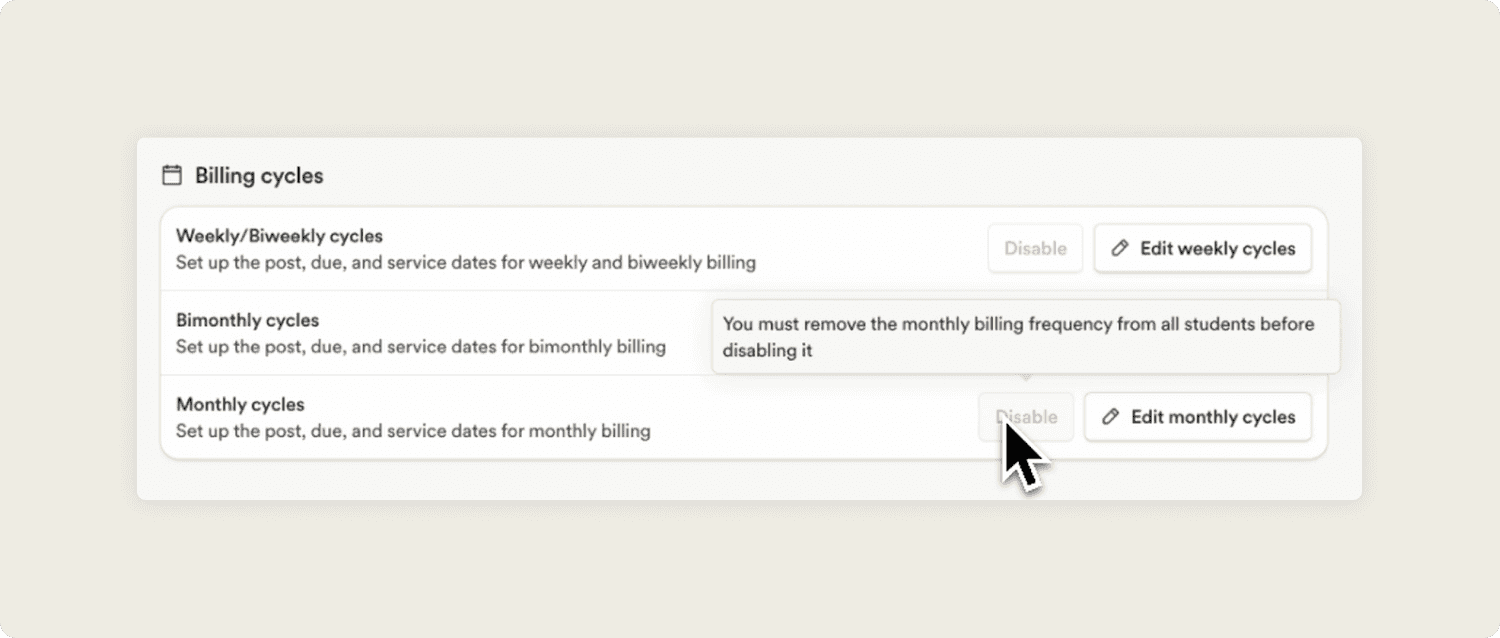
Programs can now disable billing frequencies they don’t use, preventing staff from assigning inactive billing schedules.
A new Grouped Subsidy Summary report helps finance teams review expected, received, copay, waived, and charged amounts by voucher or by student and agency.
Billing period summary PDFs now include billing plan status, making it easier to identify students with missing or ending billing plans.
Editing subsidy rate accounting codes is now clearer and better explains how changes affect future voucher assignments.
Fixed invoice settings incorrectly showing unsaved changes after loading.
Fixed negative currency values in exported CSV reports so spreadsheets correctly recognize them as numbers.
Enrollment & Paperwork
Staff paperwork can now be marked as optional, and optional documents no longer contribute to unfinished paperwork badges.
Paperwork reminder settings now support program-specific recipient emails, allowing expiration reminders to reach the right contacts.
Fixed guardian lesson plan visibility so families only see plans for their children’s classrooms.
Reporting & Insights
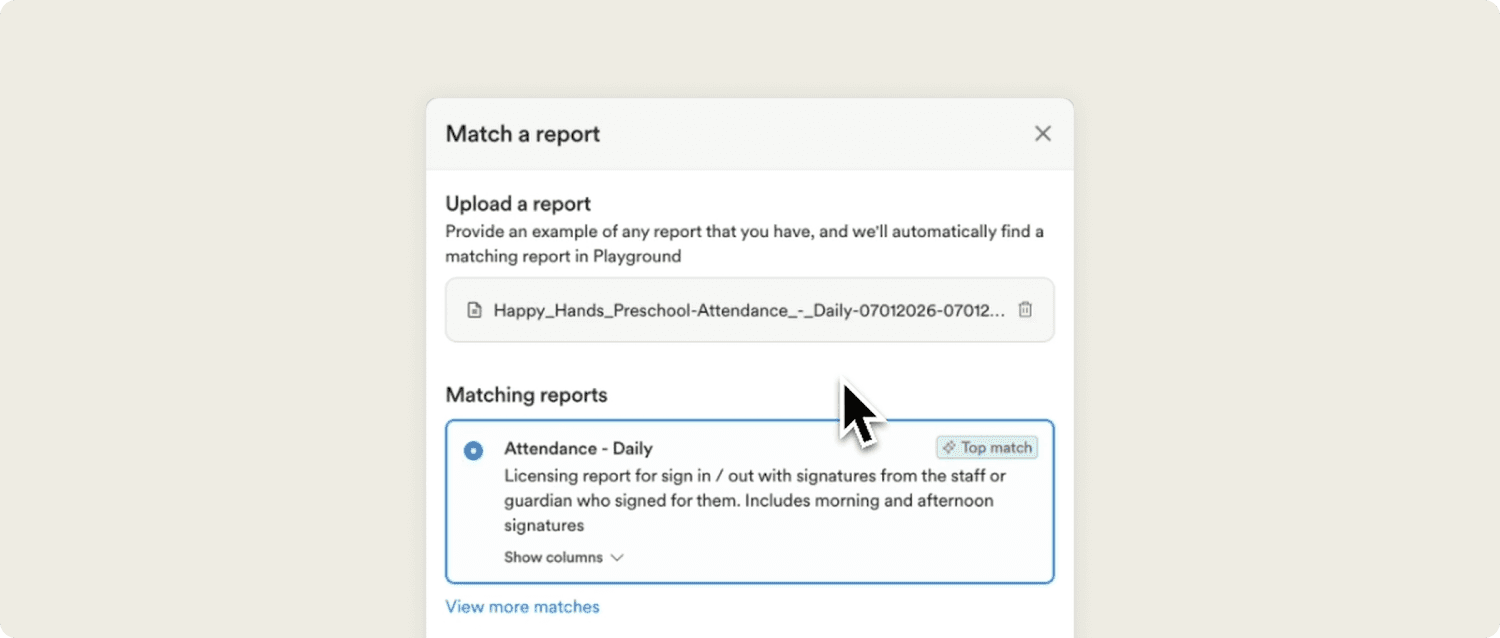
Report Finder helps teams migrate reporting by uploading a report from another system and automatically matching it to the closest Playground report, suggesting a custom report, or recommending a new report request.
Custom reports can now include guardian invite status, making it easier to track family onboarding.
The enterprise activation report now distinguishes offline and online credit activity, providing better insight into payment adoption.
Platform, Integrations & Admin
Feed post filters now support selecting up to 30 post types, making large feed searches easier to refine.
The API now supports additional single-record lookups, unified payment retrieval, and subsidy agency access for integrations.