

Child Care Subsidies and Grants in 2026: How to Grow Your Business With Funding Programs
Child Care Subsidies and Grants in 2026: How to Grow Your Business With Funding Programs
Child Care Subsidies and Grants in 2026: How to Grow Your Business With Funding Programs

Last updated:

Subsidies for child care and daycare services have a range of requirements depending on the program, location and business type. If you’re looking to grow your business – or otherwise supplement your bottom line to make ends meet – exploring the wide variety of available subsidies, grants and financial incentives for the child care industry could give you a clear path forward.
From the perspective of the child care director, using subsidies or grants in your program can help you expand your potential pool of customers, grow your program by providing matched funds for set up costs, or reduce your overhead on recurring costs such as meals.
The less glamorous side of the subsidy world of course is the added compliance. Each program has its own set of rules that participants must abide by, often dictated by state-led agencies. Usually this entails extra reporting, potentially some additional inspections, or otherwise adhering to quality, curriculum or staffing requirements. So, your program’s needs and goals must ultimately match up with the pros and cons of the specific subsidy or incentive program you intend to join. Here’s an overview of the pathways you can potentially take and what you might expect from each.
Child Care Subsidies: What to Consider Before Applying
Many subsidy, grant, and tax incentive programs for the child care industry hinge on a specific mission: often reducing the barrier to entry for low-income families to gain quality care, improving care quality, improving childhood nutrition, and making sure child care businesses are available for the long-term as families age in and out of programs.
Regardless of which subsidy catches your eye, you’ll want to make sure it’s a good fit for your program. It’ll be helpful to have a thorough understanding of your current procedures and protocols, accounting, finances, and staffing dynamics to evaluate whether your program is a good fit and whether it will make long-term sense for your business.
Such considerations should generally cover:
Compliance infrastructure. Knowing your current state requirements for compliance will help you have a baseline for what your operations currently look like and what types of resources might adapt your program to any additional requirements mandated by a subsidy program. Your state licensing agency will have all the information available about the baseline compliance requirements your program currently must adhere to, such as ratio and reporting requirements. Consider any additional costs or headaches that subsidy compliance might call for.
Target market. You’ll also want to evaluate the market fit between your business, the subsidy program, and the local families that you intend to serve. For instance, if you’re looking to expand your business by accepting lower-income families through the Child Care and Development Fund (CCDF, more information on this below), you’ll want to first make sure there are such local families who would use the program in conjunction with your services before you put in the upfront work to get onboarded and compliant.
Reporting. Organization is very important in child care, especially when you start adding additional layers of compliance. If you don’t already have cohesive systems keeping your day-to-day operations systematized and documented in one place, you’ll want to establish that sooner than later – regardless of whether you opt in to a subsidy program. Consider exploring your ability to consolidate important operations and paperwork all in one app with Playground by booking a free custom demo.
Finances. This will often be the crux of your cost-benefit evaluation, and can affect your capacity to take on a subsidy program in a variety of ways. For example, you should consider that payments for different subsidy or incentive programs may hit your bank account at different times or in different ways depending on the specifics. You’ll have to ensure your cash flows are enough to sustain your business in the interim while you’re waiting on payments. Similarly, some subsidy and grant programs may require a matching investment from child care providers for expansion costs to make sure they have some skin in the game.
Staffing. In addition to classroom ratios, some subsidy and incentive programs might require you to maintain a staff with specific credentials, especially if the program’s main mission is quality-of-care improvements. The competitiveness of the local job market may provide context for reasonable staffing capacity projections at your specific business. For example, for meal-specific subsidy programs, your staff might need to be able to pass annual required training regarding nutrition.
Plenty of other considerations may be appropriate depending on the circumstances of your business, goals, and the subsidy program you’re considering, so make sure to digest the details and consider the implications to your program in practice. You want to make sure everything stays practical and profitable after all is said and done.
Types of Financial Incentives for Child Care Businesses
Funding may be available for child care and daycare businesses in several forms. There is federal funding via subsidies and grants – often administered by the states – separate state-level programs, tax credits, and supplementary industry savings programs.
It may be helpful to zoom out a little bit and explore all your options for cost savings. As mentioned above, the form of funding may also impact the rest of your accounting and financial practices.
Subsidies might be paid in a variety of forms and timelines depending on the program. Families may be granted payment vouchers which they submit to your business, and you redeem for money from the appropriate governing body. Or, a subsidy program might require that you submit a report about services provided or receipts for applicable purchases in order to receive the payment due. In some states, payments may even be made ahead of services rendered, directly from the governing body to the child care providers.
Tax credits and similar incentives may require a little patience to receive the benefit. Depending on the time of year it is, you might not see tax incentives hit your bottom line until tax time. It’s important in these cases to make sure you are not dependent on these financial benefits for imminent cash flow.
Savings programs or clubs are a low barrier to entry for child care businesses to save on costs and potentially grow their business. While not a traditional subsidy or grant program, they do not generally require you to jump through additional hoops for compliance. Some examples of benefits and savings programs include the National Association for the Education of Young Children (NAEYC), to which you can pay a small membership fee in exchange for savings on insurance, conferences, and other items. Similarly, Playground Savings Club offers child care directors a free source of savings for purchases of common child care supplies.
Book a free demo today to see what other ways Playground can help you grow your business.
Funds Available for Child Care and Daycare Businesses
The major subsidy and grant programs available to child care and daycare programs currently include:
Child Care Development Fund (CCDF): The CCDF is the pool of money supporting the Child Care and Development Block Grant legislation (CCDBG). This funding is disbursed to the states, which in turn administer subsidies and vouchers for low-income families to afford local child care. Funding also helps support child care quality improvements and training, and grants may be available in your state on the provider side, independent of low-income families in the program using your services. This is the most widespread subsidy and grant program for child care businesses.
Head Start Program: Delivers free comprehensive preschool services for eligible children ages 3 to 5, with strong emphasis on quality, school readiness, health, and family support. Providers can become grantees or partners. Grants from the Head Start program generally require a 20% match from the provider’s side as well as rigorous program standards.
Early Head Start Program: Serves pregnant women and children from birth to age 3 with developmental, health, and family services. Follows a similar grant structure to Head Start but with an infant/toddler focus and high program standards.
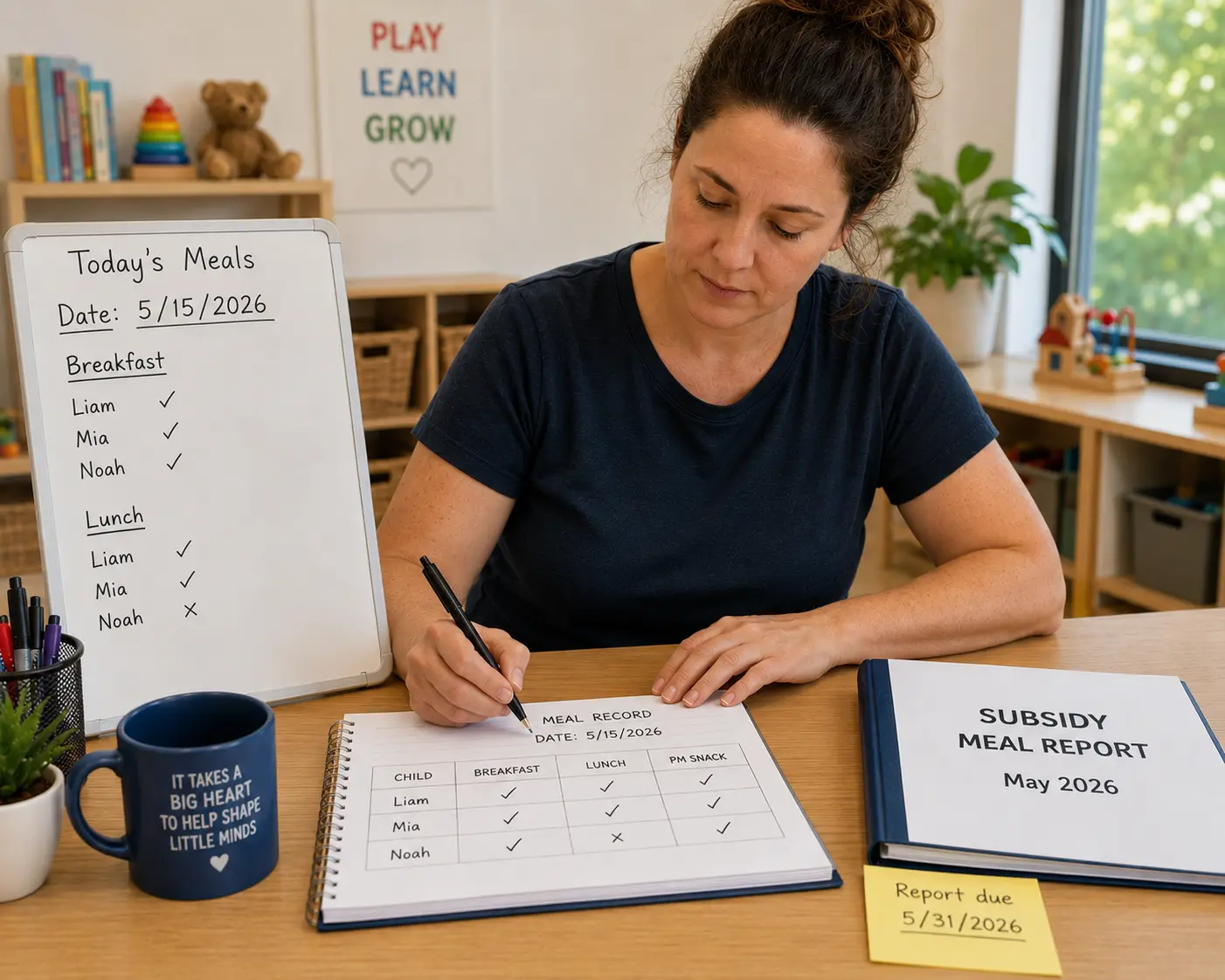
CACFP (Child and Adult Care Food Program): Reimburses centers for eligible meals and snacks served to children. One of the most accessible programs for offsetting food costs, with monthly reimbursements based on attendance.
Preschool Development Grant Birth through Five (PDG B-5): Funds states to strengthen early childhood systems. Can create center-level pilots, sub-grants, or quality initiatives depending on your state’s approach.
Employer-Provided Child Care Credit (section 45F): Offers employers a federal tax credit for providing or supporting child care for their employees. Providers can benefit by partnering with businesses interested in claiming the credit.
Summary of Daycare Subsidies and Grants and How to Apply
Program | General summary | Notes | Extra requirements | How to get started |
CCDF / CCDBG | Subsidy vouchers from low-income families reimbursed; grants to providers for service quality improvements | Reimbursement is usually after care is provided (some states moving to prospective pay) | Varies by state; often QRIS participation for higher rates | Contact your state’s CCDF lead agency |
Head Start Program | Free preschool program for children aged 3 to 5 with a heavy emphasis on program quality | Annual grant disbursed depending on applicable enrollment spots. Grantees must provide a 20% funds match. | Rigorous program standards | Become a direct grantee or partner with a current grantee with unfilled spots |
Early Head Start Program | Supports pregnant women through children up to age 3 in developmental, health, and family needs | Same grant structure as Head Start | Rigorous program standards + infant/toddler focus | Contact local Early Head Start grantees or apply when federal grants open |
CACFP | USDA program that reimburses centers for meals and snacks served to children. Very widely used and helps offset food costs. | Monthly reimbursement based on approved meals and attendance | Annual nutrition training required; meal and expense reporting | Apply through your State CACFP Sponsor (usually Dept. of Education or Health) |
PDG B-5 | Grants disbursed directly to the states to fund statewide development | Sometimes center-level pilot programs or sub-grants | None directly; potentially through the state administer | Learn more here but you will ultimately need to contact your state agency to get involved. |
Employer-Provided Child Care Credit (section 45F) | Tax credit for employers who provide or pay for child care for their employees | Non-refundable federal tax credit (up to $150,000 per year) | Must meet Internal Revenue Code requirements | Employers work with a tax advisor or CPA; child care providers can market this benefit to companies if looking to expand their business |
Additional Financial Resources for Child Care Providers
Besides the above subsidies, grants and savings designed specifically for child care providers, daycare businesses may be able to take advantage of a slice of some wider subsidy and grant opportunities as applicable.

Federal & National Resources
Grants.gov: Central hub for searching and applying to federal grant opportunities.
SBA Loans & Support: The Small Business Administration offers loans (including 504 loans) and technical assistance specifically tailored for child care businesses.
USDA Rural Development: Provides grants and loans for building, renovating, or expanding child care facilities in rural areas.
Temporary Assistance for Needy Families (TANF): Some TANF funds are used to support child care services and subsidies.
State & Local Opportunities These vary widely by location but often include:
Provider startup and expansion grants
Quality improvement grants (e.g., QRIS upgrades, staff training, curriculum)
Workforce supports (wage supplements, scholarships, and retention bonuses)
Stabilization and emergency grants
Facilities improvement and expansion funding
Additionally, many states offer tax credits for child care providers or businesses that invest in child care. You may want to contact your local Child Care Resource & Referral (CCR&R) agency or your state’s Department of Early Childhood / Human Services to learn more about what’s available in your state.
Upcoming Legislation Which Might Provide More Opportunities to Child Care Directors
Child care legislation at the federal level continues to evolve, with several bipartisan bills that could create new funding streams, expansion grants, or operational incentives for providers.
While not yet law, these proposals are worth monitoring as they could expand opportunities through CCDBG-related programs, workforce supports, and targeted pilots.
The Child Care Modernization Act of 2025 aims to reauthorize and update the Child Care and Development Block Grant (CCDBG). It focuses on more sustainable provider reimbursement rates, workforce development, rural access, supply-building grants, and quality improvements. If passed, it would likely strengthen CCDF participation and provider-side funding.
The After Hours Child Care Act would establish pilot grants under CCDBG framework to help providers expand care during nontraditional hours (evenings, weekends, early mornings). It targets families with shift-work schedules and includes support for workplace-based options, with a provider match requirement.
The Child Care Workforce and Facilities Act of 2025 would potentially provide competitive grants to states and tribal entities to expand the child care workforce through education, training, and retention efforts while supporting the improvement and expansion of child care facilities, particularly in shortage areas. If passed, it would offer direct grant funding to help providers address staffing challenges and grow capacity.
The Child Care Supply Tax Credit Act of 2025 would create a new federal tax credit for eligible child care providers equal to a percentage of wages paid to employees who provide direct care to children (5% generally, rising to 7% in rural areas). It aims to help providers increase compensation, retain staff, and expand the overall supply of child care slots.
The Supporting Early-Childhood Educators’ Deductions (SEED) Act would extend the existing educator expense tax deduction to early childhood educators, allowing them to deduct up to $350 annually for unreimbursed out-of-pocket classroom expenses such as supplies, materials, and professional development. This would provide tax relief directly to child care teachers and providers, rather than the businesses themselves.
Other active bills might also include provisions that help support the child care industry, but keep in mind that the list above has yet to pass as legislation and may never come to fruition. If you feel strongly about a particular bill, you can contact your state’s congresspeople to express your thoughts.
The Bottom Line
Child care subsidies, grants, and tax incentives can be powerful tools to increase revenue, fill more slots, reduce overhead, and strengthen your program — but only when they align with your operations, staffing, and financial realities. From the widely used CCDF and CACFP to emerging opportunities in pending federal legislation, the right mix of funding can meaningfully improve profitability and help close the persistent worker demand gap in the industry.Take time to evaluate programs based on your target market, compliance capacity, and cash flow. Start with your state’s CCDF lead agency and local CCR&R for the most relevant options, then explore tuition pricing strategies that complement subsidy revenue.
Ready to run a stronger, more sustainable child care business? Book a free custom demo with Playground to streamline compliance, reporting, and operations – so you can spend less time on paperwork and more time growing your program.
Subsidies for child care and daycare services have a range of requirements depending on the program, location and business type. If you’re looking to grow your business – or otherwise supplement your bottom line to make ends meet – exploring the wide variety of available subsidies, grants and financial incentives for the child care industry could give you a clear path forward.
From the perspective of the child care director, using subsidies or grants in your program can help you expand your potential pool of customers, grow your program by providing matched funds for set up costs, or reduce your overhead on recurring costs such as meals.
The less glamorous side of the subsidy world of course is the added compliance. Each program has its own set of rules that participants must abide by, often dictated by state-led agencies. Usually this entails extra reporting, potentially some additional inspections, or otherwise adhering to quality, curriculum or staffing requirements. So, your program’s needs and goals must ultimately match up with the pros and cons of the specific subsidy or incentive program you intend to join. Here’s an overview of the pathways you can potentially take and what you might expect from each.
Child Care Subsidies: What to Consider Before Applying
Many subsidy, grant, and tax incentive programs for the child care industry hinge on a specific mission: often reducing the barrier to entry for low-income families to gain quality care, improving care quality, improving childhood nutrition, and making sure child care businesses are available for the long-term as families age in and out of programs.
Regardless of which subsidy catches your eye, you’ll want to make sure it’s a good fit for your program. It’ll be helpful to have a thorough understanding of your current procedures and protocols, accounting, finances, and staffing dynamics to evaluate whether your program is a good fit and whether it will make long-term sense for your business.
Such considerations should generally cover:
Compliance infrastructure. Knowing your current state requirements for compliance will help you have a baseline for what your operations currently look like and what types of resources might adapt your program to any additional requirements mandated by a subsidy program. Your state licensing agency will have all the information available about the baseline compliance requirements your program currently must adhere to, such as ratio and reporting requirements. Consider any additional costs or headaches that subsidy compliance might call for.
Target market. You’ll also want to evaluate the market fit between your business, the subsidy program, and the local families that you intend to serve. For instance, if you’re looking to expand your business by accepting lower-income families through the Child Care and Development Fund (CCDF, more information on this below), you’ll want to first make sure there are such local families who would use the program in conjunction with your services before you put in the upfront work to get onboarded and compliant.
Reporting. Organization is very important in child care, especially when you start adding additional layers of compliance. If you don’t already have cohesive systems keeping your day-to-day operations systematized and documented in one place, you’ll want to establish that sooner than later – regardless of whether you opt in to a subsidy program. Consider exploring your ability to consolidate important operations and paperwork all in one app with Playground by booking a free custom demo.
Finances. This will often be the crux of your cost-benefit evaluation, and can affect your capacity to take on a subsidy program in a variety of ways. For example, you should consider that payments for different subsidy or incentive programs may hit your bank account at different times or in different ways depending on the specifics. You’ll have to ensure your cash flows are enough to sustain your business in the interim while you’re waiting on payments. Similarly, some subsidy and grant programs may require a matching investment from child care providers for expansion costs to make sure they have some skin in the game.
Staffing. In addition to classroom ratios, some subsidy and incentive programs might require you to maintain a staff with specific credentials, especially if the program’s main mission is quality-of-care improvements. The competitiveness of the local job market may provide context for reasonable staffing capacity projections at your specific business. For example, for meal-specific subsidy programs, your staff might need to be able to pass annual required training regarding nutrition.
Plenty of other considerations may be appropriate depending on the circumstances of your business, goals, and the subsidy program you’re considering, so make sure to digest the details and consider the implications to your program in practice. You want to make sure everything stays practical and profitable after all is said and done.
Types of Financial Incentives for Child Care Businesses
Funding may be available for child care and daycare businesses in several forms. There is federal funding via subsidies and grants – often administered by the states – separate state-level programs, tax credits, and supplementary industry savings programs.
It may be helpful to zoom out a little bit and explore all your options for cost savings. As mentioned above, the form of funding may also impact the rest of your accounting and financial practices.
Subsidies might be paid in a variety of forms and timelines depending on the program. Families may be granted payment vouchers which they submit to your business, and you redeem for money from the appropriate governing body. Or, a subsidy program might require that you submit a report about services provided or receipts for applicable purchases in order to receive the payment due. In some states, payments may even be made ahead of services rendered, directly from the governing body to the child care providers.
Tax credits and similar incentives may require a little patience to receive the benefit. Depending on the time of year it is, you might not see tax incentives hit your bottom line until tax time. It’s important in these cases to make sure you are not dependent on these financial benefits for imminent cash flow.
Savings programs or clubs are a low barrier to entry for child care businesses to save on costs and potentially grow their business. While not a traditional subsidy or grant program, they do not generally require you to jump through additional hoops for compliance. Some examples of benefits and savings programs include the National Association for the Education of Young Children (NAEYC), to which you can pay a small membership fee in exchange for savings on insurance, conferences, and other items. Similarly, Playground Savings Club offers child care directors a free source of savings for purchases of common child care supplies.
Book a free demo today to see what other ways Playground can help you grow your business.
Funds Available for Child Care and Daycare Businesses
The major subsidy and grant programs available to child care and daycare programs currently include:
Child Care Development Fund (CCDF): The CCDF is the pool of money supporting the Child Care and Development Block Grant legislation (CCDBG). This funding is disbursed to the states, which in turn administer subsidies and vouchers for low-income families to afford local child care. Funding also helps support child care quality improvements and training, and grants may be available in your state on the provider side, independent of low-income families in the program using your services. This is the most widespread subsidy and grant program for child care businesses.
Head Start Program: Delivers free comprehensive preschool services for eligible children ages 3 to 5, with strong emphasis on quality, school readiness, health, and family support. Providers can become grantees or partners. Grants from the Head Start program generally require a 20% match from the provider’s side as well as rigorous program standards.
Early Head Start Program: Serves pregnant women and children from birth to age 3 with developmental, health, and family services. Follows a similar grant structure to Head Start but with an infant/toddler focus and high program standards.
CACFP (Child and Adult Care Food Program): Reimburses centers for eligible meals and snacks served to children. One of the most accessible programs for offsetting food costs, with monthly reimbursements based on attendance.
Preschool Development Grant Birth through Five (PDG B-5): Funds states to strengthen early childhood systems. Can create center-level pilots, sub-grants, or quality initiatives depending on your state’s approach.
Employer-Provided Child Care Credit (section 45F): Offers employers a federal tax credit for providing or supporting child care for their employees. Providers can benefit by partnering with businesses interested in claiming the credit.
Summary of Daycare Subsidies and Grants and How to Apply
Program | General summary | Notes | Extra requirements | How to get started |
CCDF / CCDBG | Subsidy vouchers from low-income families reimbursed; grants to providers for service quality improvements | Reimbursement is usually after care is provided (some states moving to prospective pay) | Varies by state; often QRIS participation for higher rates | Contact your state’s CCDF lead agency |
Head Start Program | Free preschool program for children aged 3 to 5 with a heavy emphasis on program quality | Annual grant disbursed depending on applicable enrollment spots. Grantees must provide a 20% funds match. | Rigorous program standards | Become a direct grantee or partner with a current grantee with unfilled spots |
Early Head Start Program | Supports pregnant women through children up to age 3 in developmental, health, and family needs | Same grant structure as Head Start | Rigorous program standards + infant/toddler focus | Contact local Early Head Start grantees or apply when federal grants open |
CACFP | USDA program that reimburses centers for meals and snacks served to children. Very widely used and helps offset food costs. | Monthly reimbursement based on approved meals and attendance | Annual nutrition training required; meal and expense reporting | Apply through your State CACFP Sponsor (usually Dept. of Education or Health) |
PDG B-5 | Grants disbursed directly to the states to fund statewide development | Sometimes center-level pilot programs or sub-grants | None directly; potentially through the state administer | Learn more here but you will ultimately need to contact your state agency to get involved. |
Employer-Provided Child Care Credit (section 45F) | Tax credit for employers who provide or pay for child care for their employees | Non-refundable federal tax credit (up to $150,000 per year) | Must meet Internal Revenue Code requirements | Employers work with a tax advisor or CPA; child care providers can market this benefit to companies if looking to expand their business |
Additional Financial Resources for Child Care Providers
Besides the above subsidies, grants and savings designed specifically for child care providers, daycare businesses may be able to take advantage of a slice of some wider subsidy and grant opportunities as applicable.
Federal & National Resources
Grants.gov: Central hub for searching and applying to federal grant opportunities.
SBA Loans & Support: The Small Business Administration offers loans (including 504 loans) and technical assistance specifically tailored for child care businesses.
USDA Rural Development: Provides grants and loans for building, renovating, or expanding child care facilities in rural areas.
Temporary Assistance for Needy Families (TANF): Some TANF funds are used to support child care services and subsidies.
State & Local Opportunities These vary widely by location but often include:
Provider startup and expansion grants
Quality improvement grants (e.g., QRIS upgrades, staff training, curriculum)
Workforce supports (wage supplements, scholarships, and retention bonuses)
Stabilization and emergency grants
Facilities improvement and expansion funding
Additionally, many states offer tax credits for child care providers or businesses that invest in child care. You may want to contact your local Child Care Resource & Referral (CCR&R) agency or your state’s Department of Early Childhood / Human Services to learn more about what’s available in your state.
Upcoming Legislation Which Might Provide More Opportunities to Child Care Directors
Child care legislation at the federal level continues to evolve, with several bipartisan bills that could create new funding streams, expansion grants, or operational incentives for providers.
While not yet law, these proposals are worth monitoring as they could expand opportunities through CCDBG-related programs, workforce supports, and targeted pilots.
The Child Care Modernization Act of 2025 aims to reauthorize and update the Child Care and Development Block Grant (CCDBG). It focuses on more sustainable provider reimbursement rates, workforce development, rural access, supply-building grants, and quality improvements. If passed, it would likely strengthen CCDF participation and provider-side funding.
The After Hours Child Care Act would establish pilot grants under CCDBG framework to help providers expand care during nontraditional hours (evenings, weekends, early mornings). It targets families with shift-work schedules and includes support for workplace-based options, with a provider match requirement.
The Child Care Workforce and Facilities Act of 2025 would potentially provide competitive grants to states and tribal entities to expand the child care workforce through education, training, and retention efforts while supporting the improvement and expansion of child care facilities, particularly in shortage areas. If passed, it would offer direct grant funding to help providers address staffing challenges and grow capacity.
The Child Care Supply Tax Credit Act of 2025 would create a new federal tax credit for eligible child care providers equal to a percentage of wages paid to employees who provide direct care to children (5% generally, rising to 7% in rural areas). It aims to help providers increase compensation, retain staff, and expand the overall supply of child care slots.
The Supporting Early-Childhood Educators’ Deductions (SEED) Act would extend the existing educator expense tax deduction to early childhood educators, allowing them to deduct up to $350 annually for unreimbursed out-of-pocket classroom expenses such as supplies, materials, and professional development. This would provide tax relief directly to child care teachers and providers, rather than the businesses themselves.
Other active bills might also include provisions that help support the child care industry, but keep in mind that the list above has yet to pass as legislation and may never come to fruition. If you feel strongly about a particular bill, you can contact your state’s congresspeople to express your thoughts.
The Bottom Line
Child care subsidies, grants, and tax incentives can be powerful tools to increase revenue, fill more slots, reduce overhead, and strengthen your program — but only when they align with your operations, staffing, and financial realities. From the widely used CCDF and CACFP to emerging opportunities in pending federal legislation, the right mix of funding can meaningfully improve profitability and help close the persistent worker demand gap in the industry.Take time to evaluate programs based on your target market, compliance capacity, and cash flow. Start with your state’s CCDF lead agency and local CCR&R for the most relevant options, then explore tuition pricing strategies that complement subsidy revenue.
Ready to run a stronger, more sustainable child care business? Book a free custom demo with Playground to streamline compliance, reporting, and operations – so you can spend less time on paperwork and more time growing your program.
Jaclyn is a data journalist and CFP™ who evaluates trends in the childcare industry and wider economy. She has previously worked for publications including CNET, SmartAsset, Bizfluent, AZCentral and Chron, and as a research consultant for NAPCO Media. Her insights are often cited by publications including Bloomberg, CNBC, Business Insider, Fox News, USA Today, The Hill and more. She has a bachelor’s degree in economics and mathematics from The College of New Jersey.
Share this article
Table of Contents
The highest rated child care software
Ratings and review counts from public app store listings, May 2026.



Book a demo and simplify every corner of your business.




Book a demo and simplify every corner of your business.
