

The True Value of Observation and Assessment in ECE
The True Value of Observation and Assessment in ECE
The True Value of Observation and Assessment in ECE

Last updated:
Effective assessment requires proper observation. Both observation and assessment in early childhood education (ECE) are not just compliance checkboxes, but powerful ways to understand children, refine curriculum, and build trust with families. When done thoughtfully, assessment provides crucial insight into how each child develops. For educators like you, those insights are invaluable for delivering the highest quality care.
Why does ECE assessment matter?
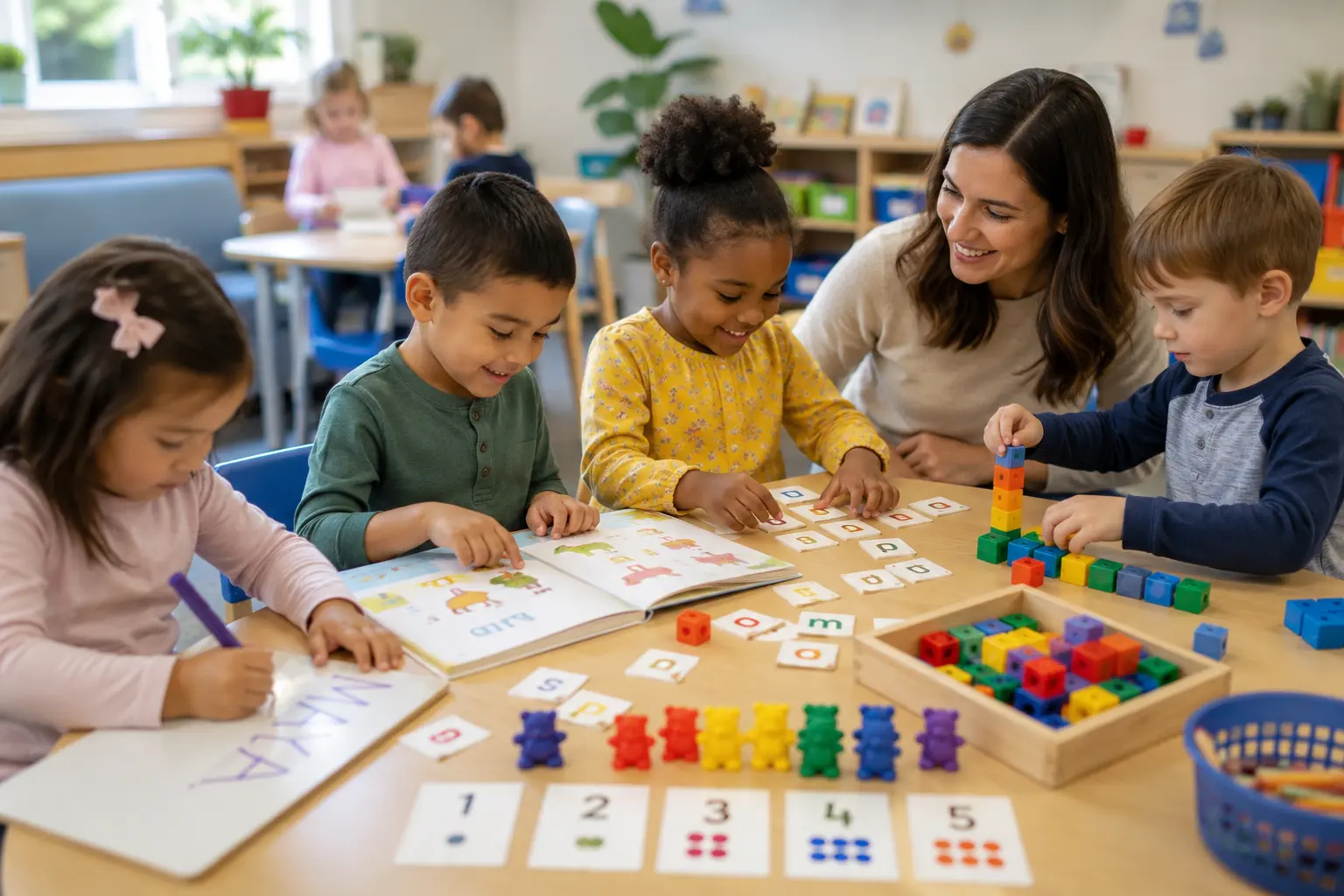
Like any skill, observation deepens with practice. In early childhood education, that practice takes shape through ongoing assessment—watching closely, documenting thoughtfully, and learning how each child engages with the world. These quiet insights help you truly understand your students and meet them where they are.
For many children, that understanding can be a turning point. Roughly 1 in 6 children in the U.S. has a developmental delay or disability, yet signs often remain hidden until school begins. With intentional, everyday observation, you can help surface what might otherwise be missed—and give kids the support they need early on.
What should a well-rounded assessment strategy include?
Effective assessment should cover the spectrum of a child’s development: social-emotional, cognitive, language, and physical skills. At a minimum, an effective observation checklist should include:
Informal notes and checklists
Formal tools like developmental screeners
In-class worksheets and activity output
Behavioral assessment for children showing challenges in social-emotional areas
Parent insights and input
Assessing a child’s development: What to look for
Each child grows and learns at their own unique pace—but across all journeys, there are four key areas that support healthy, whole-child development. These areas work together to build the foundation for lifelong learning and well-being:
Cognitive development: Thinking, problem-solving, and discovering how the world works
Language development: Expressing ideas, understanding others, and building vocabulary
Social-emotional development: Forming relationships, managing emotions, and building self-confidence
Physical development: Gaining strength, coordination, and motor skills for everyday movement
Tip: Look for trends over time rather than isolated incidents. A single outburst doesn’t signal a problem, but consistent cognitive and social-emotional monitoring can identify these trends early on.

Laying the foundation for school readiness
For preschool-aged children, pre-K assessments help track readiness for kindergarten and pinpoint any early learning gaps. A strong structure might include:
Beginning-of-year assessment: Establishing a baseline of pre-K skills to guide instruction
Mid-year snapshot: Monitoring progress across key developmental areas
End-of-year evaluation: Measuring growth in early math, literacy, and self-help skills compared to the baseline
This structure supports educators in adapting instruction and gives families a clear view of their child’s progress toward kindergarten goals. A side-by-side comparison of results at the start and end of the year surfaces these gaps, and shows parents you’re dedicated to ongoing care and education
Observation-based assessments are especially powerful in identifying learning gaps that might otherwise go unnoticed. In one pre-K program, assessment data revealed that 50% of children could not recognize the letters in their own name—a critical early literacy skill. By catching issues like these early, educators can deliver data-informed interventions that better prepare children for the transition to kindergarten.
How to make observation and assessment truly meaningful
Be consistentQuick daily notes add up. When you observe a little each day, you get a much richer, more accurate view of each child than if you rely on occasional check-ins.
Focus on what’s realWrite down exactly what you see and hear. No assumptions, no interpretations. Let the child’s actions tell the story. Ask questions to dig deeper.
Keep it simpleUse a checklist, form, or sticky note—whatever helps you jot things down without losing focus on the child.
Train your teamEvery educator should know what to look for and how to document it. A little clarity goes a long way in making observations more useful and less stressful.
When you observe with intention, you don’t just track development—you shape it. Playground makes those observations transparent and accessible, so teachers, owners, and families are always on the same page about each child’s progress.
Effective assessment requires proper observation. Both observation and assessment in early childhood education (ECE) are not just compliance checkboxes, but powerful ways to understand children, refine curriculum, and build trust with families. When done thoughtfully, assessment provides crucial insight into how each child develops. For educators like you, those insights are invaluable for delivering the highest quality care.
Why does ECE assessment matter?
Like any skill, observation deepens with practice. In early childhood education, that practice takes shape through ongoing assessment—watching closely, documenting thoughtfully, and learning how each child engages with the world. These quiet insights help you truly understand your students and meet them where they are.
For many children, that understanding can be a turning point. Roughly 1 in 6 children in the U.S. has a developmental delay or disability, yet signs often remain hidden until school begins. With intentional, everyday observation, you can help surface what might otherwise be missed—and give kids the support they need early on.
What should a well-rounded assessment strategy include?
Effective assessment should cover the spectrum of a child’s development: social-emotional, cognitive, language, and physical skills. At a minimum, an effective observation checklist should include:
Informal notes and checklists
Formal tools like developmental screeners
In-class worksheets and activity output
Behavioral assessment for children showing challenges in social-emotional areas
Parent insights and input
Assessing a child’s development: What to look for
Each child grows and learns at their own unique pace—but across all journeys, there are four key areas that support healthy, whole-child development. These areas work together to build the foundation for lifelong learning and well-being:
Cognitive development: Thinking, problem-solving, and discovering how the world works
Language development: Expressing ideas, understanding others, and building vocabulary
Social-emotional development: Forming relationships, managing emotions, and building self-confidence
Physical development: Gaining strength, coordination, and motor skills for everyday movement
Tip: Look for trends over time rather than isolated incidents. A single outburst doesn’t signal a problem, but consistent cognitive and social-emotional monitoring can identify these trends early on.
Laying the foundation for school readiness
For preschool-aged children, pre-K assessments help track readiness for kindergarten and pinpoint any early learning gaps. A strong structure might include:
Beginning-of-year assessment: Establishing a baseline of pre-K skills to guide instruction
Mid-year snapshot: Monitoring progress across key developmental areas
End-of-year evaluation: Measuring growth in early math, literacy, and self-help skills compared to the baseline
This structure supports educators in adapting instruction and gives families a clear view of their child’s progress toward kindergarten goals. A side-by-side comparison of results at the start and end of the year surfaces these gaps, and shows parents you’re dedicated to ongoing care and education
Observation-based assessments are especially powerful in identifying learning gaps that might otherwise go unnoticed. In one pre-K program, assessment data revealed that 50% of children could not recognize the letters in their own name—a critical early literacy skill. By catching issues like these early, educators can deliver data-informed interventions that better prepare children for the transition to kindergarten.
How to make observation and assessment truly meaningful
Be consistentQuick daily notes add up. When you observe a little each day, you get a much richer, more accurate view of each child than if you rely on occasional check-ins.
Focus on what’s realWrite down exactly what you see and hear. No assumptions, no interpretations. Let the child’s actions tell the story. Ask questions to dig deeper.
Keep it simpleUse a checklist, form, or sticky note—whatever helps you jot things down without losing focus on the child.
Train your teamEvery educator should know what to look for and how to document it. A little clarity goes a long way in making observations more useful and less stressful.
When you observe with intention, you don’t just track development—you shape it. Playground makes those observations transparent and accessible, so teachers, owners, and families are always on the same page about each child’s progress.
Daniel is passionate about helping child care providers grow through clear, practical education. He is dedicated to creating helpful resources that make complex topics like enrollment, billing, operations, and child care management software easier to understand—so center leaders can make smarter decisions and build stronger businesses.
Share this article
The highest rated child care software
Ratings and review counts from public app store listings, May 2026.

Book a demo and simplify every corner of your business.



Book a demo and simplify every corner of your business.
