

Back-to-School Enrollment Strategies for Child Care Providers: Fill More Spots Before September
Back-to-School Enrollment Strategies for Child Care Providers: Fill More Spots Before September
Back-to-School Enrollment Strategies for Child Care Providers: Fill More Spots Before September

Last updated:
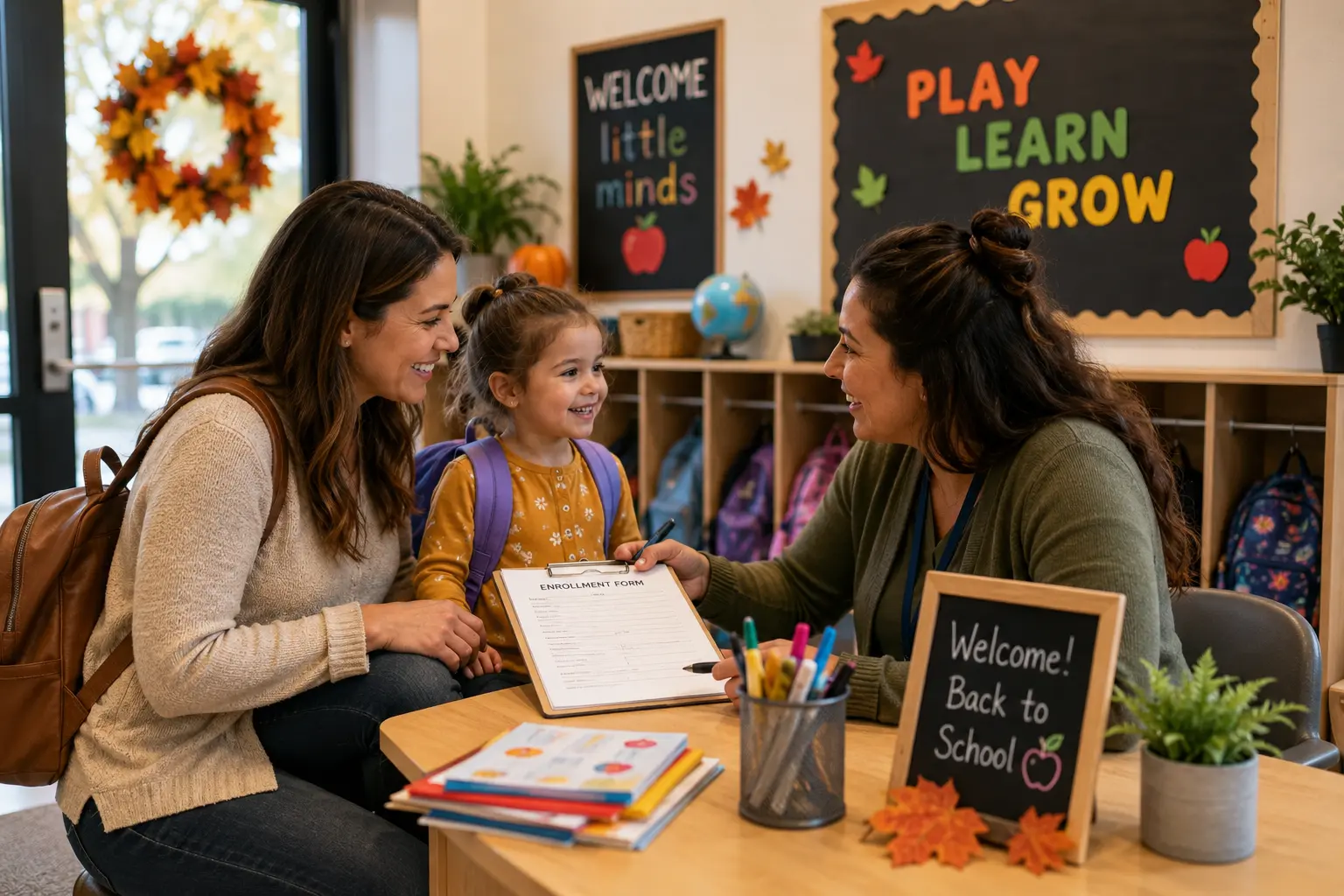
With fall around the corner, many child care providers are focused on one key goal: filling classrooms with the right families. July and August are prime time for final decisions as parents are actively searching for enrollment spots. Programs that act now will have a clear advantage.The good news? You don’t need a huge marketing budget or extra staff hours. Smart, targeted actions can deliver strong results. Here’s a practical playbook with strategies that work for centers and family child care homes alike.
Interested in boosting your marketing efforts with an integrated CRM built specifically for child care? Book a free demo with Playground to learn more.
Begin with a quick capacity audit
Before you send a single message or post, know exactly what you have available. Walk through every classroom and note current enrollment numbers along with open spots through December. Identify which age groups and services are in highest demand (infants, toddlers, and extended hours tend to fill fastest) and which move more slowly. Turning this information into an ideal customer profile (ICP) may help steer your marketing efforts toward the highest-return opportunities.
Similarly, you can create a simple one-page fall forecast that shows at a glance when each room will reach capacity (consider trying Predictive Enrollment for this step). This can be powerful because many programs lose families simply by not being able to answer basic questions quickly and confidently. When a parent asks, “Do you have space for a 2-year-old starting in August?” you want to respond immediately with clear options and genuine urgency.
Reengage your warm leads
Your easiest and highest-ROI enrollments usually come from families who already inquired or toured in the past 6 to 12 months. Pull those names and reach out with a warm, low-pressure message: “We still have a few spots left for fall – here’s what current families are loving right now.” Follow up personally with a quick call or text, and be specific (for example, “We have two openings in our Twos room with care until 6:30 pm”). These families already know you and have shown interest, so a gentle nudge often converts far better than cold outreach. You can even use AI like ChatGPT or purpose-built systems like Playground to help you draft these communications.
Turn your current families into recruiters
Referrals remain one of the most effective ways to bring in new families because they come with built-in trust and social proof. Make it simple and rewarding by offering a $50 to $100 tuition credit or one free week for every successful referral. Provide families with a one-click shareable link or a ready-to-forward email template, or otherwise encourage and incentivize them to share their positive experiences with other local families.
Strengthen your online front door
Most parents begin their search online, so your digital presence must make a strong first impression. Update your Google Business Profile with current photos, accurate hours, and fresh reviews by asking your past and current customers to submit a star rating and comments.
Refresh your website homepage with new images and add a clear, prominent banner that says “Fall 2026 Spots Available” with an easy contact form. You can also ask your current or past customers to provide reviews online to help build your reputation. Equally important: respond to every inquiry within 24 hours. This single habit can dramatically improve your conversion rate.
Want to delegate your website marketing? Book a demo with Playground to learn about custom, branded websites that convert.
Build local partnerships that feed younger classrooms
Don’t overlook the power of community relationships. They’re one of the best ways to get consistent referrals for infants, toddlers, and twos.Start by reaching out to pediatricians and family doctors. Offer to drop off brochures, parent resource packets, or even host a short “Choosing Quality Childcare” lunch-and-learn for their staff. New and expecting parents trust their pediatrician’s recommendations more than almost anything else.
Connect with realtors who specialize in family relocations. Many families move into the area with infants or toddlers and need childcare immediately. Give them a simple “Welcome to the Neighborhood” packet they can hand to new clients.Build relationships with local parent groups, mommy-and-me programs, library story times, and neighborhood parent Facebook groups. Offer to speak at one of their meetings or host a free workshop on topics like “Sleep Solutions for Toddlers” or “What to Look for in Infant Care.”
You can also work with elementary schools and kindergarten teachers, but frame these partnerships around younger siblings. When a pre-k family loves your program, they often have (or will soon have) a baby or younger toddler – and they can become your best source of referrals for the infant and toddler rooms.
A few quick wins for July and August
While you’re executing the bigger strategies, layer in these smaller touches:
Clearly highlight what sets your program apart – whether that’s infant care availability, bilingual staff, a strong outdoor learning focus, or otherwise.
Create honest urgency by sharing real numbers (“Only three spots left in our pre-k room for September”).
Offer a limited-time back-to-school incentive, such as a waived registration fee or a welcome supply kit.
By focusing on capacity clarity, warm leads, referrals, and a polished online presence, you’ll position your program to welcome the right families this fall with confidence and ease. The key to strong fall enrollment is acting with clarity and focus right now. Instead of scattering your marketing efforts, concentrate on high-return strategies that play to your strengths.
With fall around the corner, many child care providers are focused on one key goal: filling classrooms with the right families. July and August are prime time for final decisions as parents are actively searching for enrollment spots. Programs that act now will have a clear advantage.The good news? You don’t need a huge marketing budget or extra staff hours. Smart, targeted actions can deliver strong results. Here’s a practical playbook with strategies that work for centers and family child care homes alike.
Interested in boosting your marketing efforts with an integrated CRM built specifically for child care? Book a free demo with Playground to learn more.
Begin with a quick capacity audit
Before you send a single message or post, know exactly what you have available. Walk through every classroom and note current enrollment numbers along with open spots through December. Identify which age groups and services are in highest demand (infants, toddlers, and extended hours tend to fill fastest) and which move more slowly. Turning this information into an ideal customer profile (ICP) may help steer your marketing efforts toward the highest-return opportunities.
Similarly, you can create a simple one-page fall forecast that shows at a glance when each room will reach capacity (consider trying Predictive Enrollment for this step). This can be powerful because many programs lose families simply by not being able to answer basic questions quickly and confidently. When a parent asks, “Do you have space for a 2-year-old starting in August?” you want to respond immediately with clear options and genuine urgency.
Reengage your warm leads
Your easiest and highest-ROI enrollments usually come from families who already inquired or toured in the past 6 to 12 months. Pull those names and reach out with a warm, low-pressure message: “We still have a few spots left for fall – here’s what current families are loving right now.” Follow up personally with a quick call or text, and be specific (for example, “We have two openings in our Twos room with care until 6:30 pm”). These families already know you and have shown interest, so a gentle nudge often converts far better than cold outreach. You can even use AI like ChatGPT or purpose-built systems like Playground to help you draft these communications.
Turn your current families into recruiters
Referrals remain one of the most effective ways to bring in new families because they come with built-in trust and social proof. Make it simple and rewarding by offering a $50 to $100 tuition credit or one free week for every successful referral. Provide families with a one-click shareable link or a ready-to-forward email template, or otherwise encourage and incentivize them to share their positive experiences with other local families.
Strengthen your online front door
Most parents begin their search online, so your digital presence must make a strong first impression. Update your Google Business Profile with current photos, accurate hours, and fresh reviews by asking your past and current customers to submit a star rating and comments.
Refresh your website homepage with new images and add a clear, prominent banner that says “Fall 2026 Spots Available” with an easy contact form. You can also ask your current or past customers to provide reviews online to help build your reputation. Equally important: respond to every inquiry within 24 hours. This single habit can dramatically improve your conversion rate.
Want to delegate your website marketing? Book a demo with Playground to learn about custom, branded websites that convert.
Build local partnerships that feed younger classrooms
Don’t overlook the power of community relationships. They’re one of the best ways to get consistent referrals for infants, toddlers, and twos.Start by reaching out to pediatricians and family doctors. Offer to drop off brochures, parent resource packets, or even host a short “Choosing Quality Childcare” lunch-and-learn for their staff. New and expecting parents trust their pediatrician’s recommendations more than almost anything else.
Connect with realtors who specialize in family relocations. Many families move into the area with infants or toddlers and need childcare immediately. Give them a simple “Welcome to the Neighborhood” packet they can hand to new clients.Build relationships with local parent groups, mommy-and-me programs, library story times, and neighborhood parent Facebook groups. Offer to speak at one of their meetings or host a free workshop on topics like “Sleep Solutions for Toddlers” or “What to Look for in Infant Care.”
You can also work with elementary schools and kindergarten teachers, but frame these partnerships around younger siblings. When a pre-k family loves your program, they often have (or will soon have) a baby or younger toddler – and they can become your best source of referrals for the infant and toddler rooms.
A few quick wins for July and August
While you’re executing the bigger strategies, layer in these smaller touches:
Clearly highlight what sets your program apart – whether that’s infant care availability, bilingual staff, a strong outdoor learning focus, or otherwise.
Create honest urgency by sharing real numbers (“Only three spots left in our pre-k room for September”).
Offer a limited-time back-to-school incentive, such as a waived registration fee or a welcome supply kit.
By focusing on capacity clarity, warm leads, referrals, and a polished online presence, you’ll position your program to welcome the right families this fall with confidence and ease. The key to strong fall enrollment is acting with clarity and focus right now. Instead of scattering your marketing efforts, concentrate on high-return strategies that play to your strengths.
Jaclyn is a data journalist and CFP™ who evaluates trends in the childcare industry and wider economy. She has previously worked for publications including CNET, SmartAsset, Bizfluent, AZCentral and Chron, and as a research consultant for NAPCO Media. Her insights are often cited by publications including Bloomberg, CNBC, Business Insider, Fox News, USA Today, The Hill and more. She has a bachelor’s degree in economics and mathematics from The College of New Jersey.
Share this article
The highest rated child care software
Ratings and review counts from public app store listings, May 2026.



Book a demo and simplify every corner of your business.




Book a demo and simplify every corner of your business.
