

House Releases FY 2027 Proposal for CCDBG, Head Start, and PDG B-5
House Releases FY 2027 Proposal for CCDBG, Head Start, and PDG B-5
House Releases FY 2027 Proposal for CCDBG, Head Start, and PDG B-5

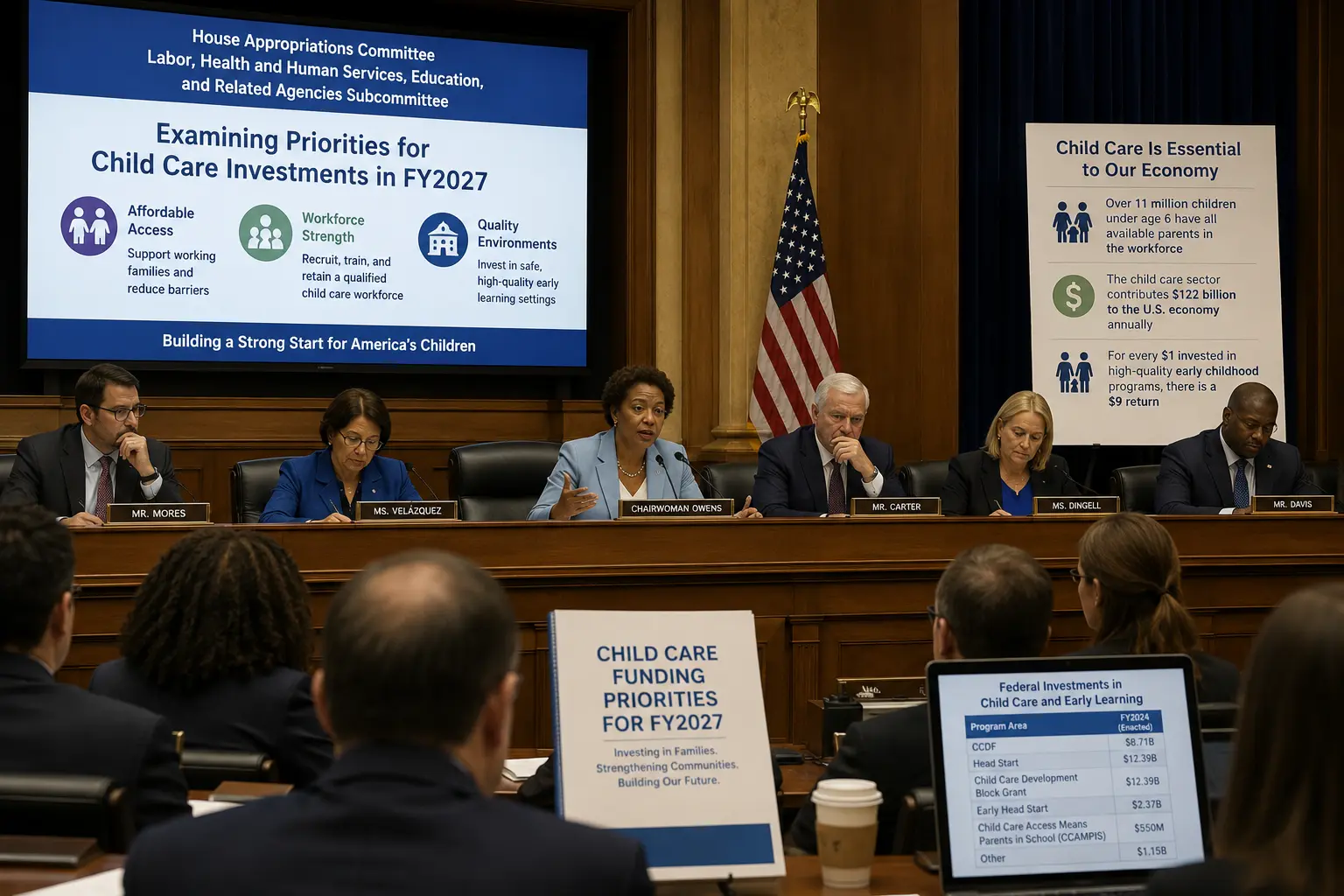
On June 4, 2026, the House Labor-HHS-Education Appropriations Subcommittee released its Fiscal Year (FY) 2027 spending proposal. The proposal has the potential to impact subsidy and funding options such as the Child Care and Development Block Grant (CCDBG), Head Start and Early Head Start programs, and Preschool Development Grants Birth through Five (PDG B-5). While some of the proposals would increase funding to programs, other parts would eliminate some programs entirely. Whether the bill will go on to become law in its current state remains to be seen. Here’s what child care directors should know to prepare for either scenario.
Federal funding through programs like this plays a major role in subsidy reimbursements, enrollment capacity, and overall program stability. See how Playground can help you manage these elements of your program regardless of legislative changes.
House Releases FY2027 Labor-HHS-Education Spending Proposal
The House Labor, Health and Human Services, Education, and Related Agencies Appropriations Subcommittee released its Fiscal Year 2027 funding proposal, part of the annual process for determining the level of federal support for child care and early learning programs.
Key elements of the 2027 House proposal include:
Child Care and Development Block Grant (CCDBG): $8.8 billion (a $10 million increase over 2026)
Head Start / Early Head Start: Approximately $12.3 billion (a $10 million increase)
Preschool Development Grants Birth through Five (PDG B-5): The proposal would eliminate this program.
Why This Matters for Your Center
CCDBG is the main federal funding stream that enables states to provide child care subsidies to working families. Even a small increase can help states maintain or slightly improve reimbursement rates, reduce waitlists in some areas, and provide more stable payments to providers.
Head Start funding supports comprehensive services and frequently intersects with child care through partnerships and mixed-delivery systems. Changes here can influence local collaboration opportunities and resource sharing.
The proposed elimination of PDG B-5 may raise concerns for many directors. This program has funded state efforts to strengthen quality systems, improve data infrastructure, enhance coordination across early childhood programs, and expand access, with the benefits often flowing to community-based centers. Those concerned about the potential elimination of this program can consider taking any of the action steps to monitor the progress of this proposal and take the next steps for their program accordingly.
What Happens Next
The appropriations process is far from over. The full House Appropriations Committee is expected to review and advance the bill soon. The Senate will release its own version, which has historically proposed stronger investments in child care and early learning. Final FY 2027 funding levels will emerge from House-Senate negotiations later in 2026, potentially as part of a larger package or a continuing resolution.
Action Steps for Child Care Directors
If the FY 2027 proposal will affect your business, the following steps can help you prepare for the finalized version.
Stay informed. Follow updates from the First Five Years Fund (FFYF), NAEYC, Playground, and your state child care resource and referral agency.
Engage your lawmakers. Share real stories from your child care center about how federal funding affects staffing, enrollment, and the families you serve. Director voices are powerful in demonstrating the real-world impact of these decisions.
Plan ahead. Review your current CCDBG contracts, subsidy rates, and budget assumptions so you can respond quickly to any state-level changes.
Communicate internally. Discuss this with your staff (and families, if appropriate) to build awareness, support and a plan.
Consider booking a demo with Playground to see how you can streamline your operations regardless of legislative outcomes.
The bottom line
The appropriations process is just beginning. The full House Appropriations Committee will review the bill soon, and the Senate is expected to release its own version in the coming weeks. Final FY 2027 funding levels will be determined through House-Senate negotiations later this year and could ultimately be included in a larger spending package or a continuing resolution. As it stands now, the proposal reflects continued but modest federal support for child care amid competing budget priorities. While the numbers are not dramatic, they represent the opening position in what will likely be a long negotiation process.
On June 4, 2026, the House Labor-HHS-Education Appropriations Subcommittee released its Fiscal Year (FY) 2027 spending proposal. The proposal has the potential to impact subsidy and funding options such as the Child Care and Development Block Grant (CCDBG), Head Start and Early Head Start programs, and Preschool Development Grants Birth through Five (PDG B-5). While some of the proposals would increase funding to programs, other parts would eliminate some programs entirely. Whether the bill will go on to become law in its current state remains to be seen. Here’s what child care directors should know to prepare for either scenario.
Federal funding through programs like this plays a major role in subsidy reimbursements, enrollment capacity, and overall program stability. See how Playground can help you manage these elements of your program regardless of legislative changes.
House Releases FY2027 Labor-HHS-Education Spending Proposal
The House Labor, Health and Human Services, Education, and Related Agencies Appropriations Subcommittee released its Fiscal Year 2027 funding proposal, part of the annual process for determining the level of federal support for child care and early learning programs.
Key elements of the 2027 House proposal include:
Child Care and Development Block Grant (CCDBG): $8.8 billion (a $10 million increase over 2026)
Head Start / Early Head Start: Approximately $12.3 billion (a $10 million increase)
Preschool Development Grants Birth through Five (PDG B-5): The proposal would eliminate this program.
Why This Matters for Your Center
CCDBG is the main federal funding stream that enables states to provide child care subsidies to working families. Even a small increase can help states maintain or slightly improve reimbursement rates, reduce waitlists in some areas, and provide more stable payments to providers.
Head Start funding supports comprehensive services and frequently intersects with child care through partnerships and mixed-delivery systems. Changes here can influence local collaboration opportunities and resource sharing.
The proposed elimination of PDG B-5 may raise concerns for many directors. This program has funded state efforts to strengthen quality systems, improve data infrastructure, enhance coordination across early childhood programs, and expand access, with the benefits often flowing to community-based centers. Those concerned about the potential elimination of this program can consider taking any of the action steps to monitor the progress of this proposal and take the next steps for their program accordingly.
What Happens Next
The appropriations process is far from over. The full House Appropriations Committee is expected to review and advance the bill soon. The Senate will release its own version, which has historically proposed stronger investments in child care and early learning. Final FY 2027 funding levels will emerge from House-Senate negotiations later in 2026, potentially as part of a larger package or a continuing resolution.
Action Steps for Child Care Directors
If the FY 2027 proposal will affect your business, the following steps can help you prepare for the finalized version.
Stay informed. Follow updates from the First Five Years Fund (FFYF), NAEYC, Playground, and your state child care resource and referral agency.
Engage your lawmakers. Share real stories from your child care center about how federal funding affects staffing, enrollment, and the families you serve. Director voices are powerful in demonstrating the real-world impact of these decisions.
Plan ahead. Review your current CCDBG contracts, subsidy rates, and budget assumptions so you can respond quickly to any state-level changes.
Communicate internally. Discuss this with your staff (and families, if appropriate) to build awareness, support and a plan.
Consider booking a demo with Playground to see how you can streamline your operations regardless of legislative outcomes.
The bottom line
The appropriations process is just beginning. The full House Appropriations Committee will review the bill soon, and the Senate is expected to release its own version in the coming weeks. Final FY 2027 funding levels will be determined through House-Senate negotiations later this year and could ultimately be included in a larger spending package or a continuing resolution. As it stands now, the proposal reflects continued but modest federal support for child care amid competing budget priorities. While the numbers are not dramatic, they represent the opening position in what will likely be a long negotiation process.
Jaclyn is a data journalist and CFP™ who evaluates trends in the childcare industry and wider economy. She has previously worked for publications including CNET, SmartAsset, Bizfluent, AZCentral and Chron, and as a research consultant for NAPCO Media. Her insights are often cited by publications including Bloomberg, CNBC, Business Insider, Fox News, USA Today, The Hill and more. She has a bachelor’s degree in economics and mathematics from The College of New Jersey.
Share this article
The highest rated child care software
Ratings and review counts from public app store listings, May 2026.

Book a demo and simplify every corner of your business.



Book a demo and simplify every corner of your business.
