

Texas Child Care Licensing Violations: Most Common Deficiencies and How to Avoid Them
Texas Child Care Licensing Violations: Most Common Deficiencies and How to Avoid Them
Texas Child Care Licensing Violations: Most Common Deficiencies and How to Avoid Them

Last updated:

Across Texas, 104,357 compliance deficiencies were cited across licensed and registered child care providers in 2025.
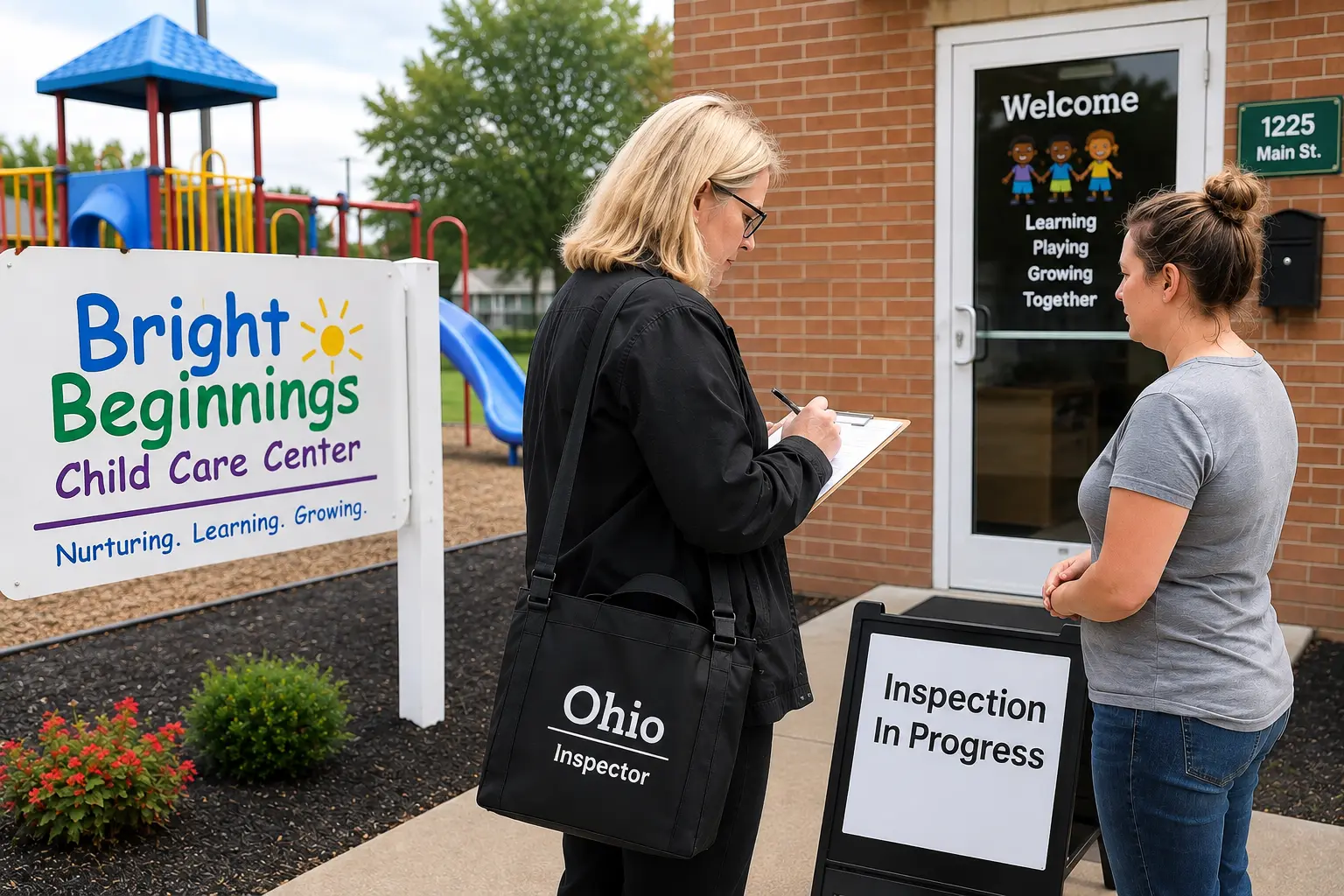
The Texas Health and Human Services Commission (HHSC) oversees compliance for centers and homes through its Child Care Regulation (CCR) Department. Licensed providers can generally expect at least one unannounced inspection each year, with more frequent visits for newly licensed operations or those with prior deficiencies or elevated risk.
Beyond the direct safety implications for children, deficiencies create real operational pressure: extra follow-up work, remediation costs, and lasting effects on a program’s standing. For these reasons, Texas child care providers are best served by focusing on preventative practices that reduce the chance of deficiencies before they occur. Here’s what to look out for based on the frequency of deficiencies across Texas last year, and some ways to mitigate the risk to your business.
Why do licensing compliance deficiencies matter?
Deficiencies cited by the CCR require specific responses from Texas child care providers.
Deficiencies are weighted by severity according to the level of risk they pose to children, with more severe deficiencies requiring greater urgency and repercussions.
In mild to moderate cases, providers must correct the issue by the deadline set by CCR and demonstrate that correction – often through a follow-up inspection. Even after correction, the deficiency and related details become part of the public record on the Search Texas Child Care website unless successfully disputed through an administrative review. Parents and prospective families can review this history when choosing care, so any negative marks may leave a bad impression and potentially cost you business.
In more serious cases or when patterns of noncompliance appear, CCR may:
Require a formal Plan of Action
Place the operation on probation with increased inspections
Assess administrative penalties
Impose permit restrictions
Pursue license suspension or revocation
On the other hand, remaining in good standing circumvents the need for these actions and supports access to subsidies, grants, and quality rating programs.
The tables below break out the 10 most common deficiencies in licensed centers, licensed homes, and registered homes across Texas in 2025, which providers can use to help guide their own compliance preparations.
Find out how Playground can digitize, document, and automate the elements of your business susceptible to compliance deficiencies. Book a free demo.
Texas Child Care Provider Compliance Deficiencies: Licensed centers, top 10 deficiencies
A total of 34,790 compliance deficiencies were recorded during inspections of licensed child care centers across Texas in 2025. The top 10 most frequently cited deficiencies are listed below.
Deficiency type | Rule | Number of deficiencies |
Supervision: Caregiver must maintain visual/auditory awareness and physical proximity to each child | 746.1205(a)(4) | 1,024 |
Annual report of employees who left during the prior calendar year | 746.303(b) | 616 |
Fire inspection required before permit and every 12 months | 746.5101(a) | 556 |
Building, grounds, and equipment must be kept clean, repaired, and sanitary | 746.3407 | 534 |
Must receive background check clearance before person can be present with children | 745.641 | 452 |
Employees must show competency, good judgment, and self-control around children | 746.1201(1) | 452 |
Maximum number of children one caregiver may supervise (age-based ratios) | 746.1601 | 367 |
Current immunization records required for each enrolled child | 746.603(a)(4) | 359 |
Sanitation inspection required before permit and every 12 months | 746.3401(a) | 338 |
Infant feeding instructions must be reviewed/updated with parent every 30 days | 746.2421(b) | 311 |
Annual training must include specific required safety and health topics | 746.1309(e) | 307 |
Texas child care provider compliance deficiencies: Licensed homes, top 10 deficiencies
Across licensed child care homes in Texas, a total of 34,765 compliance deficiencies were cited in 2025. The top 10 most frequently cited deficiencies are listed below.
Deficiency type | Rule | Number of deficiencies |
Statement of the child’s health from a health-care professional required | 747.603(a)(3) | 81 |
Written operational policies must include parent rights | 747.501(9) | 73 |
Monthly fire drill required with safe exit in 3 minutes | 747.5005(1) | 69 |
Current immunization records required for each enrolled child | 747.603(a)(4) | 58 |
Primary caregiver must complete 30 clock hours of annual training | 747.1309(a) | 57 |
All areas accessible to children must be free from hazards | 747.3501 | 55 |
Annual written certification that CPSC recalls have been reviewed and no unsafe products are present | 747.3935(b) | 53 |
Primary, assistant, and substitute caregivers must have current pediatric first aid and CPR | 747.1313(a) | 50 |
Building, grounds, and equipment must be cleaned, repaired, and maintained for health | 747.3203 | 49 |
Must receive background check clearance before person can be present with children | 745.641 | 46 |
Texas child care provider compliance deficiencies: Registered homes, top 10 deficiencies
Across all registered child care home inspections in Texas in 2025, a total of 34,802 compliance violations were recorded. The top 10 most frequently cited violations are listed below.
Violation type | Rule | Number of violations |
Primary caregiver must complete 30 clock hours of annual training | 747.1309(a) | 151 |
Monthly fire drill required with safe exit in 3 minutes | 747.5005(1) | 123 |
Statement of the child’s health from a health-care professional required | 747.603(a)(3) | 119 |
All areas accessible to children must be free from hazards | 747.3501 | 104 |
Primary caregiver must develop and implement operational policies that comply with rules | 747.207(1) | 101 |
Current immunization records required for each enrolled child | 747.603(a)(4) | 100 |
Must receive background check clearance before person can be present with children | 745.641 | 92 |
Primary, assistant, and substitute caregivers must have current pediatric first aid and CPR | 747.1313(a) | 92 |
Required admission information must be obtained and maintained for each child | 747.603(a)(2) | 91 |
Written operational policies must include parent rights | 747.501(9) | 85 |
Ways to reduce the risk of licensing deficiencies
During a typical unannounced inspection, a Texas CCR inspector will walk through the indoor and outdoor activity areas, meal prep/serving spaces, restrooms, and sleeping areas to check for obvious issues with supervision, child/caregiver ratios, safety, sanitation, and fire hazards. They will also review your records across multiple domains and ongoing operations.
Many of the most frequent deficiencies in Texas involve supervision and ratios, background checks, training documentation, immunization and health records, operational policies, and facility maintenance. Deficiencies in these areas are largely preventable with stronger systems.
Playground, the highest rated all-in-one child care management platform, helps close these gaps by bringing critical functions together in one place. Features designed to lower deficiency risk include:
Real-time ratio and attendance tracking that supports proper supervision indoors and outdoors
Complete digital child and staff profiles that keep enrollment, health, immunization, and employment records current and easy to access
Centralized document storage with quick search so required forms and certifications are ready during an inspection
Customizable, compliant digital templates that reduce missing or outdated paperwork for policies, training, and parent communications
Beyond compliance support, Playground also handles billing, payroll, enrollment, marketing, and other day-to-day operations built specifically for child care programs. To see how it can help your business stay ahead of common deficiencies, book a free demo.
Across Texas, 104,357 compliance deficiencies were cited across licensed and registered child care providers in 2025.
The Texas Health and Human Services Commission (HHSC) oversees compliance for centers and homes through its Child Care Regulation (CCR) Department. Licensed providers can generally expect at least one unannounced inspection each year, with more frequent visits for newly licensed operations or those with prior deficiencies or elevated risk.
Beyond the direct safety implications for children, deficiencies create real operational pressure: extra follow-up work, remediation costs, and lasting effects on a program’s standing. For these reasons, Texas child care providers are best served by focusing on preventative practices that reduce the chance of deficiencies before they occur. Here’s what to look out for based on the frequency of deficiencies across Texas last year, and some ways to mitigate the risk to your business.
Why do licensing compliance deficiencies matter?
Deficiencies cited by the CCR require specific responses from Texas child care providers.
Deficiencies are weighted by severity according to the level of risk they pose to children, with more severe deficiencies requiring greater urgency and repercussions.
In mild to moderate cases, providers must correct the issue by the deadline set by CCR and demonstrate that correction – often through a follow-up inspection. Even after correction, the deficiency and related details become part of the public record on the Search Texas Child Care website unless successfully disputed through an administrative review. Parents and prospective families can review this history when choosing care, so any negative marks may leave a bad impression and potentially cost you business.
In more serious cases or when patterns of noncompliance appear, CCR may:
Require a formal Plan of Action
Place the operation on probation with increased inspections
Assess administrative penalties
Impose permit restrictions
Pursue license suspension or revocation
On the other hand, remaining in good standing circumvents the need for these actions and supports access to subsidies, grants, and quality rating programs.
The tables below break out the 10 most common deficiencies in licensed centers, licensed homes, and registered homes across Texas in 2025, which providers can use to help guide their own compliance preparations.
Find out how Playground can digitize, document, and automate the elements of your business susceptible to compliance deficiencies. Book a free demo.
Texas Child Care Provider Compliance Deficiencies: Licensed centers, top 10 deficiencies
A total of 34,790 compliance deficiencies were recorded during inspections of licensed child care centers across Texas in 2025. The top 10 most frequently cited deficiencies are listed below.
Deficiency type | Rule | Number of deficiencies |
Supervision: Caregiver must maintain visual/auditory awareness and physical proximity to each child | 746.1205(a)(4) | 1,024 |
Annual report of employees who left during the prior calendar year | 746.303(b) | 616 |
Fire inspection required before permit and every 12 months | 746.5101(a) | 556 |
Building, grounds, and equipment must be kept clean, repaired, and sanitary | 746.3407 | 534 |
Must receive background check clearance before person can be present with children | 745.641 | 452 |
Employees must show competency, good judgment, and self-control around children | 746.1201(1) | 452 |
Maximum number of children one caregiver may supervise (age-based ratios) | 746.1601 | 367 |
Current immunization records required for each enrolled child | 746.603(a)(4) | 359 |
Sanitation inspection required before permit and every 12 months | 746.3401(a) | 338 |
Infant feeding instructions must be reviewed/updated with parent every 30 days | 746.2421(b) | 311 |
Annual training must include specific required safety and health topics | 746.1309(e) | 307 |
Texas child care provider compliance deficiencies: Licensed homes, top 10 deficiencies
Across licensed child care homes in Texas, a total of 34,765 compliance deficiencies were cited in 2025. The top 10 most frequently cited deficiencies are listed below.
Deficiency type | Rule | Number of deficiencies |
Statement of the child’s health from a health-care professional required | 747.603(a)(3) | 81 |
Written operational policies must include parent rights | 747.501(9) | 73 |
Monthly fire drill required with safe exit in 3 minutes | 747.5005(1) | 69 |
Current immunization records required for each enrolled child | 747.603(a)(4) | 58 |
Primary caregiver must complete 30 clock hours of annual training | 747.1309(a) | 57 |
All areas accessible to children must be free from hazards | 747.3501 | 55 |
Annual written certification that CPSC recalls have been reviewed and no unsafe products are present | 747.3935(b) | 53 |
Primary, assistant, and substitute caregivers must have current pediatric first aid and CPR | 747.1313(a) | 50 |
Building, grounds, and equipment must be cleaned, repaired, and maintained for health | 747.3203 | 49 |
Must receive background check clearance before person can be present with children | 745.641 | 46 |
Texas child care provider compliance deficiencies: Registered homes, top 10 deficiencies
Across all registered child care home inspections in Texas in 2025, a total of 34,802 compliance violations were recorded. The top 10 most frequently cited violations are listed below.
Violation type | Rule | Number of violations |
Primary caregiver must complete 30 clock hours of annual training | 747.1309(a) | 151 |
Monthly fire drill required with safe exit in 3 minutes | 747.5005(1) | 123 |
Statement of the child’s health from a health-care professional required | 747.603(a)(3) | 119 |
All areas accessible to children must be free from hazards | 747.3501 | 104 |
Primary caregiver must develop and implement operational policies that comply with rules | 747.207(1) | 101 |
Current immunization records required for each enrolled child | 747.603(a)(4) | 100 |
Must receive background check clearance before person can be present with children | 745.641 | 92 |
Primary, assistant, and substitute caregivers must have current pediatric first aid and CPR | 747.1313(a) | 92 |
Required admission information must be obtained and maintained for each child | 747.603(a)(2) | 91 |
Written operational policies must include parent rights | 747.501(9) | 85 |
Ways to reduce the risk of licensing deficiencies
During a typical unannounced inspection, a Texas CCR inspector will walk through the indoor and outdoor activity areas, meal prep/serving spaces, restrooms, and sleeping areas to check for obvious issues with supervision, child/caregiver ratios, safety, sanitation, and fire hazards. They will also review your records across multiple domains and ongoing operations.
Many of the most frequent deficiencies in Texas involve supervision and ratios, background checks, training documentation, immunization and health records, operational policies, and facility maintenance. Deficiencies in these areas are largely preventable with stronger systems.
Playground, the highest rated all-in-one child care management platform, helps close these gaps by bringing critical functions together in one place. Features designed to lower deficiency risk include:
Real-time ratio and attendance tracking that supports proper supervision indoors and outdoors
Complete digital child and staff profiles that keep enrollment, health, immunization, and employment records current and easy to access
Centralized document storage with quick search so required forms and certifications are ready during an inspection
Customizable, compliant digital templates that reduce missing or outdated paperwork for policies, training, and parent communications
Beyond compliance support, Playground also handles billing, payroll, enrollment, marketing, and other day-to-day operations built specifically for child care programs. To see how it can help your business stay ahead of common deficiencies, book a free demo.
Jaclyn is a data journalist and CFP™ who evaluates trends in the childcare industry and wider economy. She has previously worked for publications including CNET, SmartAsset, Bizfluent, AZCentral and Chron, and as a research consultant for NAPCO Media. Her insights are often cited by publications including Bloomberg, CNBC, Business Insider, Fox News, USA Today, The Hill and more. She has a bachelor’s degree in economics and mathematics from The College of New Jersey.
Share this article
Table of Contents
The highest rated child care software
Ratings and review counts from public app store listings, May 2026.

Book a demo and simplify every corner of your business.



Book a demo and simplify every corner of your business.
