

How the Child Care Modernization Act Could Strengthen Providers and Expand Access for Families
How the Child Care Modernization Act Could Strengthen Providers and Expand Access for Families
How the Child Care Modernization Act Could Strengthen Providers and Expand Access for Families

Last updated:
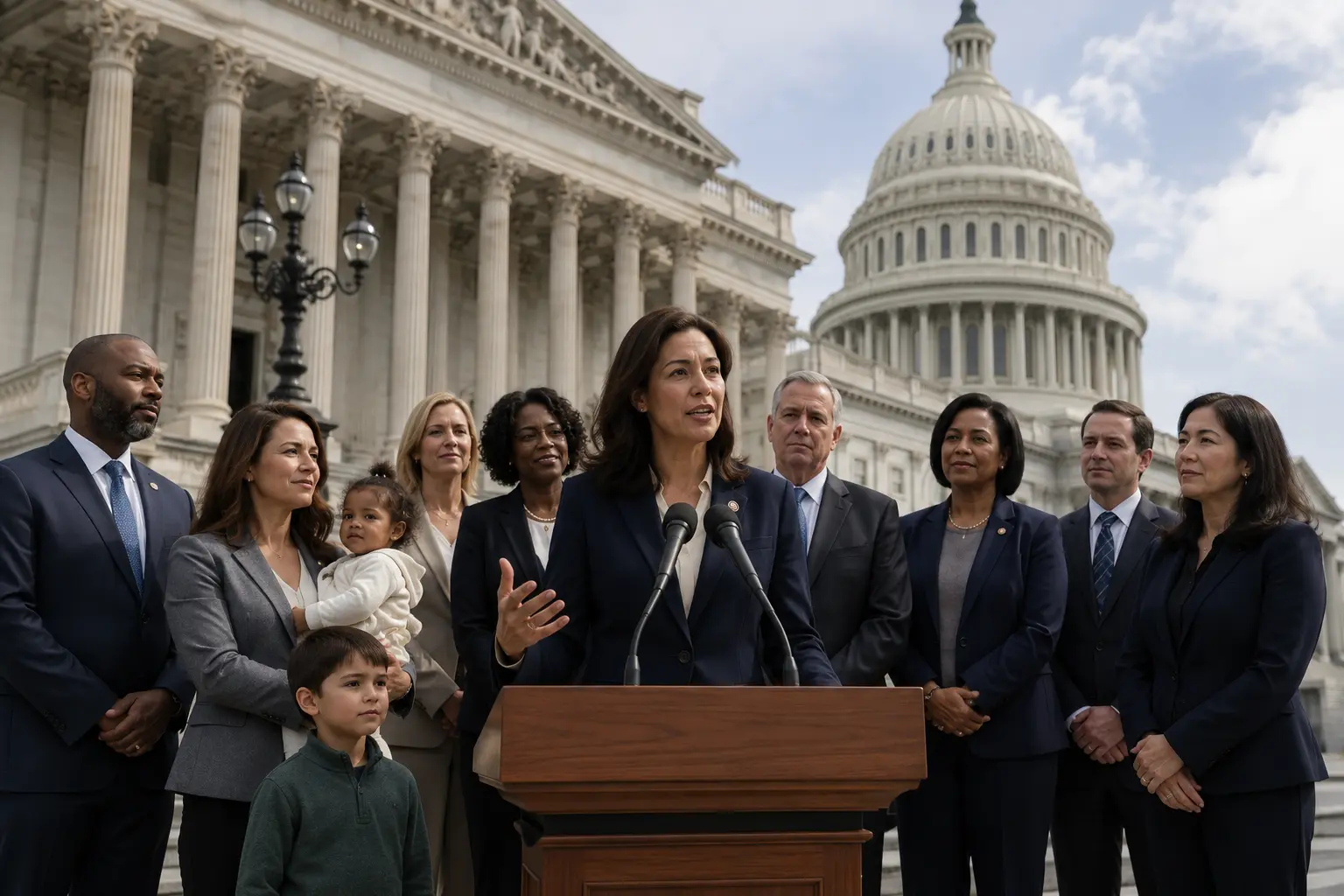
Child care directors across the country are grappling with persistent challenges: staffing shortages, rising operational costs, facility limitations, and families stretched thin by high tuition rates. A bipartisan bill in Congress aims to address many of these pain points by updating the nation’s primary federal child care assistance program. The Child Care Modernization Act of 2025 (S. 2828) seeks to reauthorize and refresh the Child Care and Development Block Grant (CCDBG), bringing it in line with today’s economic and workforce realities. Currently, the bill is still in limbo but has the potential to benefit child care programs and families across the country. Here’s what to know.
Looking for ways to streamline your child care business without waiting around for Congress? Book a free custom Playground demo today.
Goals of the Child Care Modernization Act
Introduced in September 2025 by Senators Deb Fischer (R-NE), Kirsten Gillibrand (D-NY), John Hickenlooper (D-CO), and Susan Collins (R-ME), the legislation would reauthorize CCDBG for fiscal years 2026 through 2030. It focuses on creating a more responsive system that supports a mixed delivery approach. It values centers, family child care homes, faith-based programs, and other settings equally.
The core goals include boosting the supply of child care in underserved areas, improving payment accuracy to better reflect true costs, enhancing workforce stability, promoting parental choice, and helping more children access high-quality care without adding heavy new regulatory burdens. It builds on the last major update from 2014, incorporating lessons learned from post-pandemic pressures like inflation, enrollment fluctuations, and recruitment difficulties.
Why This Matters Now
With child care costs averaging well over $10,000 per year in many areas and demand outpacing supply, updating this foundational program offers a pathway to greater stability. The emphasis on parental choice and mixed delivery systems aligns with the diverse ways families actually seek care, creating space for well-run centers to thrive.
Practical Benefits for Child Care Centers and Directors
Directors stand to gain meaningful tools for sustainability and growth if the bill advances and receives appropriations.
More Accurate and Sustainable Reimbursements
One of the most impactful provisions encourages states to use statistically valid cost estimation models instead of relying solely on outdated market-rate surveys. These models would factor in actual expenses such as competitive wages, benefits, facility maintenance, specialized care for different ages or needs, and quality enhancements. For many providers, this could close the persistent gap between subsidy rates and real costs, leading to steadier cash flow and the ability to invest in staff retention.
For more savings opportunities, check out the Playground Savings Club.
Opportunities to Expand Capacity
The Child Care Modernization Act includes targeted grants for increasing supply by covering child care startup costs, renovations, construction, and health/safety improvements. Directors could pursue these funds (directly or through state subgrants) to add classrooms, upgrade existing spaces, or launch new programs, directly addressing waitlist pressures and enrollment potential.
Workforce and Operational Support
Provisions emphasize recruitment and retention strategies, technical assistance for smaller or home-based providers, and opportunities for shared services networks that reduce administrative burdens (e.g., joint training, billing systems, or purchasing). Reduced duplicative requirements could free up time for what matters most: program quality and family relationships.
Broader Family Eligibility and Enrollment Stability
States would gain more flexibility to serve families slightly above traditional income thresholds and support parents in job training, education, or transitional situations. This expands the pool of subsidy-eligible families, potentially increasing enrollment and revenue stability for centers while maintaining focus on those who need it most.
Overall, the changes proposed by the Child Care Modernization Act could help directors run more predictable, viable businesses while delivering higher-quality experiences that families value.
Current Status and Outlook
As of May 2026, the bill remains in the introductory stage in the Senate. It received a hearing before the Senate HELP Committee on March 19, 2026, signaling continued interest.
Its strong bipartisan sponsorship and support from diverse stakeholders – including provider associations, business groups, and child advocacy organizations – improve its prospects in a challenging legislative environment. But ultimately, passage is not guaranteed and will depend on broader budget priorities, appropriations negotiations, and companion action in the House. Many in the field view it as a pragmatic step forward rather than a sweeping overhaul, which could aid progress.
Directors can stay engaged by participating in state CCDBG planning processes, connecting with national associations for updates, and reaching out to congressional offices to share on-the-ground experiences.
For other opportunities to grow your business, consider booking a free demo with Playground to empower your staff and eliminate busywork.
Child care directors across the country are grappling with persistent challenges: staffing shortages, rising operational costs, facility limitations, and families stretched thin by high tuition rates. A bipartisan bill in Congress aims to address many of these pain points by updating the nation’s primary federal child care assistance program. The Child Care Modernization Act of 2025 (S. 2828) seeks to reauthorize and refresh the Child Care and Development Block Grant (CCDBG), bringing it in line with today’s economic and workforce realities. Currently, the bill is still in limbo but has the potential to benefit child care programs and families across the country. Here’s what to know.
Looking for ways to streamline your child care business without waiting around for Congress? Book a free custom Playground demo today.
Goals of the Child Care Modernization Act
Introduced in September 2025 by Senators Deb Fischer (R-NE), Kirsten Gillibrand (D-NY), John Hickenlooper (D-CO), and Susan Collins (R-ME), the legislation would reauthorize CCDBG for fiscal years 2026 through 2030. It focuses on creating a more responsive system that supports a mixed delivery approach. It values centers, family child care homes, faith-based programs, and other settings equally.
The core goals include boosting the supply of child care in underserved areas, improving payment accuracy to better reflect true costs, enhancing workforce stability, promoting parental choice, and helping more children access high-quality care without adding heavy new regulatory burdens. It builds on the last major update from 2014, incorporating lessons learned from post-pandemic pressures like inflation, enrollment fluctuations, and recruitment difficulties.
Why This Matters Now
With child care costs averaging well over $10,000 per year in many areas and demand outpacing supply, updating this foundational program offers a pathway to greater stability. The emphasis on parental choice and mixed delivery systems aligns with the diverse ways families actually seek care, creating space for well-run centers to thrive.
Practical Benefits for Child Care Centers and Directors
Directors stand to gain meaningful tools for sustainability and growth if the bill advances and receives appropriations.
More Accurate and Sustainable Reimbursements
One of the most impactful provisions encourages states to use statistically valid cost estimation models instead of relying solely on outdated market-rate surveys. These models would factor in actual expenses such as competitive wages, benefits, facility maintenance, specialized care for different ages or needs, and quality enhancements. For many providers, this could close the persistent gap between subsidy rates and real costs, leading to steadier cash flow and the ability to invest in staff retention.
For more savings opportunities, check out the Playground Savings Club.
Opportunities to Expand Capacity
The Child Care Modernization Act includes targeted grants for increasing supply by covering child care startup costs, renovations, construction, and health/safety improvements. Directors could pursue these funds (directly or through state subgrants) to add classrooms, upgrade existing spaces, or launch new programs, directly addressing waitlist pressures and enrollment potential.
Workforce and Operational Support
Provisions emphasize recruitment and retention strategies, technical assistance for smaller or home-based providers, and opportunities for shared services networks that reduce administrative burdens (e.g., joint training, billing systems, or purchasing). Reduced duplicative requirements could free up time for what matters most: program quality and family relationships.
Broader Family Eligibility and Enrollment Stability
States would gain more flexibility to serve families slightly above traditional income thresholds and support parents in job training, education, or transitional situations. This expands the pool of subsidy-eligible families, potentially increasing enrollment and revenue stability for centers while maintaining focus on those who need it most.
Overall, the changes proposed by the Child Care Modernization Act could help directors run more predictable, viable businesses while delivering higher-quality experiences that families value.
Current Status and Outlook
As of May 2026, the bill remains in the introductory stage in the Senate. It received a hearing before the Senate HELP Committee on March 19, 2026, signaling continued interest.
Its strong bipartisan sponsorship and support from diverse stakeholders – including provider associations, business groups, and child advocacy organizations – improve its prospects in a challenging legislative environment. But ultimately, passage is not guaranteed and will depend on broader budget priorities, appropriations negotiations, and companion action in the House. Many in the field view it as a pragmatic step forward rather than a sweeping overhaul, which could aid progress.
Directors can stay engaged by participating in state CCDBG planning processes, connecting with national associations for updates, and reaching out to congressional offices to share on-the-ground experiences.
For other opportunities to grow your business, consider booking a free demo with Playground to empower your staff and eliminate busywork.
Jaclyn is a data journalist and CFP™ who evaluates trends in the childcare industry and wider economy. She has previously worked for publications including CNET, SmartAsset, Bizfluent, AZCentral and Chron, and as a research consultant for NAPCO Media. Her insights are often cited by publications including Bloomberg, CNBC, Business Insider, Fox News, USA Today, The Hill and more. She has a bachelor’s degree in economics and mathematics from The College of New Jersey.
Share this article
The highest rated child care software
Ratings and review counts from public app store listings, May 2026.




Book a demo and simplify every corner of your business.




Book a demo and simplify every corner of your business.
